
CCPA Fines Zepto, Physics Wallah, BookMyShow For Using 'Dark Patterns' To Mislead Consumers
From Fake Timers To Hidden Charges: CCPA Cracks Down On Dark Patterns
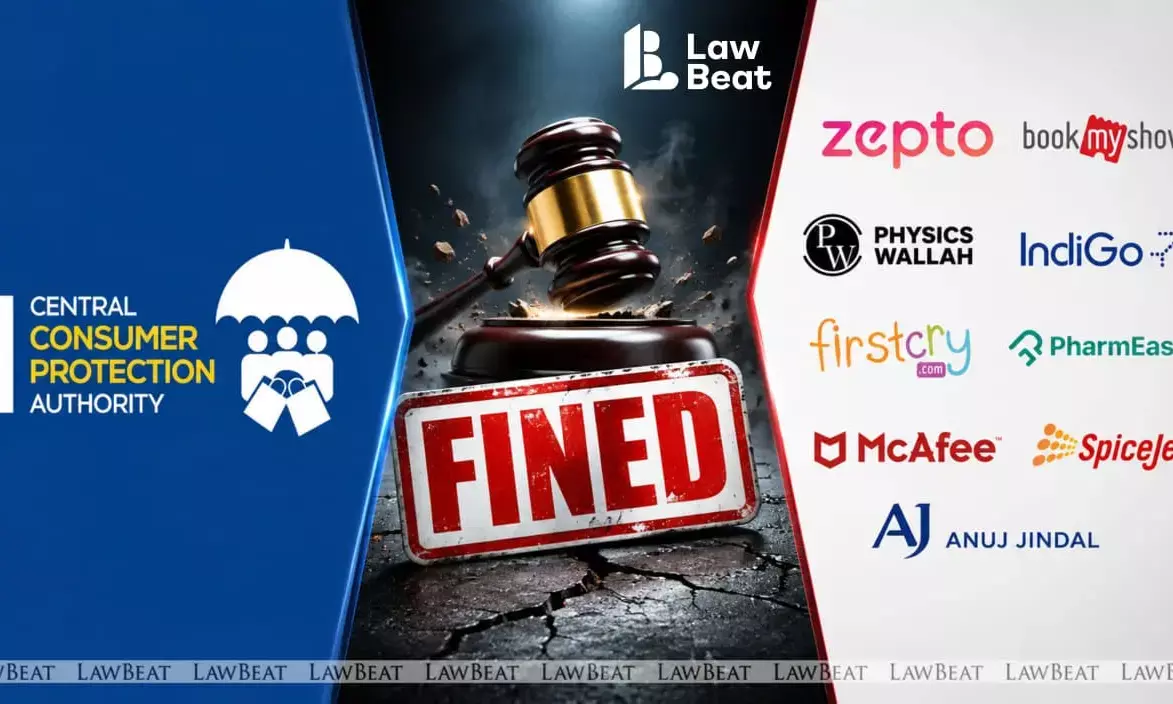
The Central Consumer Protection Authority has penalised nine digital platforms, including IndiGo, Zepto, Physics Wallah, and FirstCry, for deceptive online design tactics that mislead consumers into paying more or surrendering data they never meant to share.
The government disclosed the crackdown in a written Rajya Sabha reply, where the Ministry of Consumer Affairs said the CCPA has stepped up efforts to check unfair practices in the digital marketplace under the Consumer Protection Act, 2019 and the Consumer Protection (E-Commerce) Rules, 2020.
The regulator's action targets what it calls "dark patterns," manipulative user interface designs that nudge consumers toward choices they would not otherwise make. Common examples flagged by the CCPA include hidden charges, subscriptions activated without clear consent, artificial countdown timers meant to create false urgency, and pre-ticked boxes that pass off silence as agreement.
"Central Consumer Protection Authority (CCPA) Acts Against Dark Patterns on Digital Platforms. PhysicsWallah fined ₹5 lakh and McAfee ₹1 lakh for practices affecting informed consumer choice," reads a post shared by the Press Information Bureau on X.
The Ministry told Parliament that the CCPA has collected close to Rs 20 lakh in penalties so far from companies found in breach of the Dark Pattern Guidelines. Under the Guidelines for Prevention and Regulation of Dark Patterns, 2023, the government has catalogued thirteen categories of deceptive design.
"The 13 prominent dark patterns in e-commerce are False Urgency, Basket Sneaking, Confirm Shaming, Forced Action, Subscription Trap, Interface Interference, Bait and Switch, Drip Pricing, Disguised Advertisement, Nagging, Trick Question, SaaS Billing, and Rogue Malwares," the Rajya Sabha reply by B.L. Verma, Minister of State for Consumer Affairs, Food and Public Distribution, stated.
Among the companies penalised, Anuj Jindal Coaching Platform was fined Rs 3,00,000 for running a fake countdown timer designed to pressure buyers into hasty decisions. FirstCry was fined Rs 2,00,000 for drip pricing, after advertising prices as tax-inclusive and then adding GST at checkout. PharmaEasy drew a penalty of Rs 1,00,000 for automatically adding a PLUS membership to customers' shopping carts without their consent.
Zepto Marketplace Pvt. Ltd. was fined Rs 7,00,000, the highest among the nine, for a combination of drip pricing and basket sneaking. Physics Wallah Ltd. was fined Rs 5,00,000 for pre-selecting donation amounts and for requiring users to hand over personal information merely to access courses advertised as free. SpiceJet Ltd. was fined Rs 1,00,000 for deploying pre-ticked consent boxes that the CCPA classified as trick questions.
Beyond the monetary penalties, the CCPA has also used notices to push companies toward correcting their interfaces. IndiGo, for instance, removed shaming language from its booking flow, replacing the guilt-inducing prompt "No, I will take the risk" with a neutral alternative, "No, I will not add it to my trip."
The reply also referred to action against a major ticketing platform. "CCPA had also issued notices to a major portal for booking movie tickets (BookMyShow) for dark patterns by imposing automatically an extra charge of Rs.1 on customers pre-tick without consent of the consumer after the booking of confirmed tickets. After CCPA's intervention booking portal addressed the issue of 'Basket Sneaking' by giving customers an option to choose whether or not they wish to contribute towards BookASmile. The dark pattern has been discontinued," the reply reads.
The broader message from the government's disclosure is that regulatory scrutiny of e-commerce interfaces is no longer confined to advisories. Fines, modest as they may seem in absolute terms, are now paired with concrete design changes across some of India's most widely used platforms, signalling that the CCPA intends dark pattern enforcement to be an ongoing exercise rather than a one-time push.
Inputs from The Print