
Centre Challenges Delhi HC Order Allowing Parents to Use Deceased Son’s Frozen Sperm
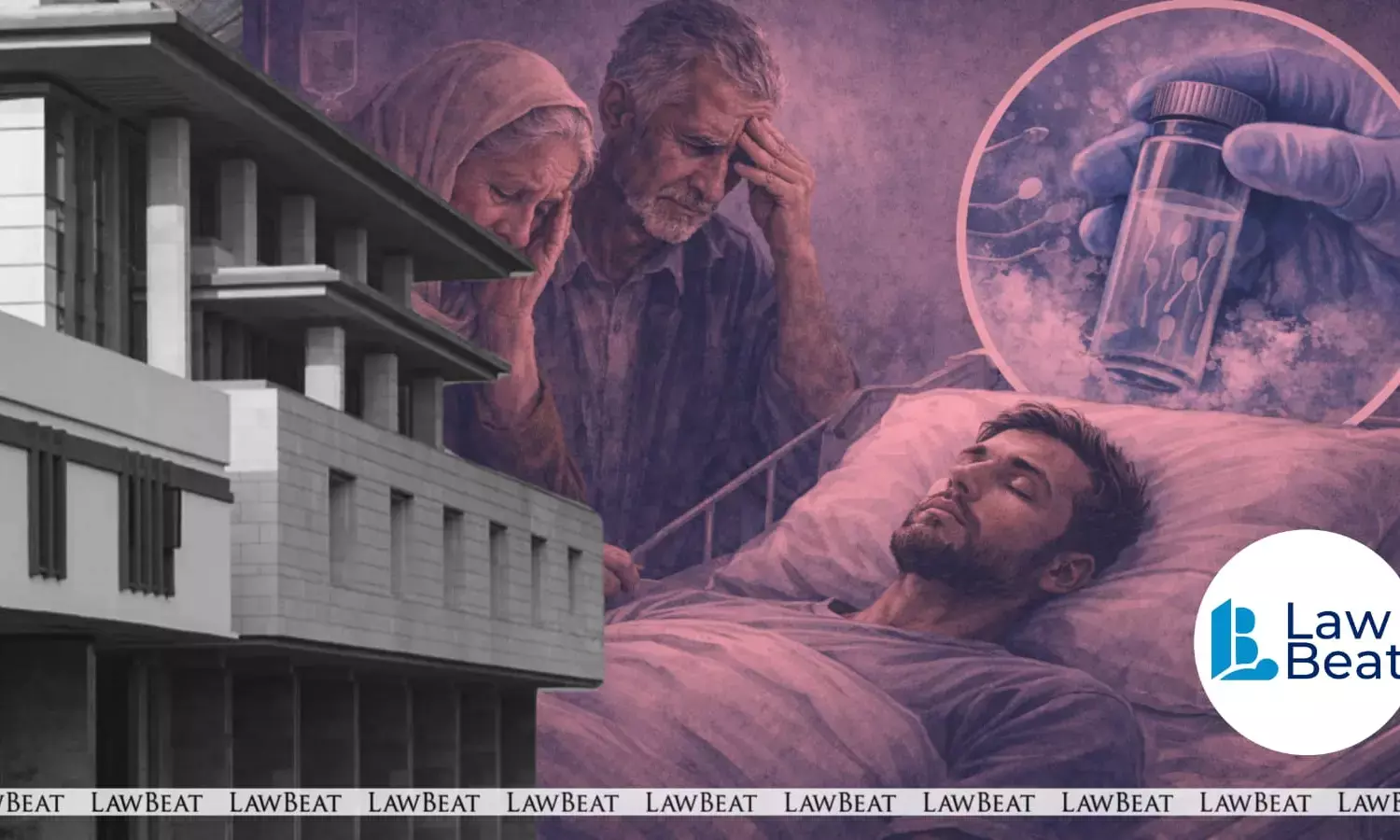
Delhi HC to Reconsider Ruling Allowing Parents to Use Deceased Son’s Sperm
The Union Government has approached the Delhi High Court challenging an earlier judicial order that permitted the parents of a deceased, unmarried man to use his cryopreserved sperm for assisted reproduction, contending that Indian law does not recognise such reproductive material as inheritable property and that grandparents cannot be treated as beneficiaries under existing assisted reproduction statutes.
The Centre has argued that permitting parents to use their deceased son’s frozen sperm to continue the family lineage raises serious legal, ethical and statutory concerns, particularly in the absence of explicit consent by the deceased for posthumous reproduction and in light of the regulatory framework governing assisted reproductive technology and surrogacy in India.
A Division Bench of the Delhi High Court is seized of the government’s challenge to a 2024 order passed by a Single Judge, which had directed a private hospital to release the frozen semen of an unmarried man to his parents.
The appeal filed by the Centre questions the legality of that direction and seeks reconsideration of the interpretation adopted by the Single Judge.
The case arises from a plea filed by the parents of a young man who had cryopreserved his semen at Sir Ganga Ram Hospital prior to undergoing medical treatment. Following his death, the parents sought release of the frozen semen, stating that they wished to use it for reproduction in order to continue their son’s lineage.
In October 2024, a Single Judge of the Delhi High Court allowed the parents’ plea, holding that there was no express prohibition under Indian law on posthumous reproduction and observing that reproductive material could form part of a person’s estate. The court had directed the hospital to hand over the cryopreserved semen to the parents, subject to applicable medical safeguards.
The Union Government has now assailed that reasoning, arguing that the order travels beyond the statutory framework governing assisted reproduction in India. According to the Centre, the Assisted Reproductive Technology (Regulation) Act, 2021 and the Surrogacy (Regulation) Act, 2021 envisage assisted reproduction only for “intending couples” or “intending women” and do not contemplate parents or grandparents as beneficiaries.
The government’s appeal contends that treating cryopreserved sperm as inheritable property is legally unsustainable, as reproductive material involves deeply personal autonomy and consent, unlike conventional movable or immovable assets.
It argues that unless a deceased individual has provided explicit, informed, and written consent for posthumous use of their gametes, such use cannot be presumed merely on the basis of parental wishes.
The Centre has further argued that allowing parents to deploy their deceased son’s sperm would amount to judicially expanding the scope of assisted reproduction laws, contrary to legislative intent.
It has submitted that Parliament consciously restricted eligibility under the ART and Surrogacy laws to safeguard the welfare of children born through assisted reproduction and to ensure clarity in parentage and guardianship.
According to the government, recognising grandparents as the driving force behind posthumous reproduction would create uncertainty regarding legal parenthood, succession rights, and the status of the child, issues that are not addressed under the current statutory framework.
The appeal also flags concerns relating to consent and autonomy, asserting that reproductive choices are intrinsic to individual dignity and privacy under Article 21 of the Constitution. The Centre has argued that permitting posthumous reproduction without unequivocal consent from the deceased risks violating these constitutional principles.
The parents, on the other hand, have maintained that their son had voluntarily preserved his sperm and that there is no statutory bar on its use after death. They have argued that the absence of an express prohibition cannot be read as a restriction, particularly where the intention is to preserve lineage and where medical protocols are complied with.
The Single Judge, while granting relief in 2024, had observed that Indian law does not explicitly prohibit posthumous reproduction and had noted the evolving nature of family structures and reproductive choices.
The court had also remarked that the cryopreserved semen could be treated as part of the deceased’s estate, capable of being dealt with by his legal heirs.
The Centre’s appeal squarely challenges this reasoning, warning that such an approach could have far-reaching consequences beyond the facts of the present case. It has cautioned that recognising reproductive material as inheritable property could open the door to claims involving consent, misuse, and commercial exploitation, particularly in a sector that Parliament has sought to regulate strictly.
The matter is currently pending before the Delhi High Court and is expected to be heard further after notice to the parties.