
Delhi High Court Allows CJP Leaders Saurav Das And Ashutosh Ranka To Withdraw Plea Against Custody Order Passed By Special Executive Magistrate
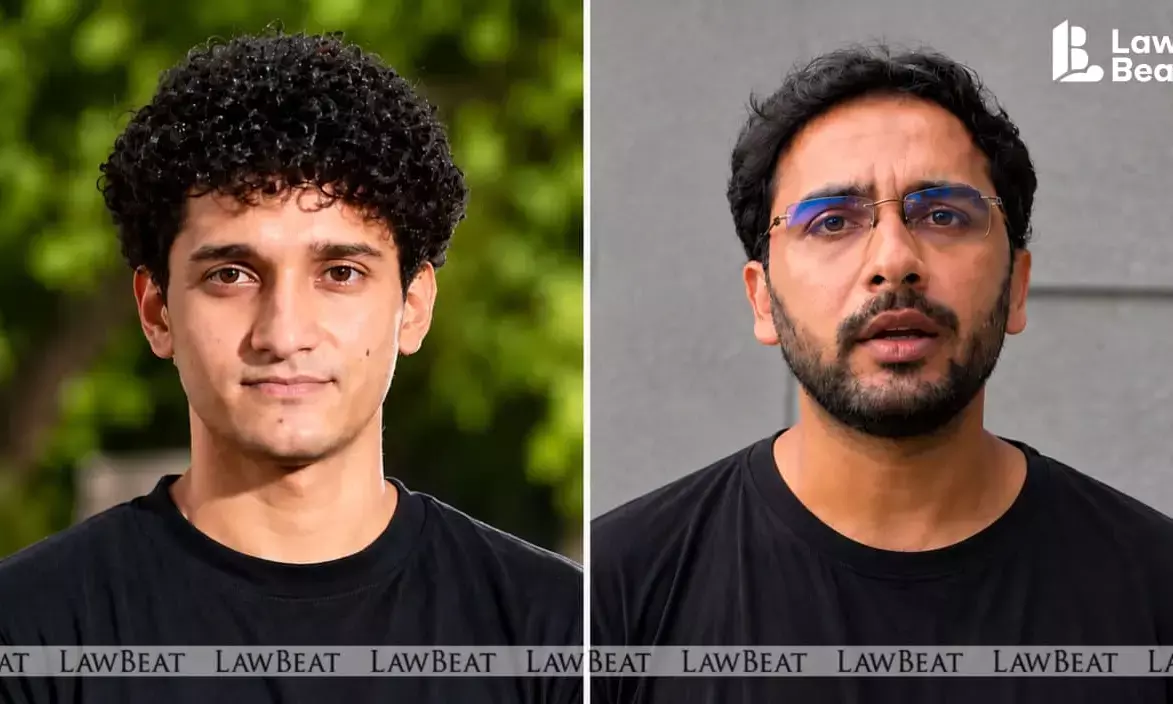
The Delhi High Court allowed CJP leaders Saurav Das and Ashutosh Ranka to withdraw their petition against the Special Executive Magistrate’s order by which they were sent to judicial custody. The Court did not go into the merits,
CJP leaders Saurav Das and Ashutosh Ranka today withdrew their petition before the Delhi High Court against a special executive magistrate (SEM) court order sending them to judicial custody till October 21. The matter was listed for an urgent hearing today.
During the hearing, Justice Subramonium Prasad suggested the Counsel for Das and Ranka to withdraw their plea as the SEM court was to reconsider the sureties furnished by them later today.
The Court repeatedly questioned their decision to approach the High Court before pursuing the remedy available before the revisional court, repeatedly suggesting that they should first await the proceedings before the SEM.
The Court also indicated that the option of Section 414 BNSS (Appeal from orders requiring security or refusal to accept or rejecting surety for keeping peace or good behaviour) will also be open for them.
After the Court asked counsel to take instructions and consider the appropriate course, advocate Abhik Chimni withdrew the petition. The High Court allowed the withdrawal without adjudicating the challenge to the SEM’s order on merits.
'A Person Goes There, Gives A Bond, Breaks The Bond'
At the outset, Justice Prasad questioned whether insisting on sureties could be considered illegal when a person was alleged to have breached an earlier peace bond.
"Here is a case where one preventive notice has been broken and then you are given a second preventive notice… The first bond has come to an end, it is rather come true that you had a tendency to break peace for the second time. Once you have done it by breaking peace the second time, are not the authorities entitled to insist on a stricter proof for everything?" the Judge observed.
"A person goes there, gives a bond, breaks the bond. In such a case, insistence on a surety, can it be said to be that illegal or that much against the law? We will hear you on that" Justice Prasad added.
The observations came as the petitioners relied on the Delhi High Court judgment in Aldanish Rein v. State (NCT of Delhi) to support their case challenging the insistence by SEM on sureties.
Justice Prasad questioned how far that judgment could assist them when the present case allegedly involved a breach of an earlier bond followed by a second preventive proceeding.
‘When You Go And Break A Barricade…’
The Judge also expressed concern about the potential consequences when a protester allegedly violates restrictions and other people join the gathering.
"When you go and break a barricade, the chances of 10 or 20 more people in violation of Section 163 (BNSS) is very high" he observed.
He added that those joining a protest might not necessarily be under the control of its organisers.
"We are seeing what is happening outside our country. Arson etc. What started as a student protest has now gone into arson, looting, and burning. Complete mayhem. You may have started with something you say is peaceful. The point is that you then cannot control, and that is for that purpose that you normally take a police permission. The police permission is just not to stop you" Justice Prasad said.
Explaining the purpose of police permission for protests, the Judge observed: "For that purpose you take police permission which is to prevent unwanted persons who join your group and spoil your name."
The observations were made in the context of the allegation that Das and Ranka had furnished peace bonds on October 11 and subsequently returned to the Jantar Mantar protest site on October 13.
The Judge, however, indicated that the allegation of breach would have to be examined, stating that the Court would see whether the bond had actually been broken.
‘You Are A Person Who Has Actually Broken A Bond’
Justice Prasad repeatedly questioned why the petitioners had invoked Article 226 of the Constitution when a statutory remedy was available.
"You are a person who has actually broken a bond...Your remedy actually lies in revision. There is a difference between maintainability and entertainability…Your remedy is under revision. It might be maintainable. I do not see the difference if you move before the Jurisdictional court. If that is a revisable order, why come in 226?" he said.
The Judge clarified that the question was not simply whether the petition could be maintained, but whether it was appropriate for the High Court to entertain it at that stage.
Justice Prasad urged counsel to consider withdrawing the petition and first seeing what transpired before the SEM later that day.
"When the matter is coming up today, why run here? Also, if it is a revisable order, would it not be appropriate for you to withdraw this, see what happens at 2 PM [before SEM court] and then see what is available to you in law?" he observed.
He further advised counsel: "Instead of arguing now, why not keep your powder dry for revision court and then this court."
The Judge explained that if the petitioners obtained relief before the SEM, the immediate dispute could come to an end. If they did not, they could then consider the remedies available to them.
"Suppose things happen in your favour at 4 o'clock, then all gone. If they don't happen in your favour, then you can go to revisional court and then this court" he said.
‘People Remain The Same, Cause Is Changing’
During the hearing, Justice Prasad also questioned the petitioners about their association and the changing nature of the protests in which they had allegedly participated.
The Judge asked whether the petitioners were members of Gen Z and proceeded to question their association, motives and the purpose of their activities in the context of preventive proceedings.
"People remain the same, cause is changing. Correct. The next question will be who are you. What are you? What is your association, what is the purpose of your association?" he asked.
The Judge said that these questions assumed significance when authorities were assessing the apprehension of a breach of peace.
"Please understand when there is apprehension of peace and tranquility, all these questions will assume importance" he observed.
Justice Prasad also cautioned counsel against drawing the Court into a wider debate that could ultimately prove counterproductive to the petitioners’ case.
"You are drawing the court into a debate which might ultimately not go in your favour" he said.
Petition Withdrawn
The petitioners had challenged the SEM’s October 19 order, alleging that their sureties had been arbitrarily rejected and that their continued custody was unlawful. Their counsel also argued that the SEM had failed to consider additional sureties produced on their behalf.
The High Court questioned whether those issues should first be taken up through the statutory remedy available under the BNSS. It also explained that writ jurisdiction ordinarily examines the decision-making process, whereas an appellate court can reappreciate the facts.
After the Court asked counsel to take instructions on pursuing an appeal, the matter was taken up following a brief break. Chimni informed the Court that he was withdrawing the petition. The Court, accordingly, allowed the plea.