
Compassionate Appointment Cannot Be Claimed After 28 Years Of Father’s Death: MP High Court
Compassionate Appointment Is Meant for Immediate Relief, Not a Delayed Entitlement, Says MP High Court
The Madhya Pradesh High Court has dismissed a daughter’s plea for compassionate appointment moved 21 years after her father’s death, holding that such employment exists to give “immediate support” to a bereaved family and cannot be claimed after decades have passed.
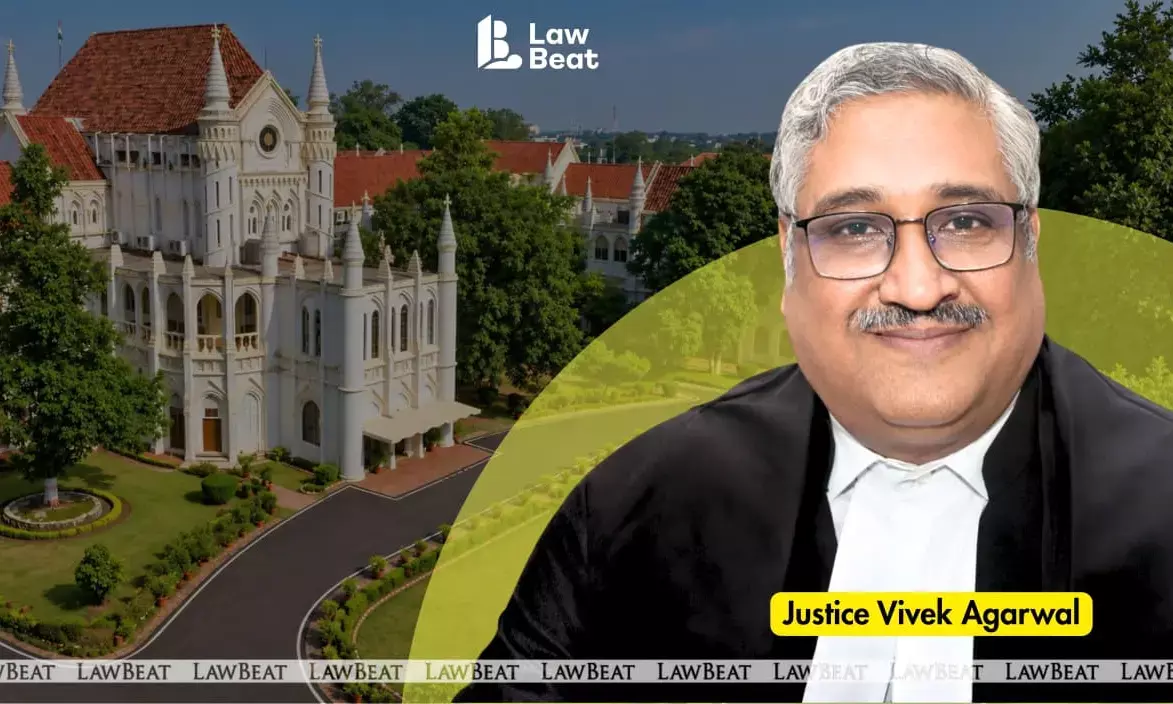
Justice Vivek Agarwal, sitting at Jabalpur, passed the order on October 7 in a writ petition filed by Rampyari Dhurve against the Chairman Managing Director and others. Advocate Ashok Kumar Chakarvarti appeared for the petitioner, while advocate Greeshm Jain represented the respondents.
Rampyari’s father, Kajju, died on October 10, 1998. She applied for compassionate appointment on August 10, 2019. The General Manager (P/IR) of Western Coalfields Limited rejected her claim on July 16, 2020, and she approached the High Court the same year.
The court noted it was an “admitted fact” that Kajju’s earlier wife, Millo Bai, had first sought the appointment for Rampyari’s husband, Bheemrao, who is Kajju’s son-in-law. When that application was turned down, Rampyari moved her own. Her earlier writ petition, numbered 3478 of 2020, was disposed of on February 17, 2020, and the rejection order now under challenge followed directly from it.
Her counsel argued that even a married daughter is entitled to compassionate appointment, so the rejection of her claim was “arbitrary and illegal”. The respondents supported the order and pointed out that Millo Bai is already being paid pension.
Justice Agarwal began with the purpose of the scheme. According to the order, it is “to provide immediate support to the family of the bereaved employee who has lost his breadwinner”. Measured against that purpose, the court found the delay fatal.
The judge relied on Supreme Court rulings on delay and laches, including Umesh Kumar Nagpal v. State of Haryana and C. Jacob v. Director of Geology and Mining. Citing Chief Commissioner, Central Excise and Customs v. Prabhat Singh, the order says delay in seeking the appointment is “an antithesis to the purpose for which compassionate appointment was conceived”.
Most heavily, the court leaned on State of Jammu and Kashmir v. Sajad Ahmad Mir. It recalled that compassionate appointment is an exception to the general rule that public employment must be open to all eligible candidates, in line with Article 14 of the Constitution. That exception is justified only by compelling circumstances, such as the death of the sole breadwinner.
Once it is proved that the family has survived and a substantial period is over, “there is no necessity to say ‘goodbye’ to the normal rule of appointment and to show favour to one at the cost of the interest of several others”, the order quotes. In Sajad Ahmad Mir, the father died in 1987, the application came in 1991 and the writ was filed in 1999.
The present case, Justice Agarwal said, was stronger still on delay. “Now, after 28 years of the bereavement in the family, if indulgence is shown, then it will be against the law laid down by Hon’ble Supreme Court,” the order states.
The respondents also relied on State of West Bengal v. Debabrata Tiwari, where it was held that a delayed claim cannot be considered for relief. With the family already compensated through family pension to the widow, the court found no ground to consider the application. “Accordingly, petition fails and is dismissed,” it concluded.
A small window remains open. Chakarvarti disputed that any pension is being paid to Millo Bai. The court clarified that if no pension is being paid to the widow, the petitioner may move an appropriate application for revival of the writ petition.
Case Title: Rampyari Dhurve vs. Chairman Managing Director and Others
Order Date: October 7, 2026
Bench: Justice Vivek Agarwal