
Compassionate Appointment Cannot Be Cancelled Years Later Without Fraud: MP HC Protects Grandson's Job
Authorities Can’t Undo Their Own Decision on Known Facts: MP High Court Restores Compassionate Job
The Madhya Pradesh High Court at Gwalior has held that a compassionate appointment, once granted after the authorities examined the relevant facts, cannot be cancelled years later when no fraud or suppression is found against the employee. The court quashed the cancellation of a grandson’s appointment as Dawasaj.
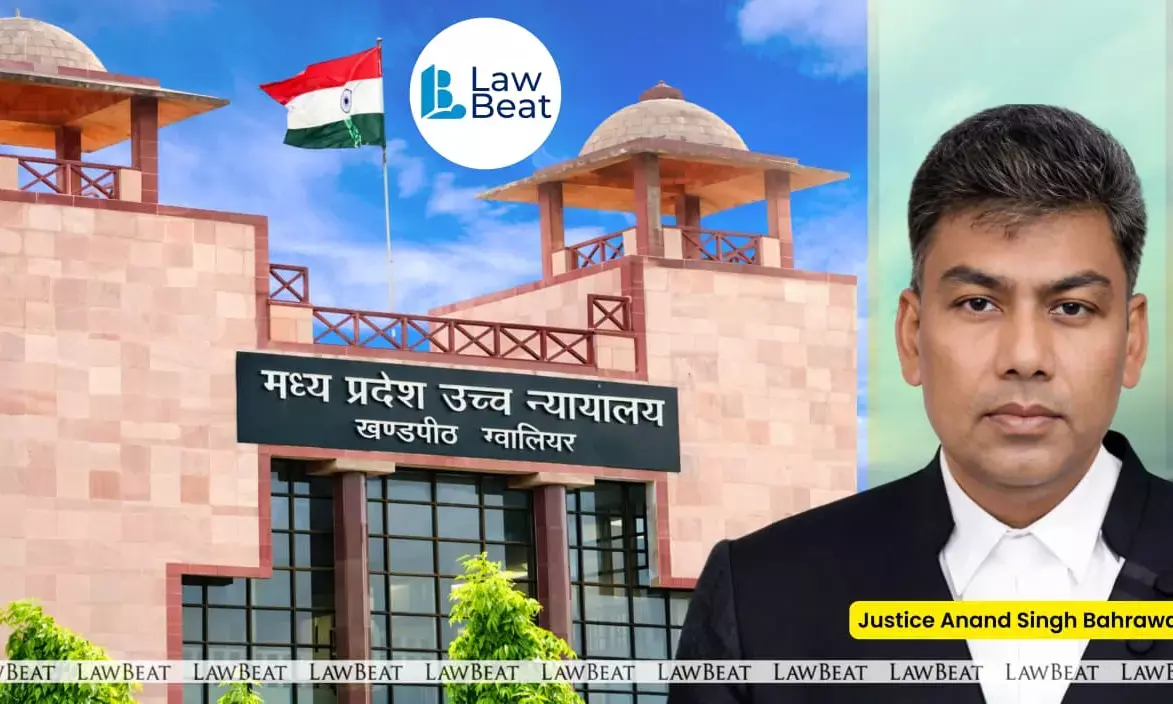
Justice Anand Singh Bahrawat, in an order pronounced on October 15, 2026, allowed Writ Petition filed by Suraj Sagar and set aside the February 18, 2019 order of the Divisional Ayush Officer (Respondent No. 3), which had cancelled his appointment.
The petitioner, who belongs to the Scheduled Caste category, lost his father in 2008, when he was 12. He, his widowed mother, two sisters and a younger brother then depended on his grandmother, Smt. Krishna Devi, a Dai at the Government Ayurved Dispensary, Mehgaon, District Bhind, who had nominated him in her service records. After she died in harness on December 6, 2015, he applied for compassionate appointment on June 9, 2016.
The Screening Committee considered his case under the State Government policy dated September 29, 2014, and recommended him. He was appointed Dawasaj on August 29, 2016, completed three years of probation and joined duty at Debhai, District Datia.
Trouble began after a complaint. A show-cause notice dated February 12, 2018 alleged that he did not fall within the definition of a dependent under Clauses 2.1 to 2.7 of the policy. He replied and was called to Bhopal to record his statement, yet his appointment was cancelled on February 18, 2019. Advocate Raj Bahadur Singh Tomar, for the petitioner, argued that no proper hearing or formal inquiry was held. The High Court stayed the cancellation on March 8, 2019.
Government Advocate K.K. Prajapati argued for the State that the petitioner, as the son of the deceased employee’s widowed daughter, fell in none of the eligible categories. Advocates Arshad Ali M. Haque and Amin Khan appeared for the intervener, the deceased employee’s daughter, who alleged suppression of material facts and pointed to a pending succession suit at Dabra.
The court accepted that compassionate appointment is an exception to normal recruitment and cannot be claimed against the governing policy. But it said the case had to be examined on its own facts, observing that “the petitioner did not conceal his relationship with the deceased employee.”
Justice Bahrawat noted that “there is no finding in the impugned order that the petitioner obtained the appointment by producing a false document, practising fraud or deliberately suppressing any material fact.” The dispute, he said, concerned the correctness of the authorities’ decision at the time of appointment, not any later misconduct.
Relying on the Supreme Court’s ruling in Md. Zamil Ahmed v. State of Bihar, the court held that the authorities could not seek to undo their own decision on facts already known to them. It also cited Union of India v. K.P. Tiwari and its own September 2025 decision in Surendra Singh v. State of M.P.
The bench was candid about the limits of its ruling, observing that nomination and dependency “cannot, by themselves, override an express eligibility condition under the policy.” It added, “The Court is not holding that every grandson is entitled to compassionate appointment.”
On the intervener’s objection, the court said she was free to raise any grievance in accordance with law, but the petition was “not a proceeding to decide succession to the estate or retiral dues of the deceased employee.” It found no material showing she was dependent on her mother.
Quashing the February 18, 2019 order, the court directed the respondents to let him continue as Dawasaj, merged the interim order with the final order, and treated his service as continuous from August 29, 2016 for all service purposes. The competent authority must also release admissible consequential benefits in accordance with law. No order as to costs was made.
Case Title: Suraj Sagar vs. The State of Madhya Pradesh and Others
Order Date: October 15, 2026
Bench: Justice Anand Singh Bahrawat