
Compassionate Appointment Claim Cannot Be Rejected Only On Older Circular: MP High Court
Authorities Must Examine 2016 Circular Before Denying Compassionate Appointment to Work-Charged Employees’ Dependants: MP High Court
The Madhya Pradesh High Court at Jabalpur has set aside an order rejecting a compassionate appointment claim made by the son of a deceased work-charged/contingency employee, holding that such a claim cannot be turned down by relying only on an older government circular without examining a later one on the same subject.
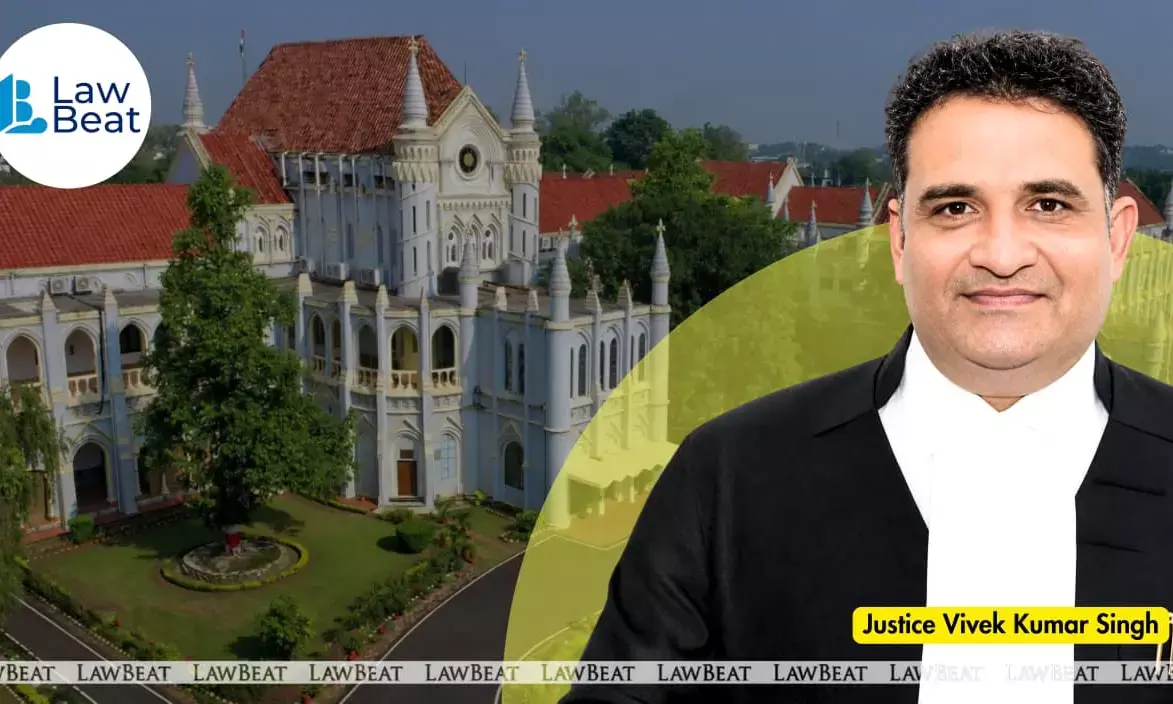
Justice Vivek Kumar Singh, while partly allowing the writ petition filed by Deepchand Patel, sent the matter back to the competent authority for fresh consideration within four months.
The petition, filed under Article 226 of the Constitution, challenged an order dated May 17, 2023, passed by respondent No. 4. That order had rejected the claim on the ground that no provision exists for compassionate appointment of dependants of deceased work-charged or contingency employees.
The petitioner’s father, late Girdhari Lal Patel, died in harness on June 15, 2022. The petitioner first approached the High Court through W.P. No. 1216/2023, which was disposed of on March 27, 2023, with a direction to decide his pending representation by passing a speaking order in accordance with the applicable State policy.
Pursuant to that direction, the authorities recorded that dependants of such employees are not entitled to compassionate appointment in view of a General Administration Department circular dated September 29, 2014. The claim was rejected the next day, primarily because the applicable policy provided for a compassionate grant instead of an appointment.
Appearing for the petitioner, advocates Manan Agrawal and Shubham Mishra argued that the order ignored a subsequent circular dated August 31, 2016, which, they said, provides for consideration of compassionate appointment for such dependants, subject to the conditions of the applicable scheme. They relied on a coordinate Bench order dated January 20, 2025 in W.P. No. 3849/2020 (Rahul Kewat vs State of Madhya Pradesh and others), which quashed a similar rejection and remanded the matter.
Opposing the plea, Panel Lawyer T.K. Khadka, appearing for the State, submitted that clause 11.1 of the 2014 circular excludes such dependants. He added that under the 2016 circular the family is entitled to a compassionate grant of Rs 2,00,000, and that the petitioner’s mother was informed about the payable benefits but refused to collect them.
The Court framed the central question as whether the claim was examined by the competent authority “with due regard to the subsequent circular dated 31.08.2016”. It noted that the coordinate Bench in Rahul Kewat, after considering Supreme Court rulings including N.C. Santhosh v. State of Karnataka and State of Himachal Pradesh v. Abhishek Kumar, had reiterated that such a claim must be considered in accordance with the applicable policy.
Turning to the facts, the Court observed that the impugned order rested primarily on the 2014 circular. It made its position clear: “The claim cannot be adjudicated merely by referring to the exclusionary provision contained in the circular dated 29.09.2014, without examining the subsequent instructions vide circular dated 31.08.2016, their applicability to the concerned establishment, and the eligibility of the claimant under the governing policy.”
The 2016 circular must be examined in light of the nature of the deceased employee’s service, the establishment where he worked and the conditions governing compassionate appointment.
At the same time, the Court was careful not to decide the merits, stating: “This Court refrains from expressing any opinion on the ultimate entitlement of the petitioner to compassionate appointment.”
Accordingly, the Court set aside the May 17, 2023 order and remanded the matter to respondent No. 2 to reconsider the claim afresh in accordance with law and in light of the January 20, 2025 order. Respondent No. 2 must pass a “fresh, reasoned and speaking order” within four months from receipt of a certified copy of the order and communicate the outcome to the petitioner.
For families of work-charged and contingency employees, the ruling is a timely reminder that a blanket reference to an older exclusion cannot substitute for a proper look at the policy that followed.
Case Title: Deepchand Patel vs. The State of Madhya Pradesh and Others
Order Date: October 28, 2026
Bench: Justice Vivek Kumar Singh