
Court Cannot Act As A "Post Office" For Prosecution: MP HC Affirms Discharge In Kidnapping And POCSO Case
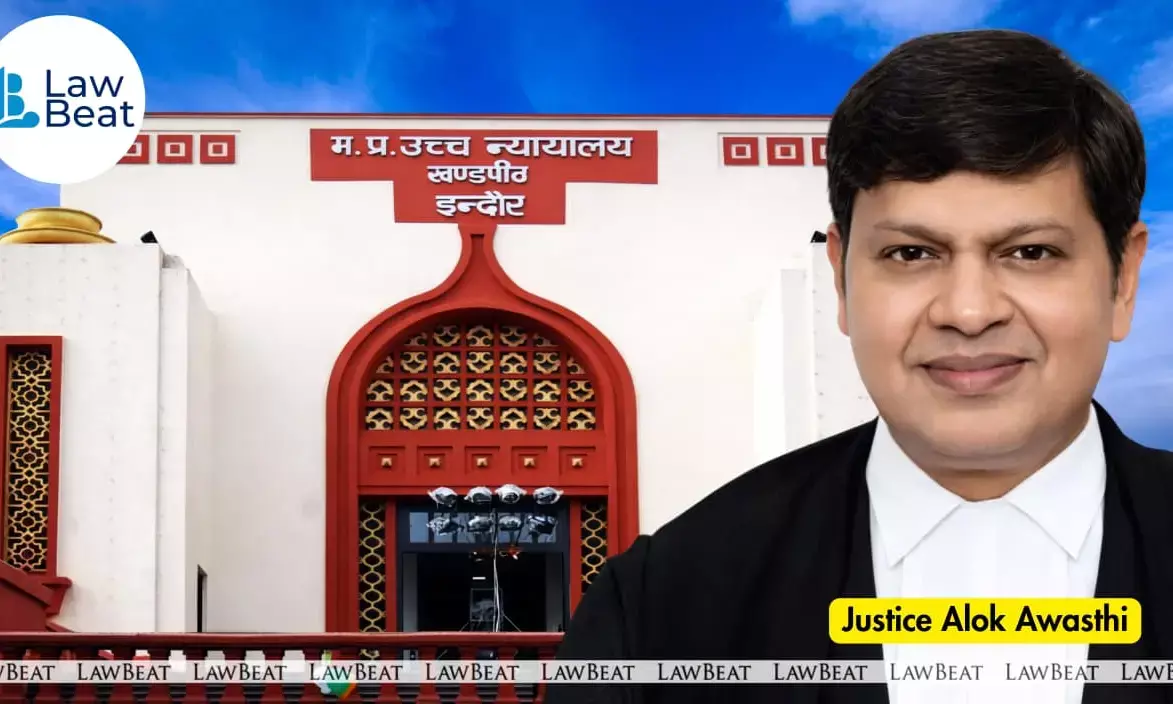
No Material to Frame Charges: MP High Court Refuses to Disturb 2016 Discharge Order
The Madhya Pradesh High Court at Indore has upheld the discharge of a man accused of kidnapping a minor girl and sexually assaulting her, holding that nothing showed she was taken or enticed away and that no sexual assault was alleged.
Justice Alok Awasthi dismissed the State's appeal against a 23 September 2016 order of the Special Judge (SC & ST Prevention of Atrocities Act), Dhar, which discharged the accused, Iqbal, of offences under Section 363 of the Indian Penal Code, Sections 7 and 8 of the POCSO Act, 2012, and Section 3(ii-v) of the SC & ST Act.
The case began on 25 September 2015, when the girl's mother lodged an FIR after finding her daughter, then about 17 years and five months old, missing from home. Iqbal was arrested on 2 July 2016, and a charge sheet followed.
Deputy Advocate General Kushal Goyal, for the State, argued that the trial court had not appreciated the evidence or examined the girl's age. Relying on her mark-sheet, which records her date of birth as 23 April 1998, he said she was a minor at the time. He also pointed to her Section 164 CrPC statement, in which she said she went with Iqbal on his bike on the day of Eid.
Advocate Asif Ahmed Khan, for Iqbal, countered that no material evidence made out any offence.
Reiterating the settled position on framing of charges, the Court said that it "cannot act merely as a post office or a mouthpiece of the prosecution", but should not weigh evidence as if conducting a trial. Citing the Supreme Court's rulings in Shashikant Sharma v. State of Uttar Pradesh and Suresh @ Pappu Bhudharmal Kalani v. State of Maharashtra, it noted that a charge need not be framed where the prosecution's own documents do not disclose the necessary ingredients of an offence. Where the material "does not disclose the basic ingredients of the alleged offence", it said, continuing proceedings "would not be justified".
On the facts, the Court noted that the girl told the police she was annoyed because her parents objected to her talking to Iqbal, a college friend. She went near Labariya Dam on her own and returned around 8 pm, stating that nobody had kidnapped her or done any wrong to her. Her later statement before the Magistrate differed in parts, but she maintained that Iqbal did not take her by force and that she went willingly.
The Court also found that none of the witnesses examined by the Investigating Officer had "personal or direct knowledge of the alleged occurrence". The mother did not claim to have witnessed the incident, and the girl was never medically examined.
On the kidnapping charge, the Court held that the girl "left home completely uninfluenced by any promise and inducement emanating from the respondent". Read with her family's statements, she was "neither taken nor enticed by the respondent to go with him". Section 363 IPC was therefore not made out even if the investigating agency's material was taken as true.
On sexual assault, the Court noted that the girl had said nothing about it and no scientific evidence had been collected. Without testimony or forensic material, the POCSO offence was also not made out.
The SC & ST Act charge requires an allegation that an accused who is not a member of a Scheduled Caste or Scheduled Tribe committed an IPC offence punishable with ten years or more against a member of those communities, knowing the person's community. The Court found no such allegation.
Summing up, the Court said "there is absolutely no evidence on record to show that the respondent has either kidnapped the prosecutrix or he has committed sexual assault upon her". The material, it added, did not raise "any grave suspicion about the involvement of the respondent in the alleged occurrence".
Dismissing the appeal as "sans merit", the Court affirmed the order.
Case Title: State of Madhya Pradesh vs. Iqbal
Judgment Date: September 29, 2026
Bench: Justice Alok Awasthi