
Criminal Prosecution No Bar to Preventive Detention Under PSA: J&K and Ladakh HC
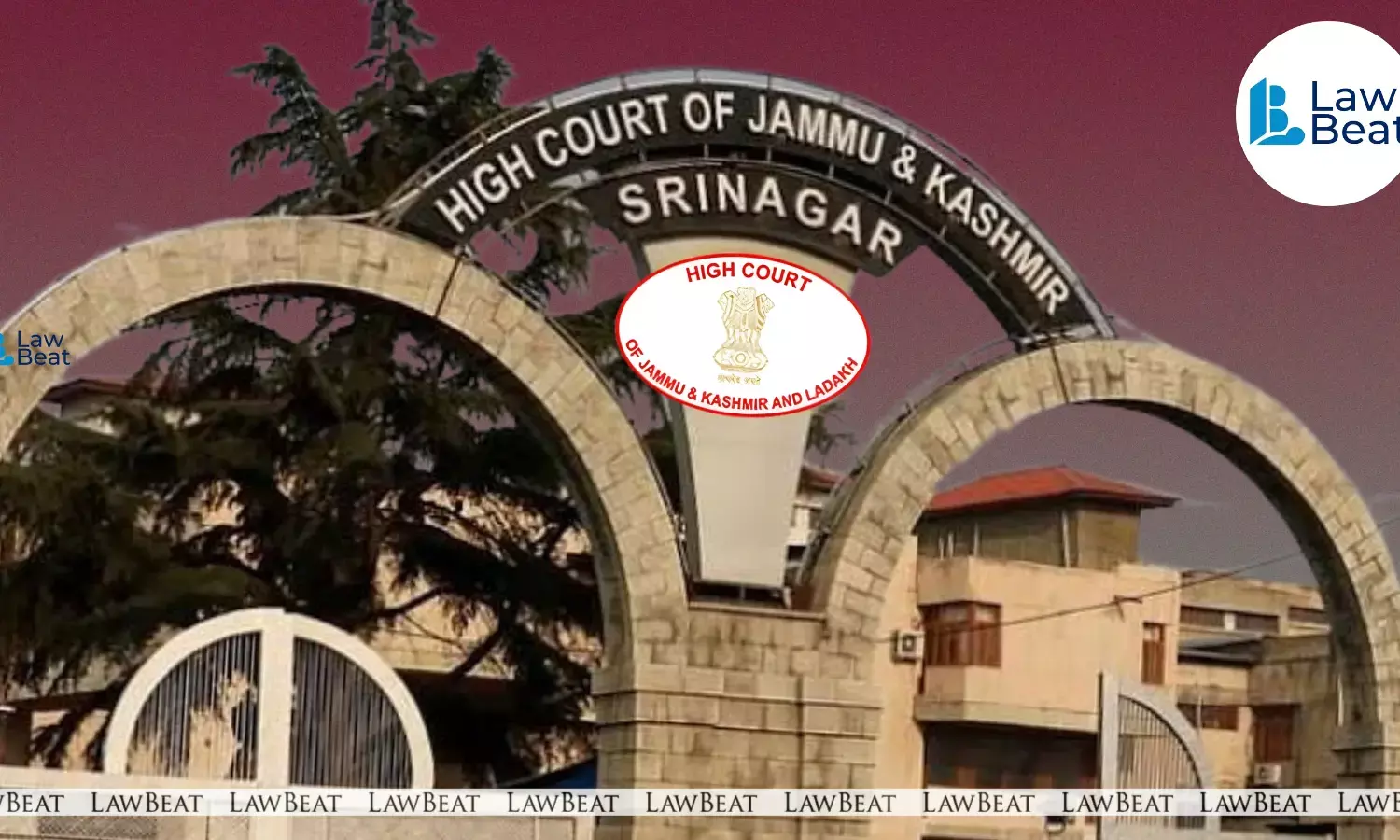
J&K and Ladakh High Court upholds preventive detention under Public Safety Act, holding that pendency of criminal cases or grant of bail does not bar preventive detention.
The High Court of Jammu & Kashmir and Ladakh has upheld the preventive detention of a man under the Jammu and Kashmir Public Safety Act, 1978, observing that pendency of criminal proceedings or grant of bail does not bar authorities from invoking preventive detention laws where past conduct indicates a reasonable apprehension of continued activities prejudicial to public order.
The Court emphasised that preventive detention is a precautionary measure aimed at preventing future harmful conduct and operates independently of criminal prosecution.
A single judge bench of Justice Rajesh Sekhri dismissed the habeas corpus petition challenging a detention order issued by the District Magistrate, Samba under Section 8 of the Public Safety Act, 1978.
"... it is trite that high Court has a very limited scope to examine the grounds of detention and the sufficiency of material, relied by the detaining authority, in exercise of its writ jurisdiction. The high Court cannot sit in appeal and find fault with the subjective satisfaction derived by the detaining authority or substitute its own opinion when the grounds of detention are found precise, pertinent and proximate", the court observed.
The detention order dated 29.05.2025 had been issued on the basis of a dossier submitted by the Senior Superintendent of Police, Samba, alleging that the petitioner was involved in repeated criminal activities and posed a threat to public order.
According to the authorities, the petitioner had been implicated in five criminal cases registered between 2021 and 2025 involving offences under provisions relating to violation of prohibitory orders, cruelty to animals, damage to public property and provisions governing animal transport.
The detaining authority recorded that the petitioner was a habitual bovine smuggler whose activities had the potential to disturb communal harmony and public tranquillity by hurting religious sentiments of a community.
The authority also expressed apprehension that the petitioner had developed a network encouraging others to participate in organised bovine smuggling, which could escalate tensions and disrupt public order.
On the basis of this material, the District Magistrate arrived at a subjective satisfaction that preventive detention was necessary to prevent the petitioner from indulging in similar activities in future.
The petitioner challenged the detention order on several grounds; It was contended that the detention order was illegal, that the grounds of detention were not properly communicated to him in a language he understood, and that all relevant documents including the dossier were not supplied to him, thereby depriving him of an effective opportunity to make a representation against the detention.
The petitioner also argued that the criminal cases relied upon in the detention order were based on false allegations and were already pending trial before competent courts.
It was further submitted that the petitioner had been granted bail in some of the cases and had complied with the conditions imposed by the courts.
According to the petitioner, invoking preventive detention despite the pendency of criminal proceedings amounted to misuse of the extraordinary powers under the Public Safety Act and violated the constitutional guarantees under Articles 21 and 22 of the Constitution.
Opposing the petition, the Union Territory authorities maintained that the detention order had been issued strictly in accordance with the provisions of the Public Safety Act.
The respondents submitted that the petitioner had been provided with all relevant documents, including the detention order, grounds of detention and supporting material comprising about fifty pages, and that these documents had been read over and explained to him in a language he understood.
They also stated that the petitioner had been informed of his right to make a representation against the detention.
Upon examining the detention record, the Court observed that the material on record supported the respondents’ claim that the detenue had been supplied with all relevant documents and that the grounds of detention had been explained to him.
The Court noted that the petitioner had not filed any rejoinder to refute these assertions, and therefore the stand taken by the respondents remained unrebutted.
Addressing the argument that preventive detention could not be invoked when criminal cases were already pending, the Court reiterated the settled legal position that preventive detention and criminal prosecution operate in different spheres.
The Court relied on the Top Court's decision in Haradhan Saha v. State of West Bengal, which clarified that preventive detention is a precautionary measure based on a reasonable prognosis of future conduct and may be ordered even before, during or after criminal prosecution.
The Court also noted that out of the five criminal cases cited in the detention dossier, the petitioner had already confessed guilt in three cases and had been convicted and fined by the competent courts.
This, according to the Court, undermined the petitioner’s contention that the cases were false or frivolous.
Referring to precedents including Naresh Kumar Goyal v. Union of India, the Court reiterated that the purpose of preventive detention is not punitive but preventive, intended to protect society by preventing individuals from engaging in activities prejudicial to public order or security.
The Court observed that past conduct of a person serves as material for drawing an inference regarding the likelihood of future behaviour.
Finding that the detention order had been issued after due consideration and that statutory and constitutional safeguards had been complied with, the Court held that there was no ground to interfere with the order. Accordingly, the habeas corpus petition was dismissed and the preventive detention order was upheld.
Case Title: Shabir Shah v. Union Territory of Jammu & Kashmir & Ors.
Bench: Justice Rajesh Sekhri
Date of Judgment: 06.03.2026