
Custodial Death Not Part Of Official Duty, No Sanction Needed To Prosecute Cops: MP High Court
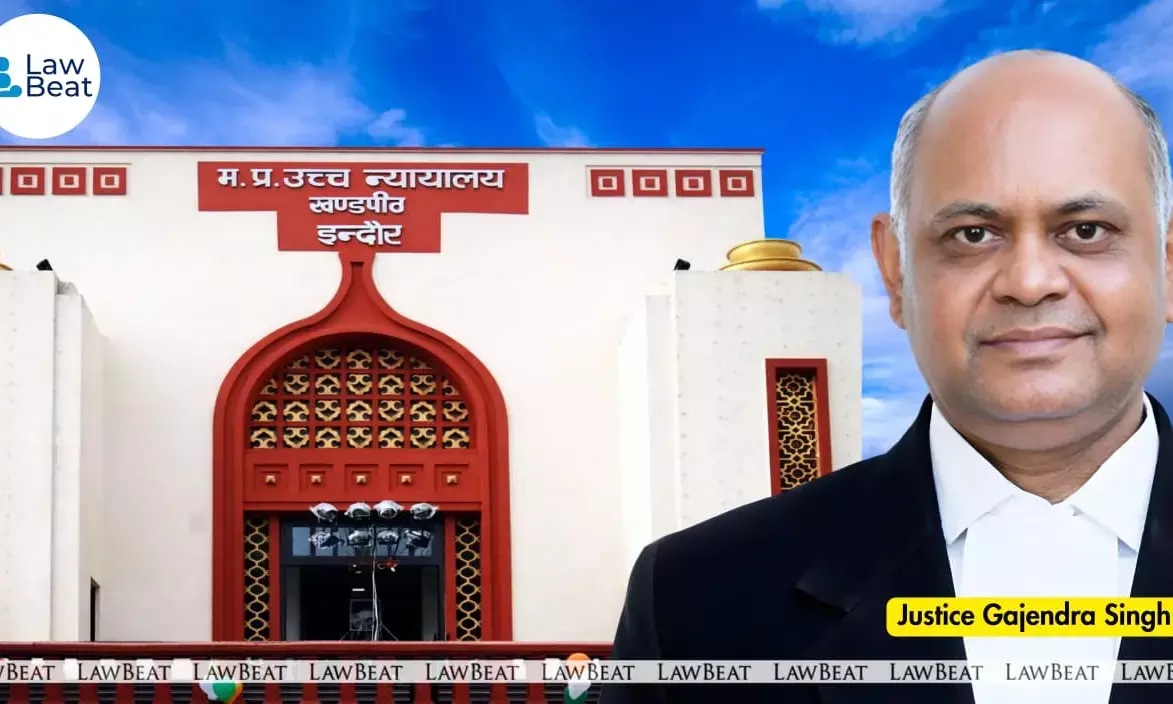
Custodial Violence Cannot Be Shielded as Official Duty, Rules MP High Court
The Madhya Pradesh High Court has refused to grant statutory protection to two police constables accused in the custodial death of a young court employee, holding that allegations of custodial violence and efforts to conceal the incident cannot be treated as acts performed in discharge of official duty.
Justice Gajendra Singh dismissed a criminal revision petition filed by Rajkumar Dwivedi and Others, who had challenged a trial court order rejecting their plea for protection under Section 197 of the Code of Criminal Procedure, now reflected in Section 218 of the Bharatiya Nagarik Suraksha Sanhita. The provision requires prior government sanction before prosecuting public servants for acts done while discharging official duties.
The case relates to the death of 24-year-old Pankaj Vaishnav, a Class-IV employee working under the District Court establishment at Indore. According to the prosecution, Vaishnav was brought to Police Station MIG, Indore, on December 19, 2015, for questioning in connection with a scooter theft case. He died later that night while in police custody.
An inquiry conducted by the Additional Chief Judicial Magistrate under Section 176 CrPC concluded that the death was a culpable homicide. Following investigation by the CID, a charge sheet was filed against the two constables and the then Station House Officer, Inspector M.A. Syed, for offences including abetment of suicide, wrongful confinement and fabrication of records.
Before the High Court, the policemen argued that the allegations arose out of actions performed during investigation and therefore had a direct connection with official functions. They contended that even if there were procedural irregularities or excesses, prosecution could not proceed without prior sanction from the government. Reliance was placed on several Supreme Court judgments recognising protection for public servants where there is a reasonable nexus between the act complained of and official duty.
The State opposed the plea, arguing that the allegations involved illegal detention, assault and concealment of facts, none of which could be considered part of lawful police functions.
Examining the record, the Court noted that the trial court had found no station diary entry regarding Vaishnav's detention and that he was allegedly subjected to physical assault while in custody. The Court also referred to the medical opinion of AIIMS Bhopal, which recorded an antemortem injury in the scrotal region.
The investigation report further alleged that Vaishnav's clothes were removed, he was beaten and harassed during questioning, and his family members were not informed about his detention. It also accused the officers of making false entries and attempting to suppress the incident after the death.
While acknowledging Supreme Court precedents that extend protection even to acts performed in purported discharge of duty, Justice Singh emphasised that the decisive test is whether there exists a reasonable nexus between the alleged act and official functions.
Applying that principle, the Court found that the present case stood on a different footing. It observed that this was not a situation where police officers were controlling a violent crowd or using force during lawful operations. Instead, the allegations concerned violence against a person already in police custody.
"There was no occasion to exercise the use of force or physical assault followed by various acts to cover up the incident," the Court said.
Describing custodial violence as one of the gravest violations of human rights, the Court relied on Supreme Court observations condemning deaths in police custody. Quoting earlier precedent, it reiterated that "death in police custody is perhaps one of the worst kinds of crime in a civilized society governed by the rule of law."
Holding that the "reasonable nexus" test was not satisfied, the High Court concluded that the accused officials could not seek the protection of prior sanction. It accordingly upheld the trial court's order and dismissed the revision petition.
Case Title: Rajkumar Dwivedi and Others v. The State of Madhya Pradesh and Others
Date of Order: June 16, 2026
Bench: Justice Gajendra Singh