
“Daylight Judicial Murder”: Allahabad High Court Orders Action Against Civil Judge
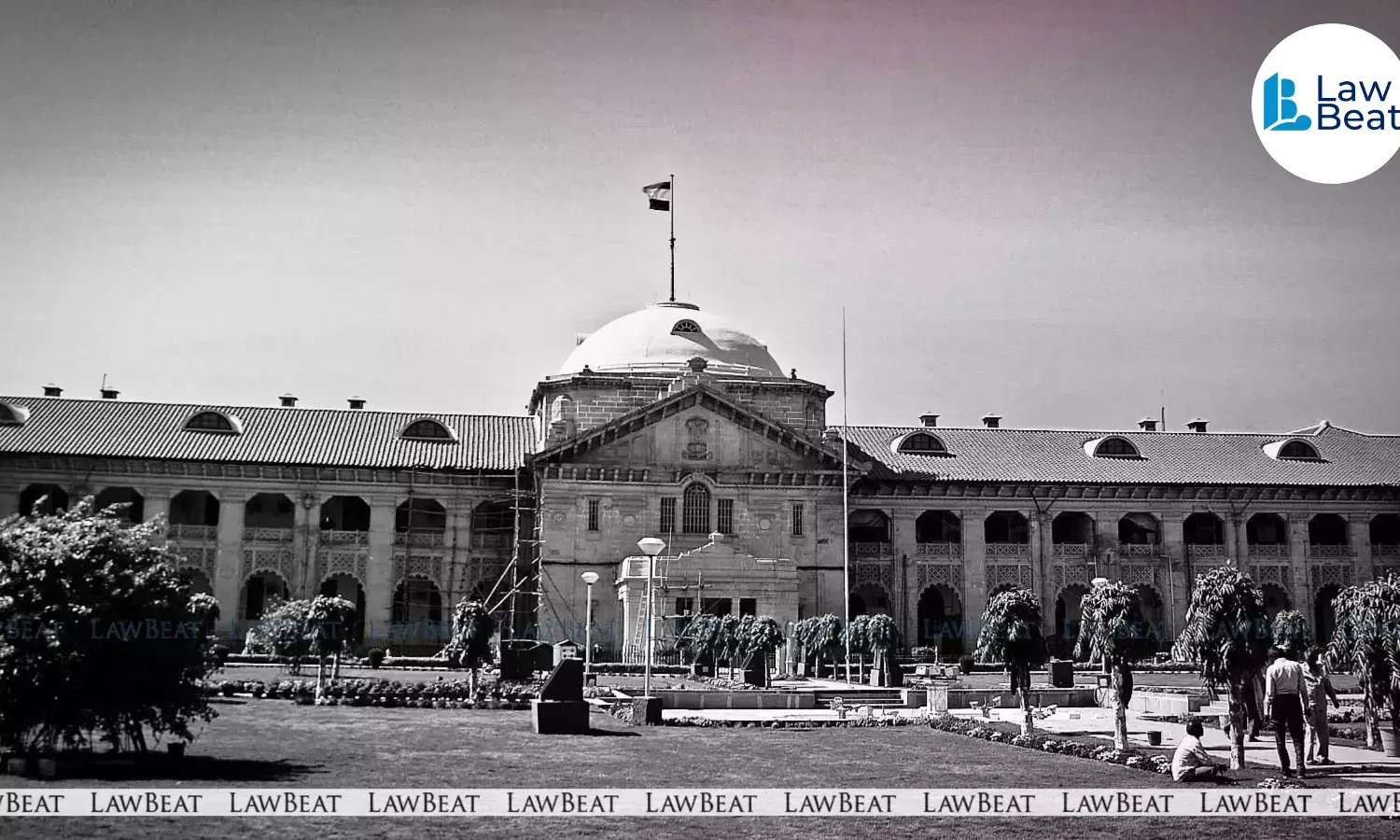
The Allahabad High Court set aside a Ghaziabad trial court decree, terming it a case of “deliberate judicial misconduct” and directing administrative scrutiny of the judicial officer
Calling it a case of “daylight judicial murder”, the Allahabad High Court recently delivered one of its strongest indictments against a subordinate judicial officer, holding that the trial court’s decree was not merely erroneous but the result of “deliberate judicial misconduct” that “shocked the conscience” of the court.
In a judgment delivered on February 24, 2026, the bench of Justice Sandeep Jain allowed a first appeal filed by Nagar Nigam Ghaziabad and set aside a decree dated May 13, 2025, passed by the then Civil Judge (Senior Division), Ghaziabad, Jasveer Singh Yadav, who had directed the municipal body to mutate property in favour of one Indra Mohan Sachdev.
The high court further directed that the file be placed before the Chief Justice for administrative action against the trial judge, observing that the conduct of the judge was “not above board” and appeared to be “tainted with extraneous considerations".
The dispute pertained to a suit filed by Sachdev seeking a mandatory injunction directing Nagar Nigam to enter his name as owner of an industrial plot at Anand Industrial Estate, Ghaziabad. His claim was founded on an ex parte decree dated May 31, 2022, passed in an earlier suit in which he had been declared owner by adverse possession against one Sushila Mehra.
Before the high court, it was admitted that Sushila Mehra had died on April 2, 1996, long before the institution of the 2019 suit that culminated in the 2022 decree. The municipal authorities had relied on her death certificate and related court records to contend that the decree was passed against a dead person and was therefore a nullity.
Justice Jain held that a decree passed against a dead person is void and confers no right, title or interest. He relied primarily on Vikram Bhalchandra Ghongade v. State of Maharashtra & Ors., 2025 SCC OnLine SC 2360, where the Supreme Court held that a decree passed in favour of or against persons who had died before adjudication is a nullity and has no force of law, and on Ashok Transport Agency v. Awadhesh Kumar, (1998) 5 SCC 567, which held that a suit instituted against a dead person and a decree passed therein is void and incapable of execution. Drawing from these rulings, and the settled principle in Kiran Singh v. Chaman Paswan (1954) that a null decree can be challenged whenever and wherever it is sought to be enforced, the high court held that such a decree confers no right, title, or interest and does not operate as res judicata.
The high court found that the trial court had “blindly relied” on the 2022 decree while ignoring the legal consequences of it having been passed against a deceased defendant. It further held that merely paying house tax or being recorded in municipal records does not confer ownership, reiterating that mutation entries are only for fiscal purposes.
Court also rejected the plaintiff’s adverse possession claim, noting that his own evidence established that his father had entered the property as a tenant. A tenant, court observed, cannot deny the landlord’s title and claim ownership by adverse possession without first surrendering possession.
Significantly, the high court was scathing in its assessment of the trial judge’s approach to evidence. The death certificate of Sushila Mehra had been rejected by the trial court on the ground that it was a photocopy. The high court termed this reasoning “shocking” and “perverse”, pointing out that certified copies of such documents are routinely relied upon in judicial proceedings.
Court stated that the trial court appeared to have ignored material evidence “purposely in order to cause illegal gain to the plaintiff”. It described the episode as involving “blatant” flouting of law and denial of justice.
Allowing the appeal, the high court set aside the decree dated May 13, 2025, and dismissed the original suit with costs throughout. In an unusual step, it directed that the matter be placed before the Chief Justice on the administrative side for appropriate action against the then Civil Judge (Senior Division), Ghaziabad.
Case Title: Nagar Nigam Ghaziabad And Another vs. Indra Mohan Sachdev
Order Date: February 24, 2026
Bench: Sandeep Jain