
Death During Leave No Bar to Compensation: Bombay HC Upholds Seafarer’s Daughter’s Claim
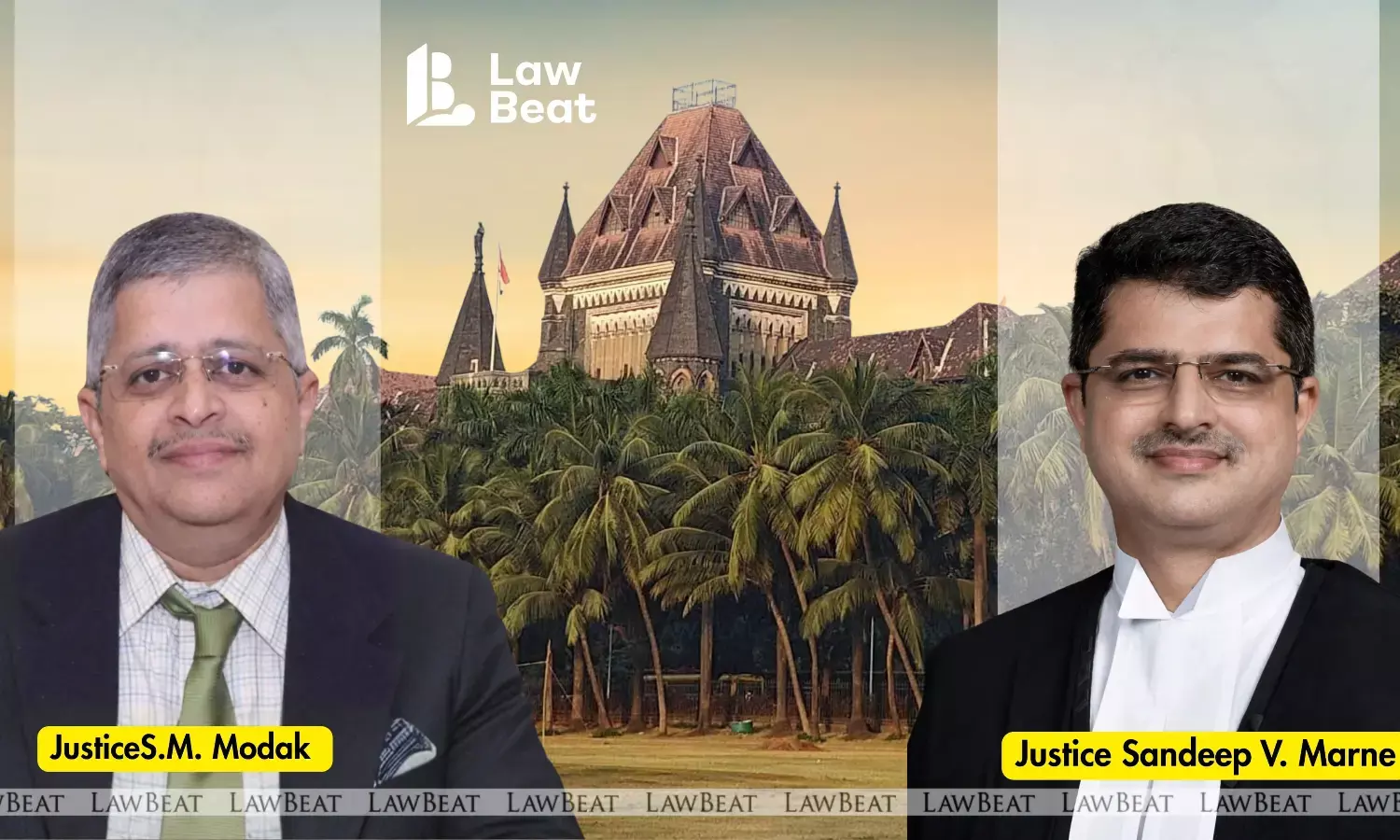
Bombay High Court directs shipping company to pay long-pending death compensation to deceased captain’s daughter
The Bombay High Court has held that the mere fact that a seafarer died while on earned leave cannot be used to deny death compensation to his legal heirs, particularly where the employment contract contemplates such payment.
Emphasising substance over technical objections, the Court refused to interfere with an appellate order directing payment of compensation to the daughter of a deceased ship captain, who had been waiting for over a decade to receive her dues.
A Division Bench of Justices S.M. Modak and Sandeep V. Marne dismissed the writ petition filed by Teekay Shipping (India) Pvt. Ltd. and upheld the order dated 28.07.2017 passed by the first Appellate Authority.
The Court directed the petitioner company to pay the awarded compensation to the deceased captain’s daughter within eight weeks, along with simple interest at 6% per annum from 28.07.2017 until realisation.
The case arose from a prolonged dispute concerning the death compensation claim of the daughter of late Captain Baldev Singh Dhinsa, who passed away on 13.11.2012 while on earned leave after serving for over 23 years.
His wife had predeceased him in 2008, leaving behind two children. While the company settled other dues, it denied the claim for death compensation amounting to USD 2,46,780, contending that the contract did not provide for such payment in cases where death occurred during leave.
The daughter approached the Directorate General of Shipping, and the matter was adjudicated by the Seamen’s Employment Office. Though her claim was initially rejected, the first Appellate Authority allowed her appeal in 2017 and directed payment of compensation in terms of the employment contract.
The company challenged this order before the High Court.
Before the Court, the petitioner raised multiple jurisdictional objections, including the applicability of the Merchant Shipping Act, 1958 to the vessel and employment in question, the alleged lack of adjudicatory powers with the Seamen’s Employment Office, and the contention that a “Master” does not fall within the definition of a “seaman.”
It was also argued that the writ petition was maintainable despite the availability of an alternate remedy due to these jurisdictional defects.
Opposing the petition, the Union of India argued that the petition was not maintainable in light of the alternate remedy under Rule 19(3) of the Merchant Shipping (Recruitment and Placement of Seafarers) Rules, 2016.
It was further submitted that the petitioner had participated in the proceedings before both authorities without raising jurisdictional objections and was therefore estopped from doing so at a later stage.
The High Court agreed with the respondents and found that the petitioner had failed to raise most of its jurisdictional objections either before the adjudicating authorities or in its pleadings.
The Court noted that objections relating to jurisdiction cannot be casually introduced during oral arguments without proper pleadings, as it would prejudice the opposing party.
On the issue of whether a “Master” falls within the scope of a “seaman,” the Court examined Section 3(42) and Section 148 of the Merchant Shipping Act and held that for certain purposes, including recovery of dues, a Master is treated akin to a seaman. The Court thus rejected the contention that the authorities lacked jurisdiction to adjudicate the claim.
Importantly, the Court also exercised its discretion under Article 226 of the Constitution to decline interference, observing that the writ jurisdiction is both extraordinary and discretionary.
It held that the petition was filed primarily to delay and avoid payment of legitimate compensation and that entertaining such challenges would defeat the ends of justice.
On merits, the Court found no infirmity in the appellate authority’s reasoning. It noted that the employment contract specifically provided for payment of compensation even in cases of illness or death occurring during earned leave.
The Court rejected the petitioner’s argument that absence of a causal link between employment and death disentitled the claimant, holding that the contractual terms clearly covered such situations.
The Court also took note of a similar instance involving another captain, where the petitioner had paid compensation despite death occurring before resumption of duties, thereby undermining its own stance.
It observed that the petitioner appeared to be selectively contesting claims and creating obstacles to avoid liability.
Highlighting the prolonged delay, the Court remarked that nearly 14 years had passed since the death of the captain and that the petitioner had failed to comply with the appellate order for over nine years without any stay.
It termed the case as one where the legal heirs had been forced into prolonged litigation despite a clear entitlement.
Concluding that the petition lacked merit, the Court dismissed it and directed compliance with the appellate order within a fixed timeline, along with interest.
Counsel for the Petitioner: Ms. Fereshte Sethna, with Mr. Prakalathan Bathey, i/b M/s. DMD; Counsel for the Respondents (Union of India & Ors.): Mr. Ashish Mehta, with Mr. Raj Dani and Mr. Yash Kataria, i/b M/s. Ethos Legal Alliance
Case Title: Teekay Shipping (India) Private Limited v. Union of India & Ors.
Bench: Justices S.M. Modak and Sandeep V. Marne
Date of Judgment: 24.03.2026