
Delhi Excise Policy: Court Discharges Arvind Kejriwal, Sisodia And Others In CBI Case
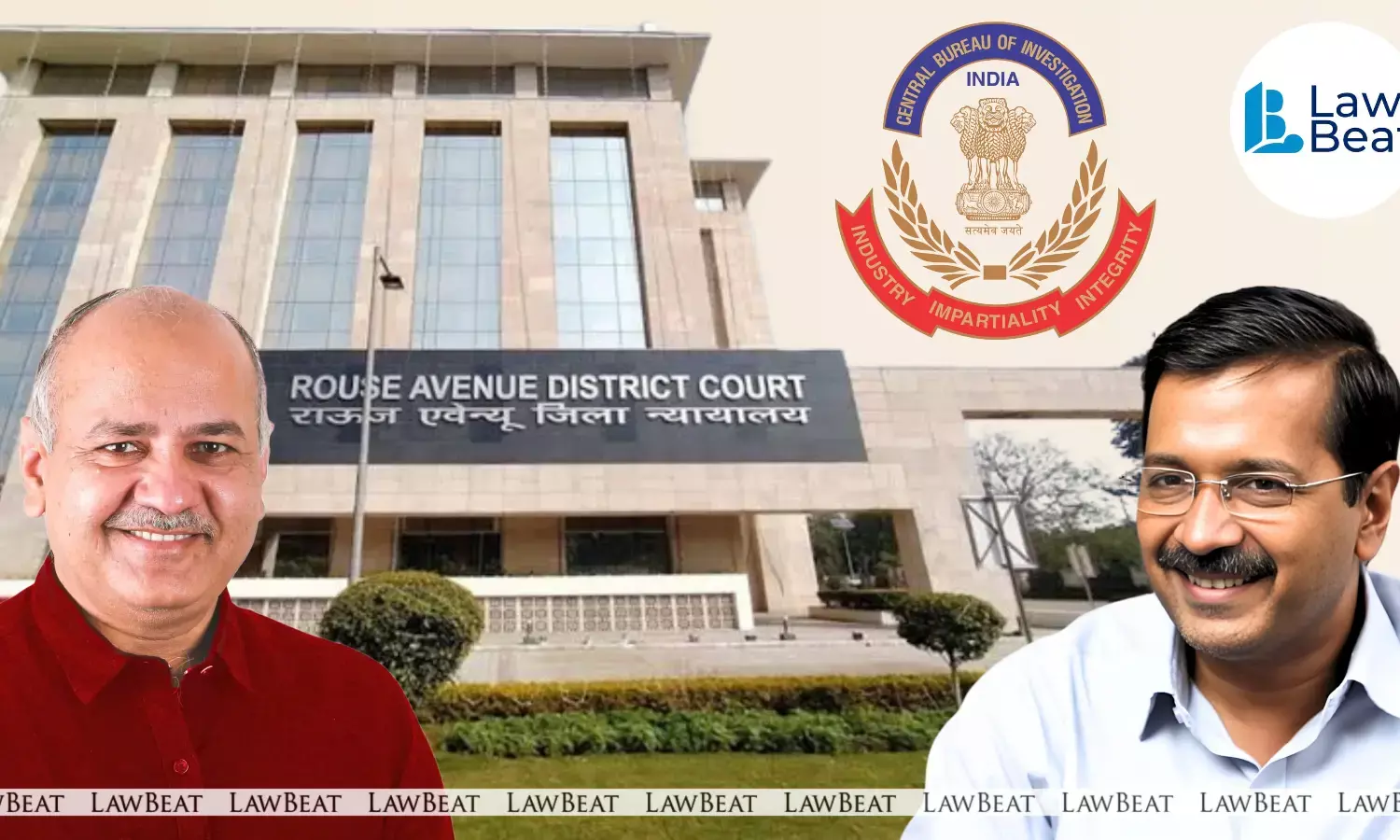
Rouse Avenue Court discharges Arvind Kejriwal, Manish Sisodia and 21 others in the alleged Delhi excise policy corruption case
A Delhi court on Friday discharged former Chief Minister Arvind Kejriwal and Aam Aadmi Party leader Manish Sisodia, holding that the Central Bureau of Investigation (CBI) failed to make out a prima facie case against them.
The order was passed by Special Judge Jitender Singh at the Rouse Avenue Courts, who refused to frame charges against any of the 23 accused persons in the matter and discharged them all.
In a detailed order, the court criticised the investigation conducted by the CBI, observing that the agency had implicated the accused without sufficient material. The judge noted that the voluminous chargesheet contained several lacunae and was not supported by witness statements or substantive evidence.
With respect to Sisodia, the court held that the CBI had failed to establish a prima facie case warranting the framing of charges. As regards Kejriwal, the judge observed that he had been implicated without any cogent material on record.
The case pertains to alleged irregularities in the formulation and implementation of the now-scrapped Delhi excise policy, which the CBI had claimed resulted in undue benefits to certain entities. The agency had filed a comprehensive chargesheet naming multiple accused, including political functionaries and other individuals.
However, upon consideration of the material placed before it, the court concluded that the prosecution had not met the threshold required for proceeding to trial. Consequently, it declined to frame charges and discharged all 23 accused.
All the 23 accused include: Kuldeep Singh, Narender Singh, Vijay Nair, Abhishek Boinpally, Arun Ramchandra Pillai, Mootha Goutam, Sameer Mahendru, Manish Sisodia, Amandeep Singh Dhall, Arjun Pandey, Butchibabu Gorantla, Rajesh Joshi, Damodar Prasad Sharma, Prince Kumar, Arvind Kumar Singh, Chanpreet Singh Rayat, Kavitha Kalvakuntal @ K. Kavitha, Arvind Kejriwal, Durgesh Pathak, Amit Arora, Vinod Chauhan, Ashish Chand Mathur, and Sarath Chandra Reddy.
Notably, in May 2025, the court had directed the Central Bureau of Investigation (CBI) to provide a detailed list of all notices, summons, and written communications issued in the Delhi Excise Policy case, along with any responses received, to be included either in the list of relied-upon documents or unrelied documents (URDs). Special Judge (PC Act) Dig Vinay Singh had ruled on May 22 that if the CBI does not intend to rely on these documents during trial, they must be included in the URD list, which shall be made available for inspection by the accused.
The Judge had also directed the Investigating Officer (IO) to file an affidavit confirming that no such document has been omitted. Additionally, the IO must clarify through a separate affidavit whether any search and seizure memos have been excluded from the URDs, as alleged by accused Amandeep Singh Dhall. “If any such search and seizure memos are missing from the URD list, they are to be added. Conversely, if none are omitted, the IO must file an affidavit to that effect,” the court had said.
The CBI had opposed the plea, arguing that such communications form part of the case diaries and not evidence per se, hence they are not subject to disclosure. The court had however, rejected this argument, holding that these documents do not fall under the protection of Section 172 of the CrPC.
Kejriwal was subsequently arrested in the ED case earlier this year and later granted bail by the Supreme Court.
Case Title: Central Bureau of Investigation v. Kuldeep Singh & Ors.
Bench: Special Judge Jitendra Singh
Order Date: February 27, 2026