
Delhi HC Grants Slum Residents Near PM Residence 6 Weeks To Relocate To Savda Ghevra
No Illegality in Eviction Process, Says Delhi High Court, But Rehabilitation Must Ensure Right to Dignity
The Delhi High Court has directed residents of three slum clusters near the Delhi Race Course, an area close to the Prime Minister's residence, to vacate their dwellings within six weeks and shift to flats at Savda Ghevra, rejecting their challenge to the eviction and rehabilitation process set in motion by the Centre.
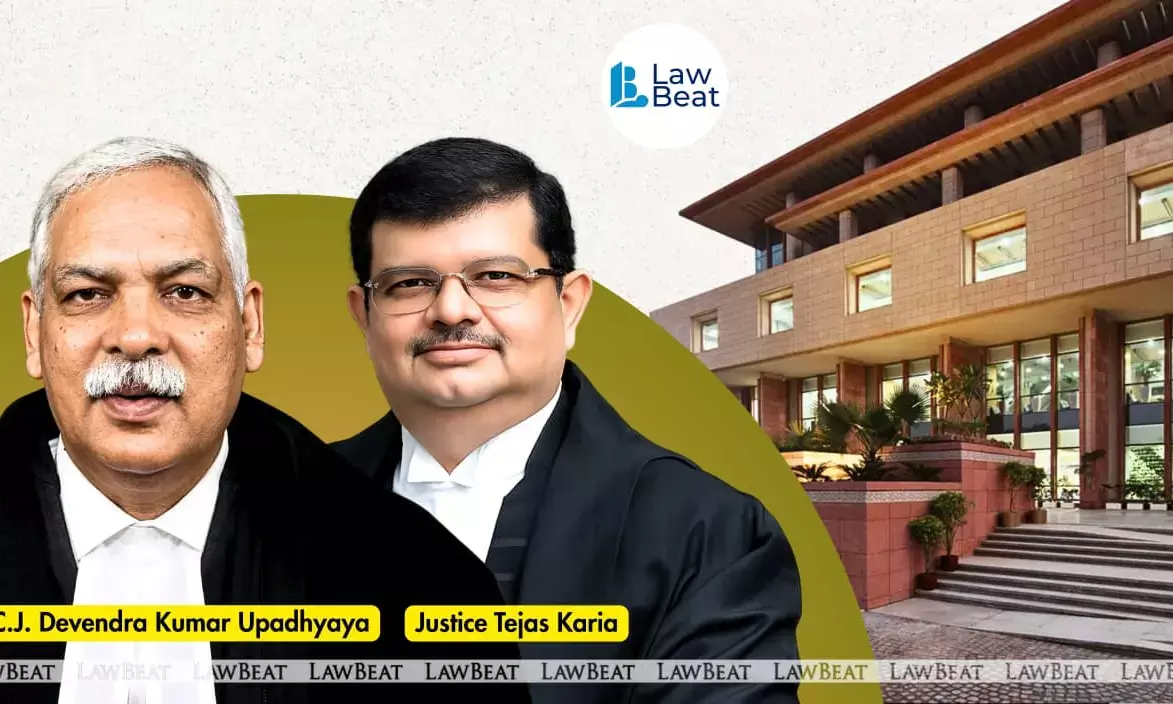
A Division Bench of Chief Justice Devendra Kumar Upadhyaya and Justice Tejas Karia was hearing three connected intra-court appeals filed by dwellers of Bhai Ram Camp, Masjid Camp and DID Colony, Jhuggi Jhopri bastis on land under the Land and Development Office, Ministry of Housing and Urban Affairs, near areas occupied by the Army and Air Force. Around 717 dwelling units were involved.
The appellants, represented by Senior Advocate N. Hariharan along with a large team of counsel, had challenged a judgment and order of a Single Judge which upheld the eviction notices but directed the authorities to ensure civic amenities and honour a waiver of beneficiary contribution before the residents were made to vacate. Before the Division Bench, the residents argued that the entire process was illegal since the Delhi Urban Shelter Improvement Board, and not the Land and Development Office, was the nodal agency under the Delhi Slum & JJ Rehabilitation and Relocation Policy, 2015, and that relocating them 40-45 kilometres away to Savda Ghevra violated the norm of in-situ rehabilitation within five kilometres.
The Bench, however, held that the Rehabilitation Policy itself permits relocation beyond five kilometres "in case of exceptional circumstances" with DUSIB's prior approval, and noted that DUSIB had formally approved the Savda Ghevra site on April 9, 2026. It also rejected the argument that the Ministry could not initiate the process, holding that Section 10(1) of the DUSIB Act "shall not derogate the power of the Central Government to remove jhuggis, if required," and that the Land and Development Office was acting as the land-owning agency on behalf of the Government of India.
Appearing for the Union, Additional Solicitor General Chetan Sharma, along with DUSIB's counsel Anuj Chaturvedi, told the court that the government had waived the beneficiary contribution and would bear the full cost of rehabilitating all 717 units, "irrespective of whether the dweller is eligible or ineligible" under the policy.
While dismissing the appeals on the question of legality, the court devoted much of its judgment to the constitutional right to dignified rehabilitation, drawing on precedents including Sudama Singh v. Government of Delhi and Ajay Maken v. Union of India. Quoting Sudama Singh, the Bench observed that "when a family living in a Jhuggi is forcibly evicted, each member loses a 'bundle' of rights - the right to livelihood, to shelter, to health, to education, to access to civic amenities and public transport and above all, the right to live with dignity." It also cited the Supreme Court's ruling in Sukanya Shantha v. Union of India to hold that "dignity forms a part of the basic structure of the Constitution."
The court recorded undertakings made earlier by the authorities on facilities at Savda Ghevra, including free Delhi Metro travel for one family member for a year, admission of children in nearby government and MCD schools, ceiling fans and induction cookware for each household, and a round-the-clock camp office to address complaints. "Any defiance or non-compliance thereof shall be viewed seriously by the Court," the Bench warned.
To ensure these commitments are honoured, the court constituted a Monitoring Committee headed by a retired Delhi Higher Judicial Services officer, with representatives from DUSIB, DDA, the Ministry of Housing and Urban Affairs, the Delhi Jal Board, and the Education and Health departments of the Delhi government, for a period of six months.
"The appellants shall vacate their dwelling units in the three Jhuggi Jhopri bastis... within six weeks from today," the Bench ordered, adding that they must be settled at Savda Ghevra within this period, failing which they may be evicted with police assistance.
Case Title: Rakesh Bansal and Ors. v. Union of India and Ors. with connected matters
Date of Judgment: August 25, 2026
Bench: Chief Justice Devendra Kumar Upadhyaya and Justice Tejas Karia