
Delhi HC Refuses To Unblock Psychologist’s Social Media Accounts Over Videos Accusing Sitting Judge Of Corruption
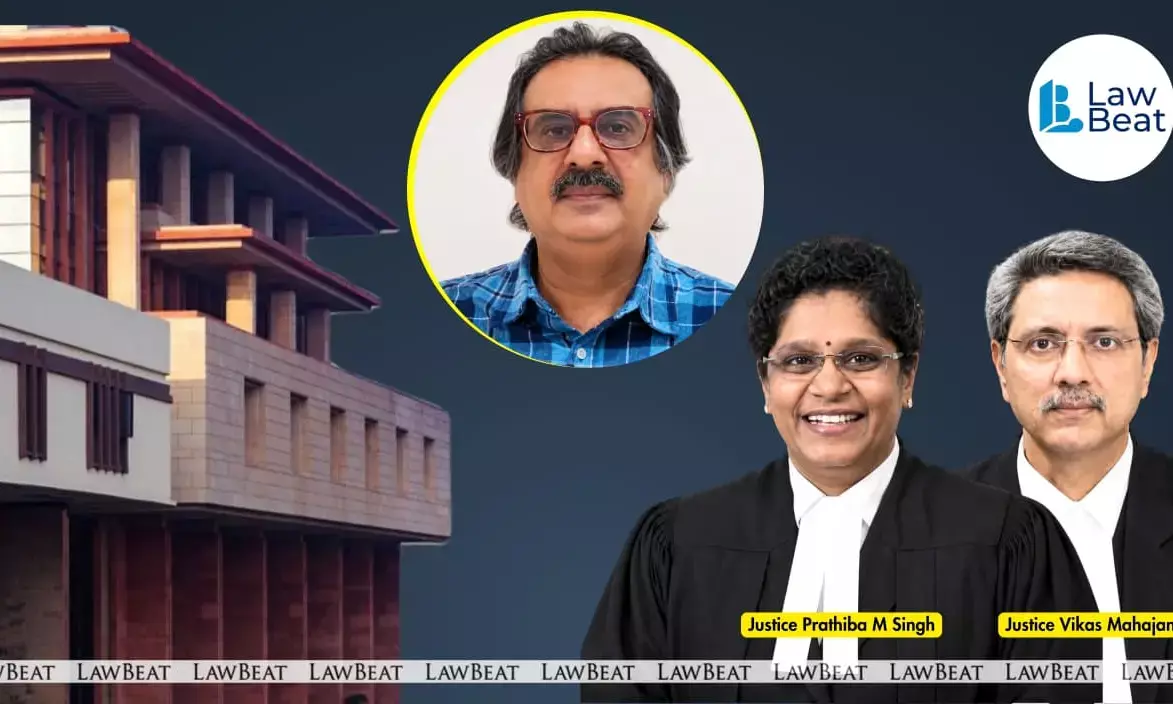
Delhi HC Refuses To Unblock Psychologist’s Social Media Accounts Over Videos Accusing Judge Of Corruption
The Delhi High Court has refused to unblock psychologist Dr. Kapil Kakar’s social media accounts, which were blocked pursuant to its earlier orders over videos containing allegations of corruption, collusion and criminality against a sitting Judge in connection with the Saket building collapse.
The Court also took cognizance under Section 15 of the Contempt of Courts Act, 1971, after finding the contents of the videos prima facie contemptuous. It directed issuance of a formal show-cause notice to Kakar as to why contempt action should not be initiated against him.
A Division Bench of Justice Prathiba M. Singh and Justice Vikas Mahajan passed the order on August 20 while hearing a contempt petition filed by the Delhi High Court Bar Association against Kakar. Meta Platforms Inc., Google LLC, X Corp and LinkedIn Corporation were also respondents.
Videos Linked Saket Building Collapse To Sitting Judge
The contempt proceedings arose from videos and social media content uploaded by Kakar following the Saket building collapse, in which allegations were made against a sitting Judge of the High Court.
The allegations went beyond criticism of judicial orders. As recorded in the High Court’s order, Kakar’s videos accused the Judge of corruption, favouring one party and big corporates, having a “quid pro quo” relationship with big corporates and Government agencies, and threatening lawyers to withdraw petitions.
The videos also used expressions including “real criminal”, “murderer”, “habitual offender” and “shameless to the core” for the sitting Judge. One video questioned whether the Judge should be sent to jail and stated that the Judge should face even capital punishment.
The Court had earlier observed that while fair criticism of judicial orders and institutions is permissible, allegations attributing corruption, collusion, criminality or improper motives to Judges without any lawful basis cannot be equated with legitimate criticism.
It had prima facie found the impugned material to be scandalous and contumacious and a direct interference with the justice delivery system.
Delhi HC Examines 3 Videos
At the August 20 hearing, the Bench watched all three videos containing the allegedly contemptuous material placed on record by the Delhi High Court Bar Association.
Kakar appeared in person and informed the Court that the three impugned videos were no longer available online on any platform.
Meta, Google, X and LinkedIn also confirmed that, pursuant to the High Court’s earlier orders dated June 8 and June 12, 2026, all URLs identified by the Bar Association had been blocked or taken down.
The Court nevertheless considered Kakar’s challenge to the earlier order blocking all his social media accounts.
‘Fair Criticism’ Permissible, But Not Baseless Allegations Against Judges
The High Court noted that any restraint on publication engages the constitutional guarantee of free speech and must therefore be exercised with caution.
At the same time, the Court had earlier held that freedom of speech does not extend to publications which prima facie scandalise the Court, undermine public confidence in the administration of justice or interfere with the independent discharge of judicial functions.
The Court also observed that social media, despite its undeniable benefits, cannot be used irresponsibly as an instrument to undermine institutions, interfere with judicial independence or malign individuals.
Kakar threatened to create new Social Media accounts
The Bench also considered a third video uploaded after Kakar had been served with the contempt petition.
In the video, Kakar acknowledged that his Facebook, X, YouTube and Instagram handles could be blocked. He asked viewers to download his videos and stated that he would continue uploading videos through new accounts, including a new Instagram account.
The High Court observed that this showed that Kakar was aware of the contempt proceedings and nevertheless indicated that he could create new accounts through which his further videos and content could be made available.
The Court therefore held that the blocking of all his social media accounts was fully justified and did not warrant recall.
Earlier orders required platforms to remove videos and similar content
The earlier June 8 order had directed Meta, Google, X and LinkedIn to take down, remove, disable access to and block URLs containing the subject videos.
The directions extended to identical, mirrored, modified, edited, clipped, reproduced, re-uploaded or substantially similar versions of the videos. The platforms were also required to act against subsequently discovered URLs containing such material within 24 hours of notification by the Registrar General.
The platforms were further directed to provide available Basic Subscriber Information, including names, email addresses, contact numbers, IP logs and registration details relating to accounts or users responsible for uploading, publishing or disseminating the videos.
Delhi HC Takes Contempt Cognizance
After considering the material, the Division Bench held that the contents of the impugned videos were prima facie contemptuous.
The Court accordingly directed the Registry to issue a formal show-cause notice under Rule 10 of the Contempt of Courts (Delhi High Court) Rules, 2025, asking Kakar why contempt action should not be initiated against him under the Contempt of Courts Act, 1971.
Kakar had already filed a reply. The Court permitted him to file a reply affidavit, if he wished, within two weeks.
The contempt petition and Kakar’s discharge application have been listed for hearing on September 7, 2026 at 2:30 PM.
Case Title: Delhi High Court Bar Association v. Dr. Kapil Kakar and Others
Date of Order: August 22, 2026
Bench: Justice Prathiba M. Singh and Justice Vikas Mahajan