
Delhi HC Reiterates No Indefeasible Right to Appointment Beyond Cut-Off, Even if Vacancies Remain Unfilled
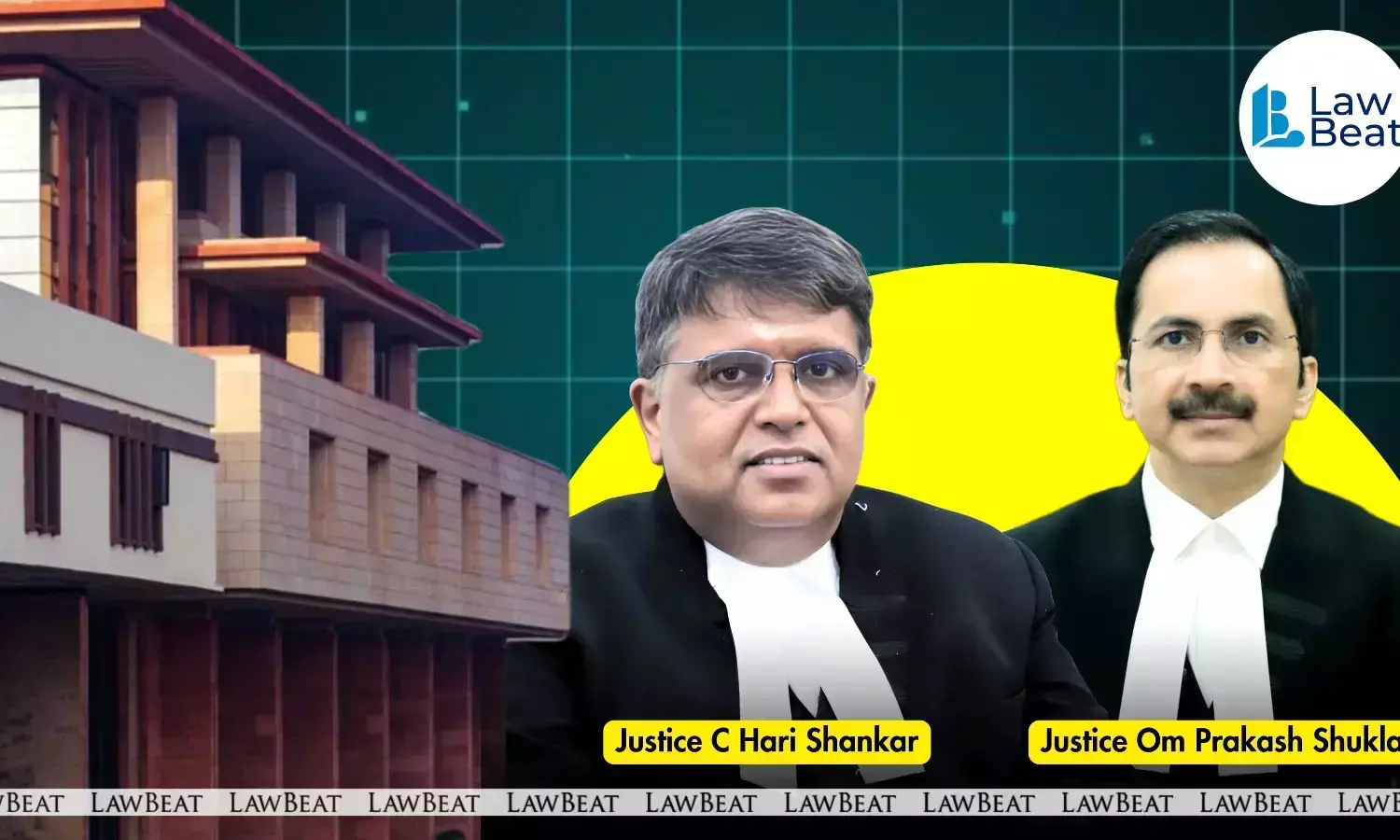
Delhi High Court holds that unfilled vacancies do not confer a right to appointment beyond the prescribed cut-off and waiting list
The Delhi High Court has dismissed a writ petition challenging the rejection of a plea for appointment as Assistant Teacher under the OBC category, affirming the order of the Central Administrative Tribunal and reiterating settled principles governing public recruitment.
The Division Bench of Justice C. Hari Shankar and Justice Om Prakash Shukla observed that once the cut-off list and the waiting list have been duly determined in accordance with the governing rules, and the Petitioner does not fall within either, no right to appointment can be claimed merely on the ground that certain vacancies remain unfilled.
“In such circumstances, the Petitioner cannot claim any indefeasible right to appointment, and as to hold otherwise would amount to rewriting the recruitment process by this Court”, the Court ruled.
The petition arose from recruitment conducted by the Delhi Subordinate Services Selection Board through Advertisement No. 02 of 2012 for the post of Assistant Teacher Primary, where 554 vacancies were notified, including 226 reserved for OBC candidates. The petitioner, an OBC candidate, secured 131.75 marks, falling marginally short of the cut off of 132.25 marks.
Although several vacancies later remained unfilled due to non joining of selected candidates and shifting of candidates to the unreserved category, the Court noted that the petitioner neither met the cut off nor secured a place in the waiting list prepared in accordance with applicable rules.
The core issue before the Court was whether a candidate could claim appointment against unfilled vacancies merely on the basis of eligibility and position in the broader merit list.
Dismissing the plea, the Court held that no such right exists. It emphasised that the recruitment process was governed by a notification dated June 13, 2013, which limited the preparation of a waiting list to 10 percent of the notified vacancies. The petitioner, despite securing marks equal to the last waitlisted candidate, was excluded due to lower merit ranking based on date of birth, a criterion that remained unchallenged.
The Court found no infirmity in the preparation or operation of the waiting list and observed that once the selection process had concluded in accordance with the governing framework, it could not be extended to accommodate candidates beyond its scope.
Relying on established precedent including Shankarsan Dash v. Union of India, the Bench reiterated that inclusion in a merit list does not confer an indefeasible right to appointment.
The Court further referred to the ruling in Tej Prakash Pathak v. High Court of Rajasthan, which affirms that the State may choose not to fill all vacancies for bona fide reasons.
The judgment also drew support from State of Karnataka v. Santhosh Kumar C, wherein it was held that selection merely renders a candidate eligible for consideration and does not create a vested right to appointment outside the statutory framework.
Rejecting the petitioner’s argument that all notified vacancies must be filled if eligible candidates are available, the Court clarified that such a proposition would run contrary to the governing rules and judicial precedent. It observed that accepting such a contention would effectively amount to rewriting the recruitment process.
“The Petitioner has not been able to point to any provision in the governing rules which permits extension of the selection process beyond the prescribed waiting list. On the contrary, the Notification dated 13.06.2013 reflects that the governing rules restrict the selection process to the notified vacancies together with a waiting list candidate limited to 10%, and do not envisage filling up all unfilled vacancies by the candidates beyond this extent”, the Court observed.
The Court also distinguished the judgments cited by the petitioner, including Prem Prakash v. Union of India, noting that those cases pertained to candidates who had already been selected, unlike the present petitioner who did not meet the prescribed cut off or fall within the waiting list.
“As regards the reliance placed on Prem Prakash (supra) to contend that once vacancies are notified and candidates are available, appointment cannot be denied till such vacancies are exhausted, the same is misplaced for two reasons. Firstly, the said decision pertains to candidates who were duly selected, whereas in the present case, the Petitioner is not a selected candidate as she failed to fall within the prescribed cut-off list or the waiting list. Secondly, the said precedent does not involve a restriction such as the 10% cap on the waiting list, which governs the present selection process. Reliance on DSSSB v. Ms. Rajni (supra) is also distinguishable, as no such restriction on waitlisted candidates existed in that case. Therefore, the aforementioned decisions do not advance the Petitioner’s case in any manner”, the Court further observed.
Further, reliance on subsequent policy changes, including a 2019 circular issued by the Government of NCT of Delhi, was rejected as being inapplicable to a recruitment process initiated years earlier.
In conclusion, the Court held that the existence of unfilled vacancies, by itself, does not create any enforceable right in favour of a candidate who fails to qualify within the prescribed selection parameters. Finding no arbitrariness or illegality in the actions of DSSSB or the Tribunal, the writ petition was dismissed.
Case Title: Smt. Jyoti v. Delhi Subordinate Services Selection Board
Bench: Justice C. Hari Shankar and Justice Om Prakash Shukla
Date of Judgement: 06.04.2026