
Delhi High Court Convicts YouTuber for Criminal Contempt Over Derogatory Content Targeting Judiciary
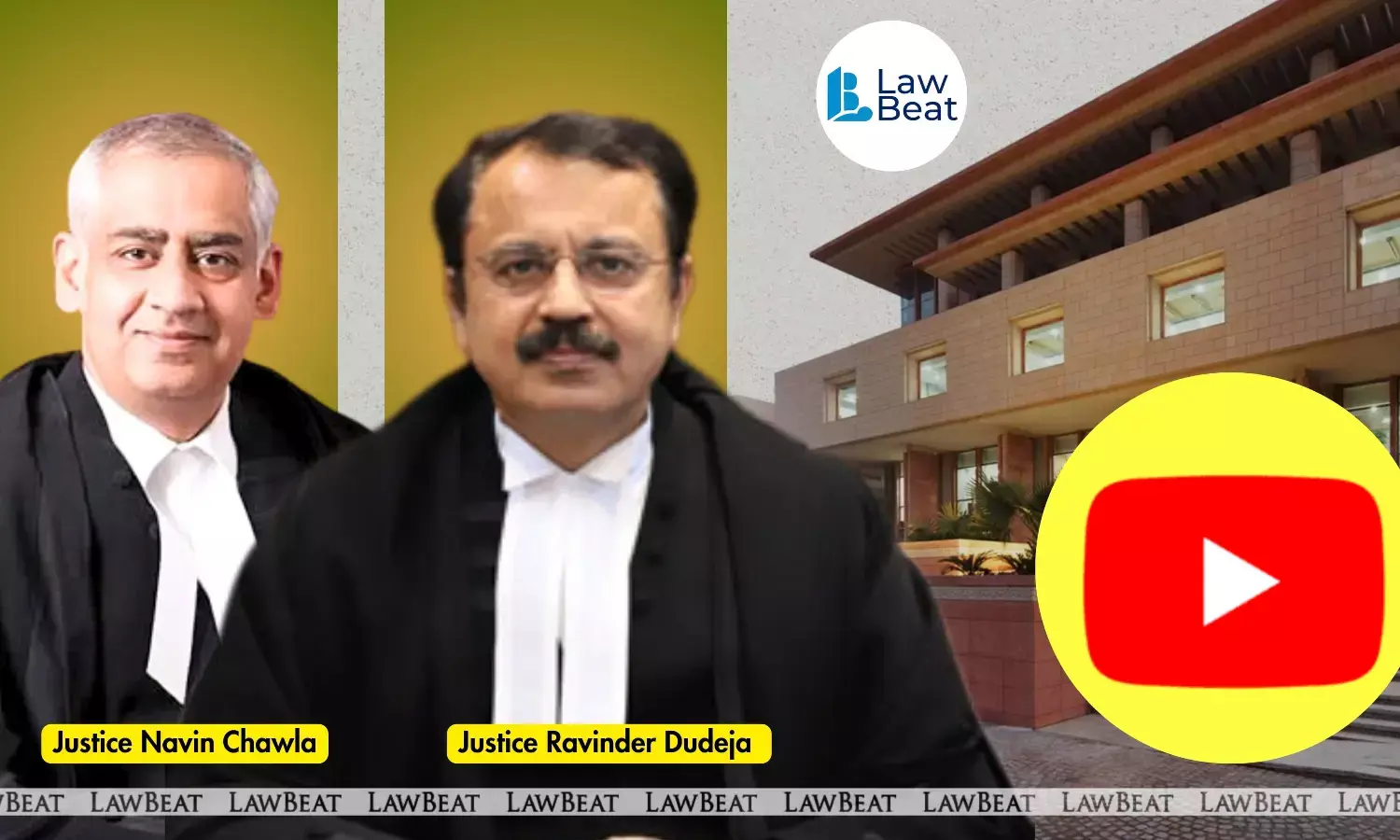
Delhi High Court convicts YouTuber for criminal contempt over scandalous content targeting judges
The Delhi High Court has convicted a YouTuber for criminal contempt after finding that videos and banners uploaded on his channel contained scandalous and derogatory remarks against judges and the judicial system, aimed at undermining public confidence in the administration of justice.
The proceedings were initiated suo-motu by the Court after receiving references from judicial officers who flagged objectionable content published on a YouTube channel titled “Fight 4 Judicial Reforms.”
The material included interviews with advocates and prominently displayed banners naming specific judges alongside sensational captions.
Upon examining the content, the bench of Justice Navin Chawla and Justice Ravinder Dudeja held that it went far beyond the scope of legitimate criticism. It observed that the material was not a genuine attempt to engage with judicial reform but rather a deliberate effort to create distrust and damage the reputation of the judiciary.
“…….The intent of respondent no. 2 is, therefore, writ large of only scandalising and lowering the image of these Judicial Officers in the general public, thereby lowering the authority of the Court. It is not to generate a healthy debate but to scandalize the Court. It is not bona fide but is mala fide to bring to disrepute the judicial system and to lower the authority of the courts”, the court observed.
At the outset, the Court acknowledged that in a democratic society, citizens are well within their rights to discuss and critique the functioning of institutions, including the judiciary. It noted that issues such as the demand for audio-video recording of court proceedings or calls for systemic reforms are valid subjects of public discourse.
However, the Bench made it clear that such freedom is not absolute.
Drawing a distinction between “fair criticism” and “criminal contempt,” the Court explained that criticism must be responsible, fact-based, and made in good faith. Expressions that attribute improper motives to judges, use abusive or defamatory language, or suggest bias or corruption without any basis cross the permissible boundary.
“If one has to attack a Judicial Officer on his integrity or competence, it must be done with cogent evidence; it cannot be made lightly. We must remember that such an attack, if made without any basis, undermines the authority of the Judicial Officer and interferes with dispensation of justice by him/her without fear or favour. Any such criticism must therefore be well founded, specially because the Judicial Officer, unlike the complainant, has no means to justify his actions in public”, the Court said.
The Court found that the YouTuber’s content, particularly the targeted references to individual judges and the provocative tone of the banners, amounted to “scandalising the court.”
It emphasised that such actions are not protected under the right to freedom of speech, as they strike at the very foundation of public confidence in the judicial system.
Importantly, the Court reiterated a well-settled principle that the law of contempt is not intended to shield judges from personal criticism but to preserve the integrity and authority of the justice delivery system.
It noted that unchecked and reckless allegations against judges could discourage litigants from placing trust in courts, thereby weakening the rule of law.
During the proceedings, two advocates who had appeared in the videos tendered unconditional and unqualified apologies for their remarks against judicial officers.
The Court accepted their apologies, observing that they appeared to be sincere and accompanied by a commitment not to repeat such conduct in the future. Accordingly, the advocates were discharged from the contempt proceedings.
In contrast, the YouTuber chose to defend his actions, arguing that the videos were created in the public interest to highlight shortcomings within the judicial system.
He invoked his right to free speech and contended that broader reforms required open discussion.
The Court, however, was not persuaded. It held that the manner in which the content was presented through sensational captions, targeted allegations, and inflammatory language, revealed an intent to vilify rather than reform. The Bench concluded that the material was designed to attract attention and provoke distrust, rather than contribute constructively to public debate.
“….in the present case, the respondent no. 2 has not confined himself to this debate nor is his venting out frustration aimed to be a fair criticism. He has personally attacked three Judicial Officers and even imputed that in case a litigant‟s case is listed before them, such litigant should not expect justice. What is the foundation of such over-sweeping remarks against the Judicial Officers? Even upon our repeated queries, the respondent no. 2 justifies these sweeping statements only on basis of the interviews given by the respondent no. 1 in these contempt references. To a query if the respondent no. 2 had even got the facts of these cases talked about in the interviews verified from the judicial record, the answer is in the negative from the respondent no. 2. While the interviews given by respondent No. 1 were on the premise that if the proceedings of those cases were being recorded, the outcome may have been different, the respondent no. 2 twisted the same to a narration that these Judicial Officers themselves were not dispensing justice and any litigant before them should not expect so”, the court observed.
While upholding the importance of free expression, the Court issued a caution that criticism must not descend into malicious attacks or attempts to bring the institution into disrepute. It reaffirmed that the judiciary remains open to scrutiny, but such scrutiny must be exercised with responsibility and respect for the rule of law.
The ruling serves as a significant reminder of the limits of free speech in the context of judicial criticism, reinforcing that accountability and respect for institutions must go hand in hand in a constitutional democracy.
Case Title: Court On Its Own Motion Vs Shiv Narayan Sharma Adv and Ors.
Bench: Justice Navin Chawla and Justice Ravinder Dudeja
Date of Judgement: 21.04.2026