
Delhi High Court Directs Government To Frame Policy For Timely Refund Of Court Fees
The Delhi High Court refused to interfere with the selection of India's dressage team for the 2026 Asian Games while directing the Equestrian Federation of India to strictly adhere to its selection criteria in future
The Delhi High Court on Wednesday directed the Delhi Government to formulate a policy or guidelines within four months to ensure expeditious refund of court fees once disputes between litigants are settled.
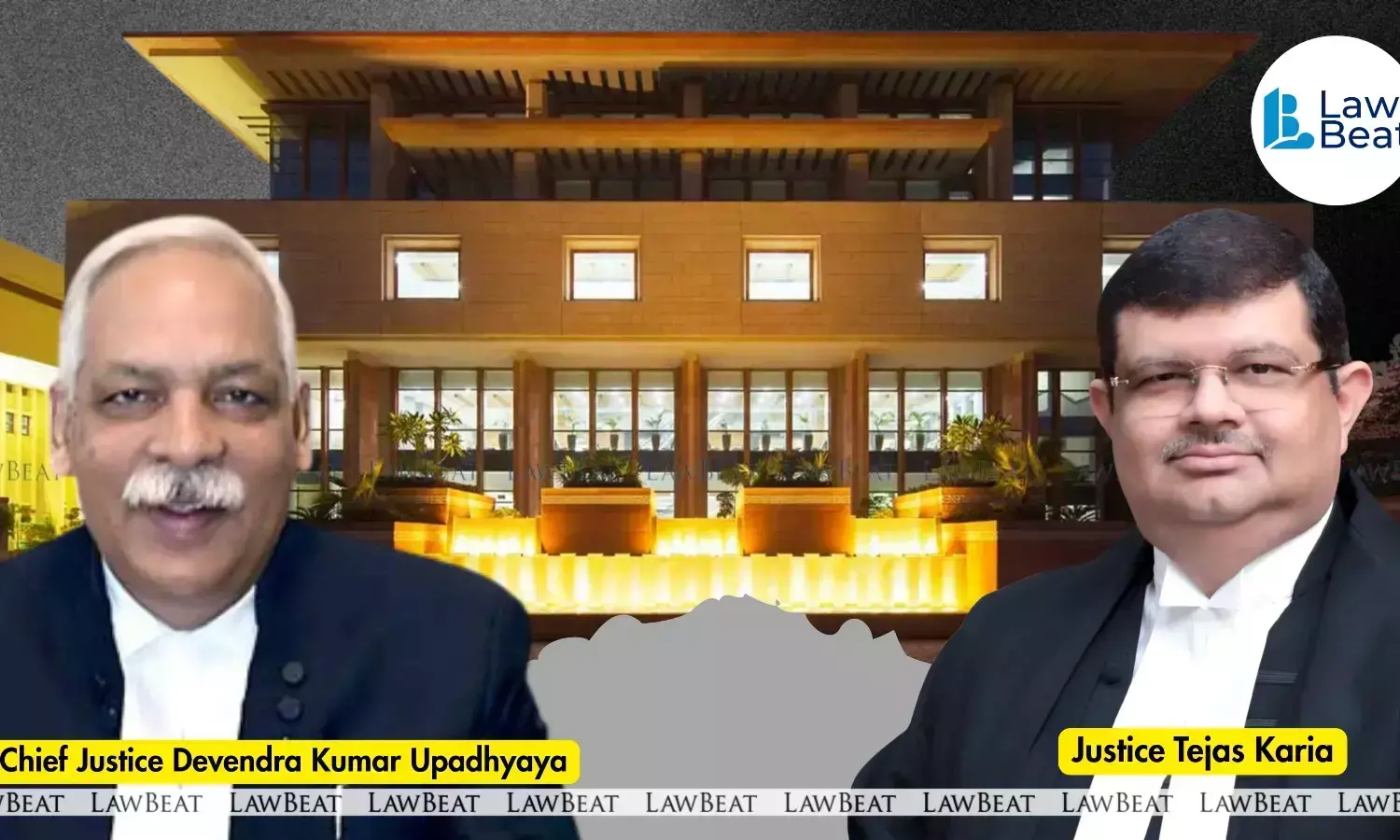
A Division Bench comprising Chief Justice Devendra Kumar Upadhyaya and Justice Tejas Karia observed that the absence of a codified mechanism was causing unnecessary hardship and delays for litigants seeking refund of court fees under Sections 16 and 16A of the Court Fees Act, 1870.
The Court observed, “Once the lawsuit brought to the court is settled between the parties, there is no reason why such a litigant should face difficulties and a long time for the return of the court fee.”
The Bench further stated that a structured and codified mechanism would significantly ease the process for litigants seeking refund of court fees after settlement of disputes.
The Court directed the Delhi Government to frame the policy in consultation with the High Court within the stipulated period of four months.
The directions were passed while hearing a public interest litigation filed by advocate Deepak Singh Thakur along with another litigant.
During the hearing, the petitioners informed the Court that litigants in Delhi currently face substantial delays in obtaining refund of court fees, with the process often taking between one and a half to two years.
Addressing the Bench, counsel for the petitioners submitted, “The procedure is very lengthy. Once we apply for it, we get it in 1.5 to 2 years.”
Taking note of the submissions and the practical difficulties faced by litigants, the Court held that a streamlined policy framework was necessary to ensure timely processing and return of court fees after settlement of disputes.
Court fees constitute the charges paid by litigants for instituting proceedings before courts and are governed by the Court Fees Act, 1870. The statute also contemplates situations where such fees may be refunded, particularly when parties resolve their disputes without requiring adjudication on merits.
The refund provisions are intended to encourage settlements and alternative dispute resolution mechanisms by ensuring that litigants are not financially disadvantaged for choosing an amicable resolution.
Section 16 of the Court Fees Act provides for refund of court fees in cases where disputes are settled through mechanisms contemplated under Section 89 of the Code of Civil Procedure, including mediation and other forms of alternative dispute resolution.
While the statutory entitlement to refund exists, the petition before the High Court highlighted the practical difficulties faced by litigants in obtaining the amount.
According to the petitioners, the absence of a streamlined administrative mechanism results in applications remaining pending for extended periods, thereby diluting the benefit intended by the refund provisions.
Refund of court fees is widely regarded as an important incentive for settlement of disputes.
By allowing parties to recover court fees after an amicable resolution, the legal framework seeks to promote mediation and reduce the burden on courts.
Delays in processing such refunds, therefore, have implications not only for individual litigants but also for broader efforts aimed at encouraging consensual dispute resolution.
Case Title: Deepak Singh Thakur & Anr. v. Government of NCT of Delhi & Ors.