
Delhi High Court Halts Demolition Action In Uttam Nagar Holi Clash Case For One Week
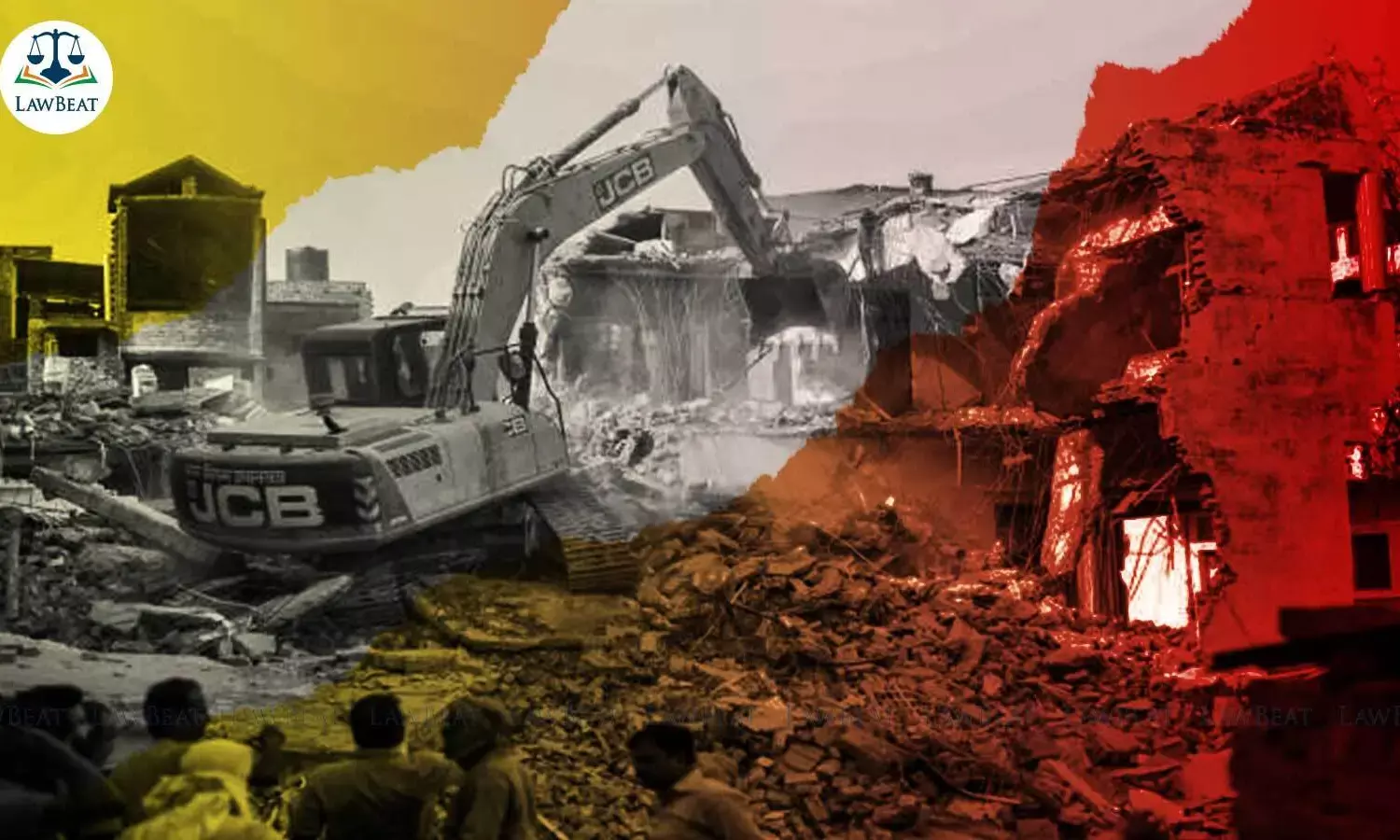
Delhi High Court closes Uttam Nagar demolition pleas after MCD assures no action without prior notice
The Delhi High Court on Tuesday restrained the Municipal Corporation of Delhi from carrying out demolition action for a period of one week against houses belonging to certain individuals allegedly linked to the Uttam Nagar Holi clash case in which a 26 year old man lost his life.
The order was passed by Justice Amit Bansal while hearing petitions filed by residents of J.J. Colony in Uttam Nagar who expressed apprehension that their houses could be demolished by the municipal authorities in connection with the ongoing investigation into the violent clash.
The petitioners included Jarina, the mother of accused Imran, and Shahnaz, whose children were questioned by the police during the course of the investigation. They approached the High Court seeking protection from demolition of their residential premises and also asked for police protection for themselves and their families.
During the hearing, the Municipal Corporation of Delhi informed the court that the demolition drive in the locality was aimed at removing encroachments and was not selective in nature. According to the civic body, eight houses in the area had encroached upon public land and action was being taken against such illegal constructions.
The corporation also suggested that the petitioners should be directed to state on oath that their houses had not encroached on any public land. However, the court did not enter into the merits of that claim at this stage.
Justice Bansal observed that the prayers made by the petitioners raised two distinct issues. One related to protection from demolition of their residential premises and the other concerned police protection for them and their family members. The court said that both issues involved different causes of action and therefore should be addressed separately.
The judge directed the petitioners to file two separate petitions if they wished to pursue both forms of relief. One petition would address their concerns regarding demolition of their houses, while the other could seek police protection.
During the proceedings, the senior counsel appearing for the Municipal Corporation of Delhi assured the court that no demolition action would be carried out against the petitioners’ houses for the time being. Taking note of this statement, the court directed that demolition would not be undertaken for a week, giving the petitioners time to file fresh petitions if required.
The civic body also clarified before the court that the demolition drive in the locality targeted only those portions of structures that had encroached upon a public drain. According to the corporation’s counsel, the applicable rules did not require prior notice for such removal of encroachments on public land.
Meanwhile, Additional Solicitor General Chetan Sharma, appearing for the Delhi Police, opposed the plea seeking police protection for the petitioners. He argued that granting such protection could hamper the ongoing investigation in the criminal case and said that the issue should not be mixed with the matter relating to demolition.
The controversy arises in the aftermath of a violent clash that occurred during Holi celebrations in Uttam Nagar. On March 8, the Municipal Corporation of Delhi had already demolished portions of a residential structure allegedly linked to one of the accused in the case involving the death of Tarun Bhutolia.
According to the police, the incident occurred when a dispute broke out between two neighbouring families who had longstanding tensions. The conflict reportedly began when a water balloon thrown by a girl from one family accidentally struck a woman from the other family during Holi celebrations.
What began as a minor argument soon escalated into a larger confrontation as members of both families gathered on the street and began exchanging blows. During the clash, Tarun Bhutolia suffered fatal injuries.
The petitioners approached the High Court after the demolition of the house allegedly belonging to accused Umardeep, claiming that the action by the municipal authorities had created fear in the locality.
The pleas, filed through advocate Divyesh Pratap Singh, stated that the demolition had created an atmosphere of terror and insecurity among residents. They argued that the demolition of one house had raised a genuine apprehension that their own homes might also be demolished without following the due process of law.
The petitioners further contended that the demolished structure was not built on public land or any government road. They claimed that several other houses existed in the same area and that the action taken against only one property indicated a selective exercise of power.
“The selective demolition of only one house strongly indicates malafide exercise of power by the authorities,” the plea submitted.
The High Court has now granted temporary relief by directing that no demolition be carried out against the petitioners’ homes for a week. The matter is expected to be taken up again once the petitioners file fresh pleas addressing the issues separately.
Case Title: Jarina v. State of NCT of Delhi & Anr.