
Delhi High Court Lists M J Akbar’s Appeal Against Priya Ramani’s Acquittal For Final Hearing On September 24
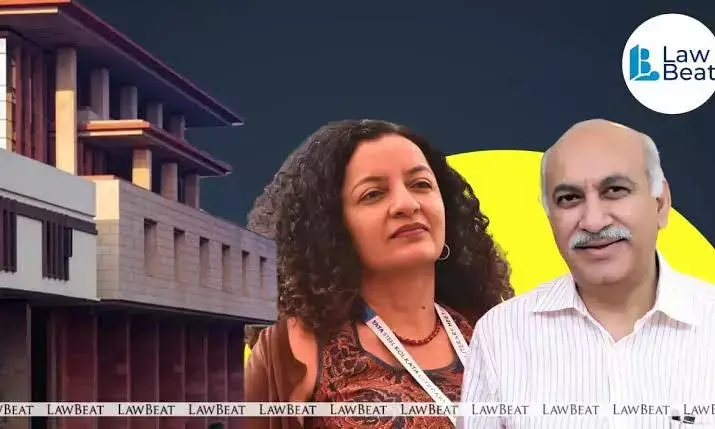
Delhi High Court lists M J Akbar’s appeal against Priya Ramani’s acquittal in defamation case for final hearing
The Delhi High Court on Monday scheduled the final hearing of former Union minister M J Akbar’s appeal challenging journalist Priya Ramani’s acquittal in a criminal defamation case arising out of allegations made during the #MeToo movement in 2018.
Justice Swarana Kanta Sharma noted that the case was ready for final adjudication as all procedural requirements had been completed.
The Court observed that the trial court records had been received and both parties had already filed their written submissions.
“Trial court record has been received. Written submissions have been filed by both the parties. List for final hearing on the next date,” the Court said while listing the matter for September 24.
The appeal filed by Akbar challenges the February 17, 2021 judgment of the trial court, which dismissed his criminal defamation complaint and acquitted Ramani of all charges.
In its 2021 ruling, the trial court had held that a woman has the right to raise her voice against alleged sexual harassment on any platform of her choice, even if the incidents being referred to occurred years earlier.
The High Court had earlier admitted Akbar’s appeal on January 13, 2022, agreeing to examine the correctness of the trial court’s findings. Notice in the matter had been issued to Ramani in August 2021.
In his plea before the High Court, Akbar has argued that the trial court’s decision was flawed and based on “surmises and conjecture.” He has contended that the evidence and submissions placed on record were not properly appreciated.
He has further submitted that the trial court erred in making observations about his reputation and failed to apply established principles of criminal law while adjudicating the case.
The dispute traces back to October 2018, when Ramani publicly accused Akbar of sexual misconduct dating back several decades. The allegations were made during the #MeToo movement, which saw several women across India come forward with accounts of harassment and abuse.
Following the allegations, Akbar resigned from his position as Union minister on October 17, 2018.
Soon after, he filed a criminal defamation complaint against Ramani on October 15, 2018, asserting that her statements had damaged his reputation.
During the trial, Ramani defended her statements as truthful and made in public interest, asserting her right to speak about her experiences.
The trial court, while acquitting Ramani, held that the prosecution had failed to prove the charge of defamation. It also made broader observations about the societal context of crimes against women, noting that such incidents continue despite cultural and historical emphasis on respecting women.
With the High Court now listing the matter for final hearing, the case is set to enter a crucial stage where the appellate court will examine the legality and correctness of the trial court’s acquittal.
The outcome of the appeal is likely to have significant implications for the intersection of defamation law and the right of survivors to speak out about alleged misconduct, particularly in the context of movements such as #MeToo.
Source: Telegraph India