
Delhi High Court Quashes POCSO FIR in Marital Case Citing Absence of ‘De Facto Victim’, Lays Down Guidelines
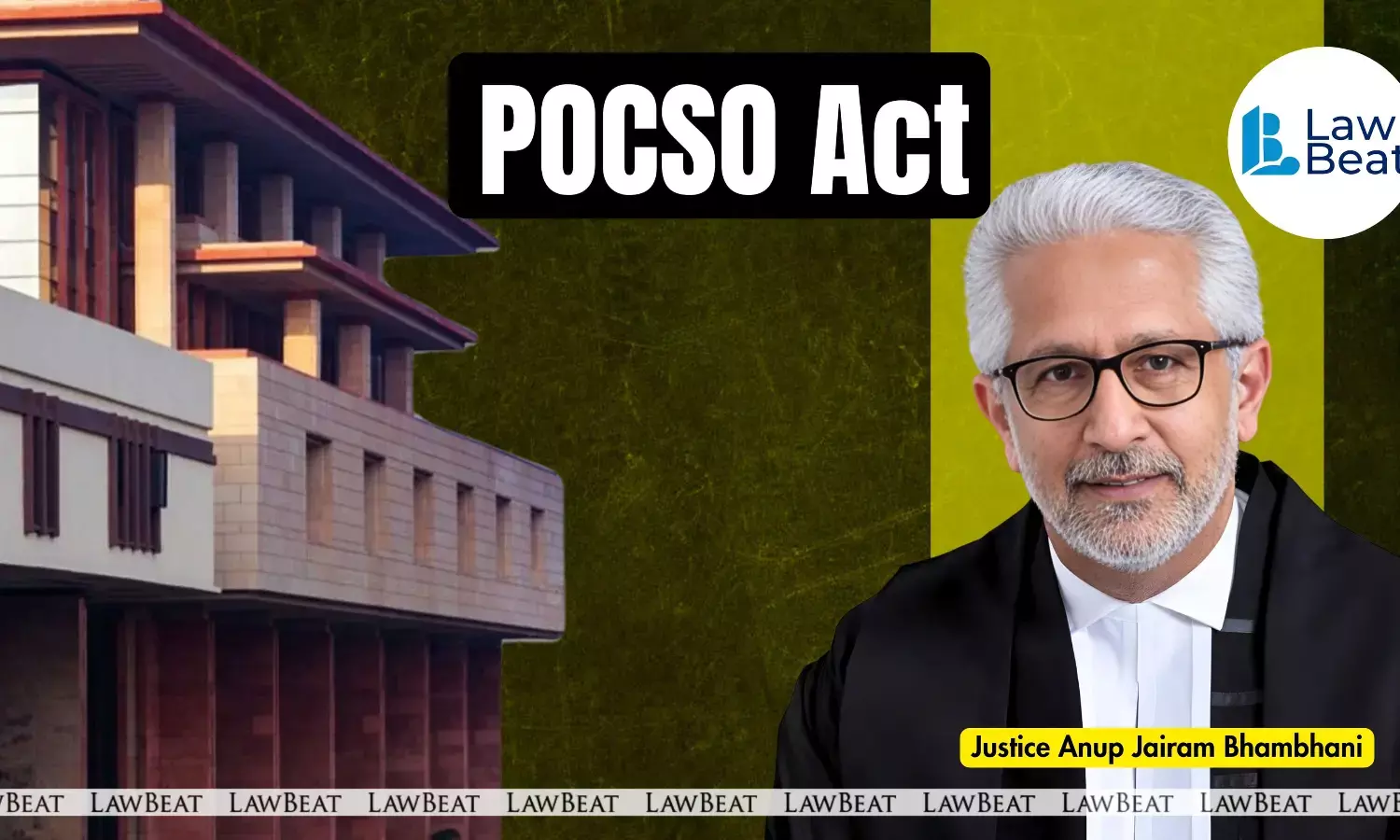
Delhi High Court quashes POCSO FIR, distinguishes between de jure and de facto victim
The Delhi High Court, in a significant ruling, quashed an FIR registered under the Protection of Children from Sexual Offences Act against a husband accused of engaging in a sexual relationship with his then minor wife, who has since married him, given birth to their child, and consistently stated that she suffered no harm.
The decision was delivered by Justice Anup Jairam Bhambhani, who underscored the need to distinguish between a “de jure victim” and a “de facto victim” while dealing with such cases. Drawing from legal philosophy, including the works of Oliver Wendell Holmes Jr., the Court laid down important guiding principles for quashing proceedings under the Protection of Children from Sexual Offences Act in exceptional circumstances.
“…..this court would also caution against wanton misuse of „compromise‟ quashing of criminal proceedings by unscrupulous offenders against gullible or vulnerable victims. The courts must be vigilant against offenders who use deceit, stratagem or dishonest device, to obtain quashing of criminal proceedings in their favour. In particular, it is necessary to instal strong guardrails and parameters for consent quashing of criminal proceedings concerning offences under the POCSO Act”, the Court observed.
The case arose from an FIR registered not at the instance of the prosecutrix, but based on information provided by doctors at a government hospital when the girl, found to be a minor, was admitted for childbirth.
At the time of the alleged offence, the prosecutrix was below 18 years of age, while the accused was an adult. The relationship later culminated in marriage performed according to Sikh rites, and the couple now has a child.
During the proceedings, the prosecutrix filed an affidavit stating that she had voluntarily married the petitioner, had no grievance against him, and did not wish to pursue the case.
She reiterated this position before the Court and expressed concern about the adverse impact of criminal proceedings on her family, including her infant child.
The Court noted that although crimes under POCSO can be prosecuted irrespective of consent, the present case raised a deeper jurisprudential issue, highlighting “the disconnect between a rigid legal construct and the human lives it seeks to govern.”
On the sustainability of prosecution, the Court observed that there may be situations “where there is a de jure victim but no de facto victim,” meaning that while the law recognises an offence, no actual harm is claimed by the person concerned.
“To be absolutely sure, this court is not entering upon the realm of consent of a minor in relation to a POCSO offence; nor into any ex post facto condonation of such offence… yet it is central to a prosecution that there be a de facto victim in the picture,” the Court clarified.
It cautioned that continuing prosecution solely on the basis of a legally constructed victim, without any real grievance, could lead to injustice.
The Court observed that pressing ahead in such cases “would not only be an exercise in futility but also an exercise leading to absurdity,” particularly where the consequences would ultimately harm the very person the law seeks to protect.
The judgment also drew on the philosophical framework of Joel Feinberg, noting that certain cases may resemble a “crime without a victim,” where statutory assumptions of harm do not align with lived realities.
The Court highlighted the conceptual tension within the statutory framework, stating that the minor is treated as a victim “not because of any demonstrable harm… but because the law denies her capacity for valid consent,” thereby creating a scenario where victimhood is legally imposed despite absence of injury.
On the role of the State, the Court referred to Jagjeet Singh v. Ashish Mishra, observing that criminal prosecution must not become an instrument of vengeance or rigid enforcement detached from justice.
It emphasised that the State should avoid a retributive approach where the concerned individual denies any harm and does not seek prosecution.
Importantly, the Court clarified that quashing POCSO proceedings is not impermissible but must be exercised with caution and sensitivity.
It laid down key factors to guide such decisions, including the nature and duration of the relationship between the parties and whether they are living as a family, whether children have been born and how their welfare would be impacted, absence of violence, coercion, or exploitation relative ages of the parties and the context of the relationship.
The Court stressed that these factors are illustrative and that courts must engage directly with the parties to arrive at a considered and subjective satisfaction before quashing proceedings.
“Ultimately, the decision… must be founded on the best interests of the de jure victim and the children, if any,” the Court held.
Relying on Ayyub Malik v. State of Uttarakhand, the Court reiterated that continuation of criminal proceedings that result in harassment or injustice would amount to abuse of process.
Concluding that further prosecution would be detrimental to the woman and her child, the Court held that “the right course of action to secure the ends of justice… would be to quash the criminal proceedings.”
Accordingly, the FIR registered under Section 64(1) of the Bharatiya Nyaya Sanhita and Section 6 of the POCSO Act at Malviya Nagar Police Station was quashed, and all proceedings arising from it were brought to a close.
Case Title: Harmeet Singh v. State of GNCT Delhi And Anr.
Bench: Justice Anup Jairam Bhambhani
Date of Judgement: 16.04.2026