
Delhi High Court says child's future cannot become collateral damage in parent's battle
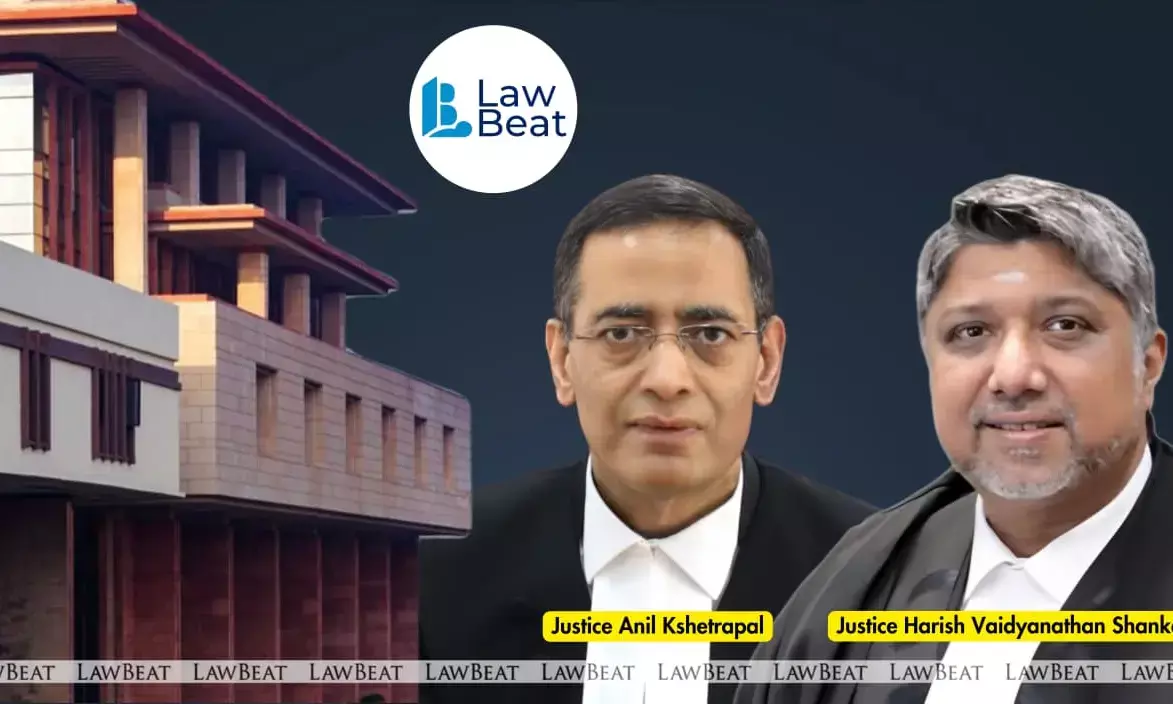
High Court made these observations while granting custody of the children to their father.
The Delhi High Court has observed that the future of a child should not become collateral damage in the battle between their parents.
"Courts can regulate custody, visitation, and access, but they cannot repair the emotional estrangement that follows when a child is compelled - consciously or otherwise - to take sides. It is, therefore, incumbent upon both parents to ensure that their personal grievances do not eclipse the child's right to an unburdened childhood, free from choices of loyalty, conflicts and emotional coercion. The future of a child ought not to become collateral damage in the battle between adults, for the cost of such alienation is borne not in the courtroom, but in the silent recesses of a child's developing mind," a bench of Justices Anil Kshetarpal and HV Shankar has said.
The bench further opined that a wholesome upbringing demand more than periodic visual access; it requires the daily, tangible presence of a parent who can guide, correct, comfort, and nurture. The presence of the father in the lives of the children is not a matter of parental entitlement but a facet of the children's own right to balanced emotional development, it further said.
These observations were made by the High Court while holding that the welfare of the children was best secured by their continued residence in India under the custody of their father in the instant case.
Before the High Court, the mother assailed the judgment passed by the Family Court, Patiala House Courts, New Delhi, whereby in Guardian Petition instituted by the father under Section 7 read with Section 25 of the Guardians and Wards Act, 1890, court directed that the custody of the two minor children, namely, SSB, aged about 12 years, and DW, aged about 6 years, were handed over to the Father.
Family Court's directions included modalities relating to visitation, communication, and the sharing of relevant information and particulars concerning the children vis-à-vis the Mother.
The High Court refused to rely on the Tender Years Doctrine noting that the doctrine is founded on a highly stereotypical premise. "In the present day and age and the time in which we currently inhabit this Earth, and having regard to the advancement in the social and cultural ethos of society and the sensitivities that now prevail, the invocation of the Tender Years Doctrine in custody battles such as the present one may no longer be apposite. Historically, the doctrine appears to have evolved at a time when societal norms rigidly ascribed the role of breadwinner to the father and that of homemaker and primary caregiver to the mother, with attendant responsibility for the day-to-day upbringing of children. Such rigid compartmentalisation of parental roles no longer accords with contemporary realities, more so in cases where both spouses are gainfully employed and leading their respective lives in fairly urbanised towns or cities.", the bench noted.
It further held that the mother's financial capacity, did not, by itself, outweigh the cumulative considerations of emotional security, psychological stability, continuity, and the imperative need to arrest further parental alienation.
Court also relied on the wishes of the children. "The pronounced and unyielding hostility expressed by the son towards the father, seen in the backdrop of prolonged minimal contact and systematic exclusion, appears not to stem from an independent or spontaneous articulation, but is more consistent with a conditioned or influenced response. A child's preference, when formed in an environment marked by alienation, cannot be elevated to a veto over judicial determination, for to do so would be to allow the consequences of alienation to harden into its justification," it noted.
It also dealt with the view on separating siblings, particularly at a stage when both are navigating their formative years, and held it would be inimical to their holistic development and emotional stability. "Siblings constitute a shared emotional universe, and their bond often functions as an anchor of continuity and reassurance amidst parental discord. To divide them at this stage would risk compounding the emotional trauma already occasioned by prolonged litigation and familial fragmentation. The welfare and best interests of the children, therefore, lie not in fragmented or divided custodial arrangements, but in a unified upbringing, as much as possible, that preserves sibling companionship while simultaneously facilitating the restoration of a balanced and healthy parental influence", it further held.
With these views, the court held that conferment of custody upon the father was not to be construed as diminishing the role or responsibility of the mother. On the contrary, consistent with her stated financial capacity and professed commitment to the children‟s welfare, she is expected to continue to contribute meaningfully towards their education, healthcare, and overall development. Such contribution. as per the court, is an integral facet of responsible co-parenting and operates independently of physical custody.
Case Title: SUMAN SANKAR BHUNIA vs. DEBARATI BHUNIA CHAKRABORTY