
Delhi Metro Harassment Case: Court Upholds Conviction, Says Such Acts Cannot Be Taken Lightly
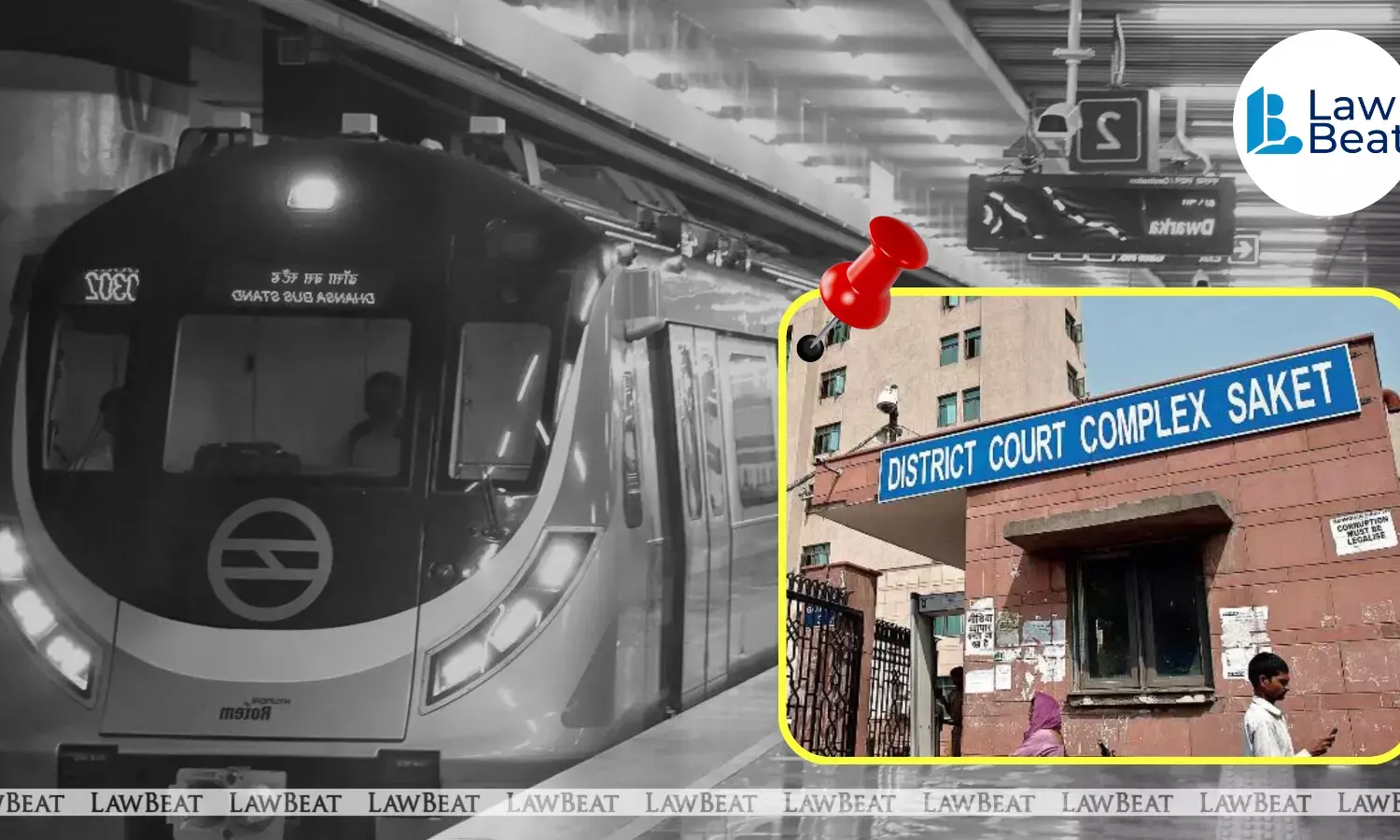
Delhi court upheld the conviction of a man who masturbated next to a woman passenger inside a Delhi Metro train, citing serious concerns about women’s safety in public transport
A Delhi Court has upheld the conviction and sentence of a man for sexually harassing a woman inside a moving Delhi Metro train by exposing himself and masturbating next to her, observing that such incidents raise serious concerns about the safety of women in public transport.
Additional Sessions Judge (ASJ) Hargurvarinder Singh Jaggi of the Saket District Courts dismissed the appeal filed by the accused challenging his conviction under Sections 354 and 354A of the Indian Penal Code, 1860.
The case relates to an incident that occurred in 2021 inside a metro train running on the Yellow Line between Saket Metro Station and INA Metro Station.
According to the prosecution, the accused exposed himself, masturbated in front of the woman passenger and touched her inappropriately while standing next to her in a crowded coach during the journey.
The woman raised an alarm during the incident, following which other passengers intervened and forced the accused to get off the train. A complaint was subsequently lodged and an FIR was registered at the metro police station at INA.
The trial court, after examining the evidence, had convicted the accused for outraging the modesty of a woman and committing sexual harassment. He was sentenced to one year of rigorous imprisonment for each offence along with a fine of ₹5,000 under both Sections 354 and 354A IPC, with the sentences directed to run concurrently.
Challenging the conviction, the accused argued that the trial court had relied solely on the testimony of the complainant and that there was no independent corroborative evidence to support the allegations.
His counsel contended that despite the incident allegedly occurring in a crowded metro coach, no independent public witnesses were examined and no CCTV footage from the metro system was produced.
The accused further pointed to alleged inconsistencies in the prosecution’s version regarding the time and place of the incident and claimed that he had been falsely implicated. It was argued that the absence of CCTV footage and public witnesses should have entitled him to the benefit of doubt.
Rejecting the arguments, the sessions court held that the trial court had correctly appreciated the evidence and found the accused guilty beyond reasonable doubt.
At the outset, the court noted that the case highlighted broader safety concerns for women travelling in the Delhi Metro, particularly in light of the increasing reliance on public transport.
The judge observed that the issue had gained renewed relevance as the country had recently marked International Women's Day on March 8. "On March 08th of every year International Women’s Day is celebrated across the globe, to mark and rejoice in the accomplishments of women in different spheres of life, and to create awareness that a lot more is yet to be done to bring in gender equality, opportunity, recognition," it observed.
The court also endorsed the trial court’s view that offences against women in public spaces can cause deep psychological trauma beyond the immediate physical act.
“Offences against women, especially those committed in a public space like a crowded metro, cause not only physical but also deep psychological trauma, violating the victim’s sense of privacy and security,” the court observed.
The judge further noted that the incident took place in a moving metro train where the victim had to press the emergency button to seek assistance.
According to the court, the sequence of events that followed, including the pressing of the emergency button, the arrival of metro officials and the subsequent arrest of the accused in the controller’s room at Green Park Metro Station, formed part of the same chain of events and corroborated the complainant’s testimony.
After examining the trial court records and evidence, the sessions court concluded that the prosecution had successfully established the guilt of the accused.
Holding that the trial court’s judgment was based on direct evidence supported by surrounding circumstances, the court found no reason to interfere with the conviction or sentence.
The appeal was accordingly dismissed, and the conviction and sentence imposed by the trial court in May and October 2025 were upheld.
Case Title: Mohd. Tahir v. The State
Bench: ASJ Hargurvarinder Singh Jaggi
Judgment Date: March 9, 2026