
Did Retired Justice Siddharth Mridul Run An LPG Business While In Office?
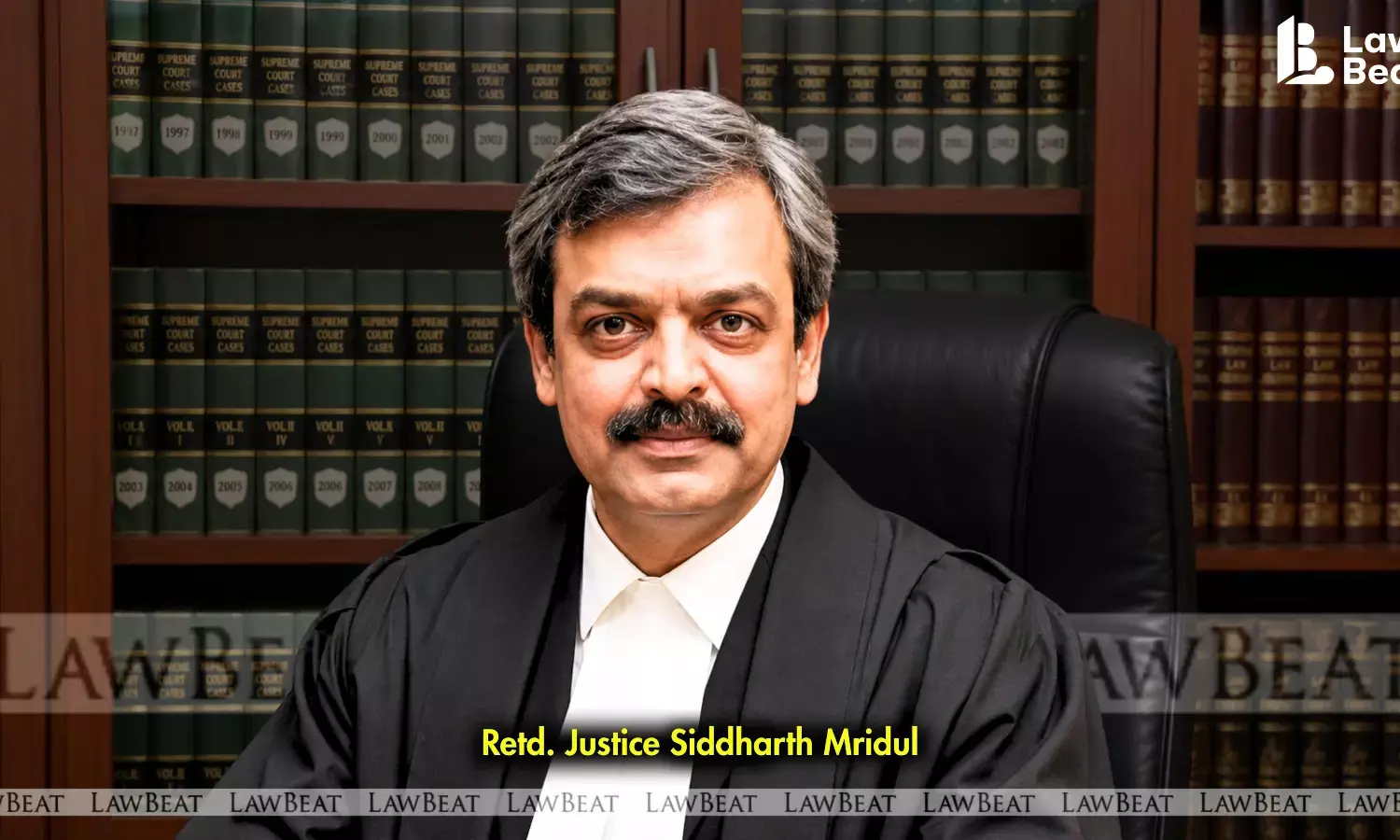
Justice Siddharth Mridul Ran LPG Business Through Judgeship, BPCL Suspends Dealership
Former Delhi High Court judge and former Chief Justice of the Manipur High Court, Justice (Retd.) Siddharth Mridul, has come under scrutiny over his alleged 16-year association with an LPG distributorship called "Kitchen Flame," a controversy that has also dimmed his prospects of contesting the Supreme Court Bar Association presidential election.
Bharat Petroleum Corporation Limited suspended the dealership on July 6, after Justice Mridul allegedly failed to respond to a show-cause notice. BPCL took the view that holding a constitutional office while simultaneously engaging in business runs contrary to applicable rules. Judges are bound by their oath of office and judicial codes of conduct, which generally bar them from running businesses or holding positions in PSUs, government bodies, or private entities that could create a conflict of interest or compromise judicial independence.
Justice Mridul began legal practice at the Delhi High Court in 1986, after enrolling as an advocate. He was appointed a judge of the same court in March 2008, and became Chief Justice of the Manipur High Court in October 2023. Through all of this, he allegedly continued running the LPG distributorship. The agreement between BPCL and "Kitchen Flame" was renewed on August 25, 1995, August 24, 2005, August 23, 2010, August 25, 2015, May 7, 2025, and again on September 29 last year, with validity extending until August 24, 2030.
The matter surfaced through an unrelated family dispute. Two months ago, Monika Yadav, wife of the agency's former manager, approached the Delhi High Court seeking transfer of the distributorship's ownership rights in her name.
In December 2025, a formal public complaint followed, alleging that the actual owner of the LPG agency was a sitting judge. BPCL then issued multiple show-cause notices citing violation of service rules, and suspended the dealership after receiving no response. After the suspension, Yadav filed a fresh petition before the Delhi High Court alleging inaction by BPCL and pointing to lapses by the previous owner, Justice Mridul, during which the matter entered the public domain.
Asked to respond to the allegations, Justice Mridul declined to engage with them on merits: "Not going to respond to motivated half-truths, false insinuations, jaundiced opinions and innuendos. The record speaks."
Whether Justice Mridul's asset declarations, required to be public under the RTI Act and a Delhi High Court Full Bench decision, were available online. The Delhi High Court's website lists his entry as "No file uploaded," while the Manipur High Court's website carries no data on judges' asset declarations at all. Asked about this gap, Justice Mridul said: "Website should have. Original kept with Chief."
The episode raises questions that go beyond one dealership. It touches on how post-retirement scrutiny of judges works in practice, how a decades-old commercial arrangement can persist across two high courts and a chief justiceship without being flagged, and how patchy compliance with asset-disclosure norms can remain unaddressed for years until an unrelated family dispute forces it into public view.
For now, BPCL's suspension order is the only formal action on record, and it was triggered not by a hearing on merits but by silence in response to repeated notices. Whether the dealership is eventually terminated altogether, and whether the judiciary's own oversight mechanisms choose to examine the underlying conduct, remains to be seen.
Inputs from India Today