
Disciplinary Enquiry Without Oral Evidence Non-Est In Law: Allahabad HC Sets Aside 30 Year Old Removal
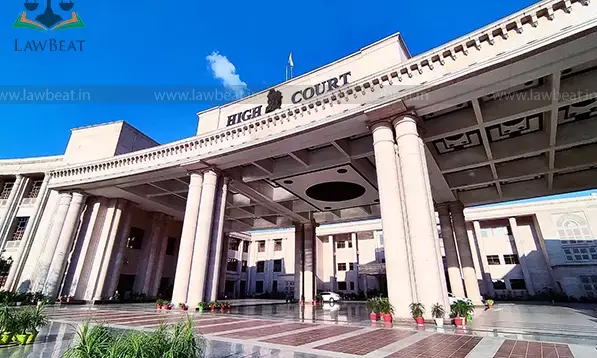
Allahabad High Court Lucknow Bench sets aside 1995 removal of Collection Amin, holds disciplinary proceedings vitiated for violation of Rule 55 U.P. Civil Services (Classification, Control and Appeal) Rules, 1930
The Allahabad High Court has set aside a three-decade-old removal order of a Collection Amin, holding that a disciplinary proceeding culminating in a major penalty without recording oral evidence and without affording the delinquent an opportunity to meet the disciplinary authority’s disagreement with the enquiry report is vitiated in law and non-est.
The Court ruled that even where the employee does not specifically seek a personal hearing, the burden to prove the charges lies on the department and an oral enquiry with examination of witnesses is mandatory before imposing dismissal or removal under Rule 55 of the U.P. Civil Services (Classification, Control and Appeal) Rules, 1930.
Justice Amitabh Kumar Rai, allowing the writ petition, quashed the punishment order dated 02.08.1995 as well as the consequential order rejecting the petitioner’s claim for re-employment, directed that his services be treated as continuous for all purposes including pension and other retiral benefits, and granted 25 per cent arrears of salary from January 2004, when the removal order was first challenged before the Court.
The Court declined to remit the matter for a fresh enquiry in view of the lapse of nearly thirty years since the charges related to the period 1993-1994.
The petitioner was appointed as a Collection Amin in 1988 and was charge-sheeted in January 1994 on allegations of poor recovery performance, failure to prepare lists of defaulters and absence on scheduled dates.
An additional charge-sheet later alleged misappropriation of small amounts, delay in deposit of certain collections and failure to hand over records during suspension.
Though he sought copies of the documents relied upon in the additional charge-sheet, the same were not supplied, and the enquiry officer initially proceeded ex parte.
A fresh enquiry report dated May 5, 1995 held one charge not proved and the remaining charges partly proved.
The disciplinary authority, however, disagreed with these findings and treated certain charges as fully proved, ultimately passing the order of removal from service.
The Court found that the entire disciplinary proceeding stood in breach of Rule 55, which mandates that before imposing a major penalty the delinquent must be informed of definite charges, given an adequate opportunity of defence and, where allegations are not admitted, an oral enquiry must be held in which documentary and oral evidence is led and witnesses are available for cross-examination.
It held that the enquiry report had been prepared solely on the basis of the petitioner’s reply and official records and that no witness had been examined to prove the documents relied upon in support of the charges.
In a departmental proceeding, which is quasi-judicial in nature, mere production of documents does not constitute evidence unless their contents are proved in accordance with law.
Relying on decisions of the Supreme Court in Roop Singh Negi v. Punjab National Bank, State of U.P. v. Saroj Kumar Sinha and Nirmala J. Jhala v. State of Gujarat, the Court held that recording of evidence is a mandatory requirement in disciplinary proceedings involving major penalties and that even in an ex parte enquiry the enquiry officer is required to examine the department’s evidence to determine whether the charges stand proved.
Since no oral evidence had been recorded and the documents had not been proved through witnesses, the findings recorded in the enquiry were held to be based on no evidence in the eye of law.
The Court further held that the disciplinary authority had acted illegally in differing from the findings of the enquiry officer without putting the petitioner on notice of the proposed disagreement and without giving him an opportunity to represent against the adverse conclusions.
Such a course, it noted, is impermissible in view of the law laid down by the Supreme Court in Punjab National Bank v. Kunj Behari Misra and Lav Nigam v. Chairman & MD, ITI Ltd.
Taking note of the fact that the petitioner had been acquitted in the parallel criminal proceedings only on the basis of benefit of doubt and had not immediately challenged the removal order, the Court confined the monetary relief to 25 per cent arrears of salary from January 2004, while directing that the entire intervening period from the date of removal till reinstatement or superannuation be treated as qualifying service for pension and other benefits.
It also directed that all consequential benefits be granted within three months.
The writ petition was accordingly allowed.
Counsel(s) Appearing: Mohammad Ali, Avinash Chaturvedi, Mansi Singh, Mohan Singh, Rahul Singh, Ravindra Singh, Saket Gupta, Vishal Singh, Advs. for the petitioners; CSC for the respondents
Case Title: Jai Prakash Verma v. State of U.P. through Secretary, Revenue & Ors.
Bench: Justice Amitabh Kumar Rai
Date: 29.01.2026