
Durga Puja | Religious Pandals On Public Roads Must Not Completely Obstruct Movement: Orissa High Court
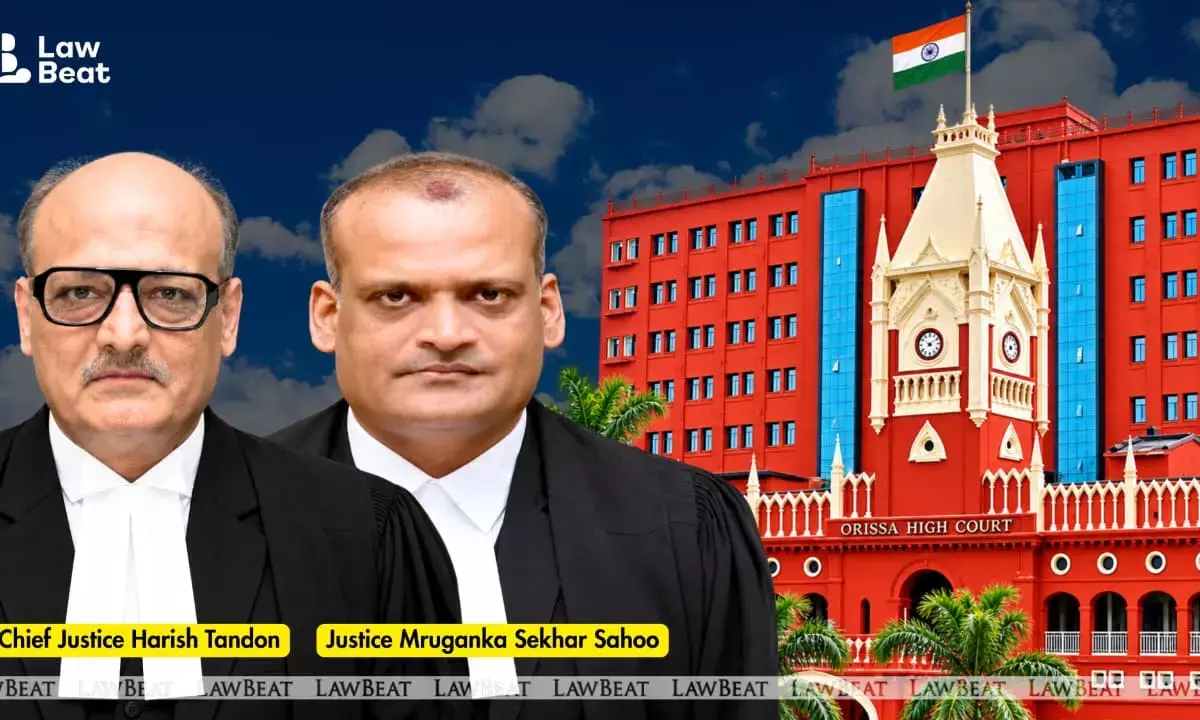
The Orissa High Court was hearing a PIL by Sarat Kumar Gajendra, who said Ganesh Puja and Durga Puja pandals blocked the road to his house. The Division Bench disposed of the plea with directions to the State government.
The Orissa High Court has held that temporary pandals erected on public roads for religious festivals must not completely obstruct vehicular movement or deny residents access to their homes.
The Court has directed the State government to ensure adequate space for vehicles, including ambulances and fire engines, while granting permission for such festivals.
A Division Bench of Chief Justice Harish Tandon and Justice Mruganka Sekhar Sahoo made the observations while disposing of a public interest litigation filed by Sarat Kumar Gajendra, who alleged that temporary pandals erected for Ganesh Puja and Durga Puja completely blocked the road leading to his house.
The petitioner’s house was situated around 50 metres from the place where the pandal was temporarily erected.
What did the State submit?
The State government informed the Court that the roads where the religious pandals were erected had not been completely blocked. According to the affidavits filed by the State, a passage measuring 22 feet had been left for vehicular movement to ensure that traffic could continue uninterrupted.
The petitioner strongly disputed the State’s stand. However, the Bench observed that when facts are presented on oath, the Court should ordinarily accept a statement that appears reasonable and rational.
The Court also noted that several residents of the locality had approached it to intervene in the proceedings, including people supporting the conduct of community religious festivals.
In view of the State’s categorical stand that sufficient passage would remain available, the Bench said it did not consider it appropriate to order a complete stoppage of religious ceremonies on the ground that they could obstruct vehicular movement or affect residents’ access to their homes.
The Court observed: "As we indicated hereinbefore that the larger public interest overshadowed an individual interest, we do not feel that there should be a complete stoppage of the performance of those religious ceremonies or the puja in the garb that it obstructs the movement of the vehicles and also access to the inhabitants of the said locality."
What did Court say on Religious Freedom?
The Bench examined the issue in the context of Article 25 of the Constitution, which guarantees freedom of conscience and the right to profess, practise and propagate religion.
It observed that the right to freedom of religion is subject to restrictions concerning public order, morality and health, as well as other provisions of Part III of the Constitution.
The Court said: "Clause-1 of the said Article ordains that all persons are equally entitled to freedom of conscience and freely to profess, practice and propagate religion but the said Article starts with the restrictions signifying that such right to profess religion is not an absolute or inchoate right but subject to the restrictions in relation to a public order, morality and health and to other provisions of the said Part."
The Bench noted that religious festivals and community rituals have long been part of India's traditions and culture, bringing people together and promoting peace and harmony.
It observed: "The religious activities, its rituals and its mode of performance through a community is all along being a part of the tradition, the culture and the mode of life which this country enjoins holding of the festivals ordained in a particular religion is always considered amongst the community or a section of the community bringing them together and propagating peace, welfare, harmony and affection amongst the peoples."
At the same time, the Court emphasised that religious freedom must be harmonised with other constitutional rights, including the right to free movement under Article 19 and the protection of life and personal liberty under Article 21.
Orissa HC says Ambulances, Fire Engines must have access
The High Court stressed that permission to hold religious festivals in public spaces cannot result in roads being completely blocked or residents being prevented from entering or leaving their homes.
The Bench observed: "Even if those festivals are performed on a public place, the State must ensure that the movement of public to their respective places of residence is not hindered or completely blocked nor the Court would conceive of that there is no access provided which would have a larger cascading effect in case of emergent situations."
The Court added that even if the pandals are constructed on a public place, there should be adequate space left for the movement of the vehicles or at least the movement of an ambulance and/or a fire engine in case of any emergency to avoid any public disorder or a disharmony into a large section of the society.
The Court further stated that the government must ensure that sufficient passage remains available for residents and emergency vehicles.
It held: "Suffice to say that while granting such license to a community in performing such religious festivals, the Government should ensure that there is no complete disruption in the movement of the vehicles nor the person should be denied a passage for ingress and egress. Adequate distance should be strictly adhered to, which makes the movement of the emergency vehicles, so that in case of any emergency, such facilities and/or amenities are available at their doorstep."
State asked to enforce Sound limits and timings
The Bench also directed the government to ensure compliance with permissible sound limits and prescribed timings for religious festivals.
The Court asked the Government to maintain the permissible sound limit while organizing those festivals and the deadline which is fixed beyond which it should not be allowed.
The Court further said that temporary structures erected on public roads must be of appropriate dimensions so that they do not unduly restrict movement.
"The Government shall also ensure that the temporary structures put on the public road should be of such measurement which would not eclipse the right of movement, as the reasonable restrictions are permissible and adequate space should be left for vehicular movement" it said.
Appreciating the petitioner for raising issues of public importance, the Bench disposed of the public interest litigation with these observations and directions.
Case title : Sarat Kumar Gajendra v. Collector & District Magistrate, Khordha and others