
Entries in Birth Register Need Independent Proof of Identity to Establish Lineage: Himachal Pradesh HC
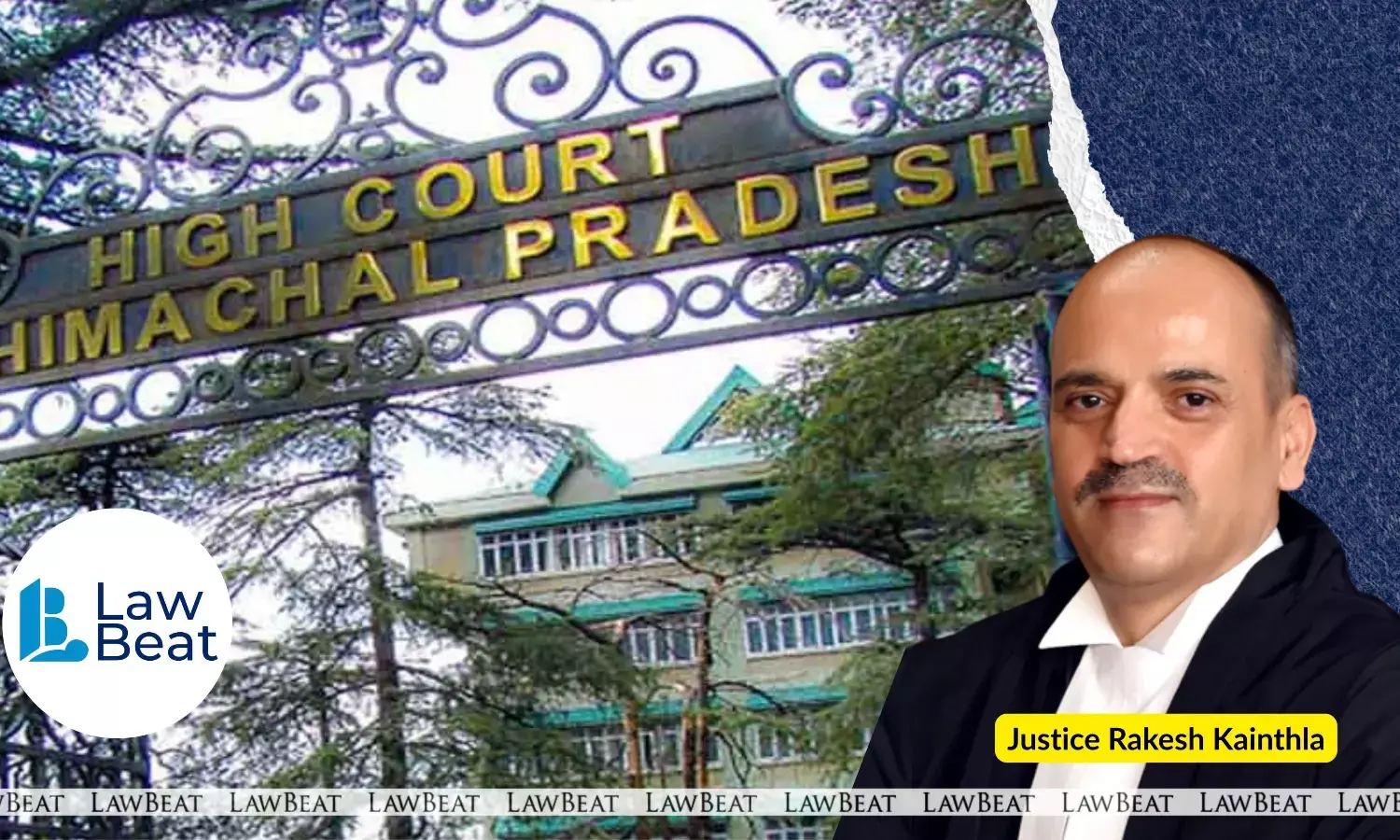
Himachal Pradesh High Court reiterates that birth certificate entries alone cannot establish relationship without independent corroborative evidence
The Himachal Pradesh High Court has reiterated that while entries in public records such as birth certificates are admissible under the Indian Evidence Act, they do not by themselves establish identity or relationship unless supported by independent evidence, holding that mere production of such documents is insufficient to prove lineage in a civil dispute.
A single judge bench of Justice Rakesh Kainthla dismissed a Regular Second Appeal and upheld the judgment and decree of the District Judge, Kullu dated 29.12.2005, which had decreed the plaintiff’s suit and set aside the mutations in favour of the defendant.
The High Court held that no interference was warranted with the appellate court’s findings and confirmed that the defendant had failed to establish her claimed relationship with the original landowner.
The dispute arose out of a civil suit filed by the plaintiff seeking a declaration that mutation Nos. 900 and 903 attested in favour of the defendant were illegal and not binding upon him.
The plaintiff claimed ownership of the suit land through succession and testamentary disposition, asserting that the defendant had no right or title in the property.
The defendant, on the other hand, claimed to be the daughter of the original owner, Rirku, and relied primarily on a birth certificate indicating that a female child was born to him.
The trial court dismissed the suit, accepting the defendant’s claim and relying upon the birth certificate along with certain admissions made during cross-examination.
However, the first appellate court reversed these findings, holding that the defendant had failed to establish her relationship with Rirku, as the birth certificate did not mention the name of the child and no independent evidence had been led to connect the entry with the defendant.
Before the High Court, the principal questions of law revolved around the evidentiary value of public documents such as birth certificates and whether their genuineness and contents could be presumed under Sections 35 and 79 of the Indian Evidence Act.
The appellants contended that such documents, being public records, were admissible and sufficient to establish the relationship without the need for further proof.
Rejecting this contention, the High Court drew a clear distinction between admissibility and probative value of evidence.
It held that although entries in public records are admissible under Section 35, they do not automatically prove the truth of their contents or establish the identity of the person referred to therein.
The Court emphasized that additional evidence is necessary to connect the entry with the person in question, especially when the relationship itself is disputed.
The Court noted that in the present case, the birth certificate merely recorded the birth of a female child to Rirku without identifying the child.
Further, the evidence on record indicated that the child was born after the death of Rirku, which was inconsistent with the defendant’s claim that she was his daughter and had been six months old at the time of his death.
These discrepancies, the Court held, rendered the document insufficient to establish the claimed relationship.
The bench further reiterated that proof of relationship must ordinarily be established through evidence contemplated under Section 50 of the Evidence Act, namely the opinion expressed through conduct by persons having special knowledge of the relationship.
In the absence of such evidence, reliance solely on documentary entries is inadequate.
The Court found that the defendant had failed to examine any witness capable of establishing her status as a family member or to produce any evidence demonstrating conduct consistent with such a relationship.
The bench also addressed the argument regarding the presumption of genuineness under Section 79 of the Evidence Act, holding that such presumption pertains only to the authenticity of the document and not to the correctness of its contents or the identity of the persons mentioned therein.
On the issue of maintainability, the appellants argued that the civil suit challenging mutation entries was barred under Section 171 of the Himachal Pradesh Land Revenue Act. The Court rejected this submission, holding that the jurisdiction of civil courts is preserved under Section 46 of the Act, which enables a person aggrieved by entries in revenue records to seek a declaration of rights.
It reiterated that revenue entries are subject to the adjudication of civil courts and cannot override substantive rights.
Additionally, the High Court dismissed an application seeking to introduce additional evidence at the appellate stage, holding that the requirements under Order XLI Rule 27 of the Code of Civil Procedure were not satisfied.
The Court observed that the documents sought to be introduced were available earlier and no explanation had been provided for their non-production before the trial court.
In light of the above findings, the Court concluded that the defendant had failed to discharge the burden of proving her relationship with the original owner and that the appellate court had correctly decreed the suit in favour of the plaintiff.
Finding no substantial question of law warranting interference, the High Court dismissed the appeal.
Case Title: Sharwan Lal & Ors. v. Ses Ram (deceased) through LRs & Ors.
Bench: Justice Rakesh Kainthla
Date of Judgment: 25.03.2026