
Equal Rights for Daughters in Farm Land? Allahabad High Court Pulls Up UP Govt for Vague Affidavit
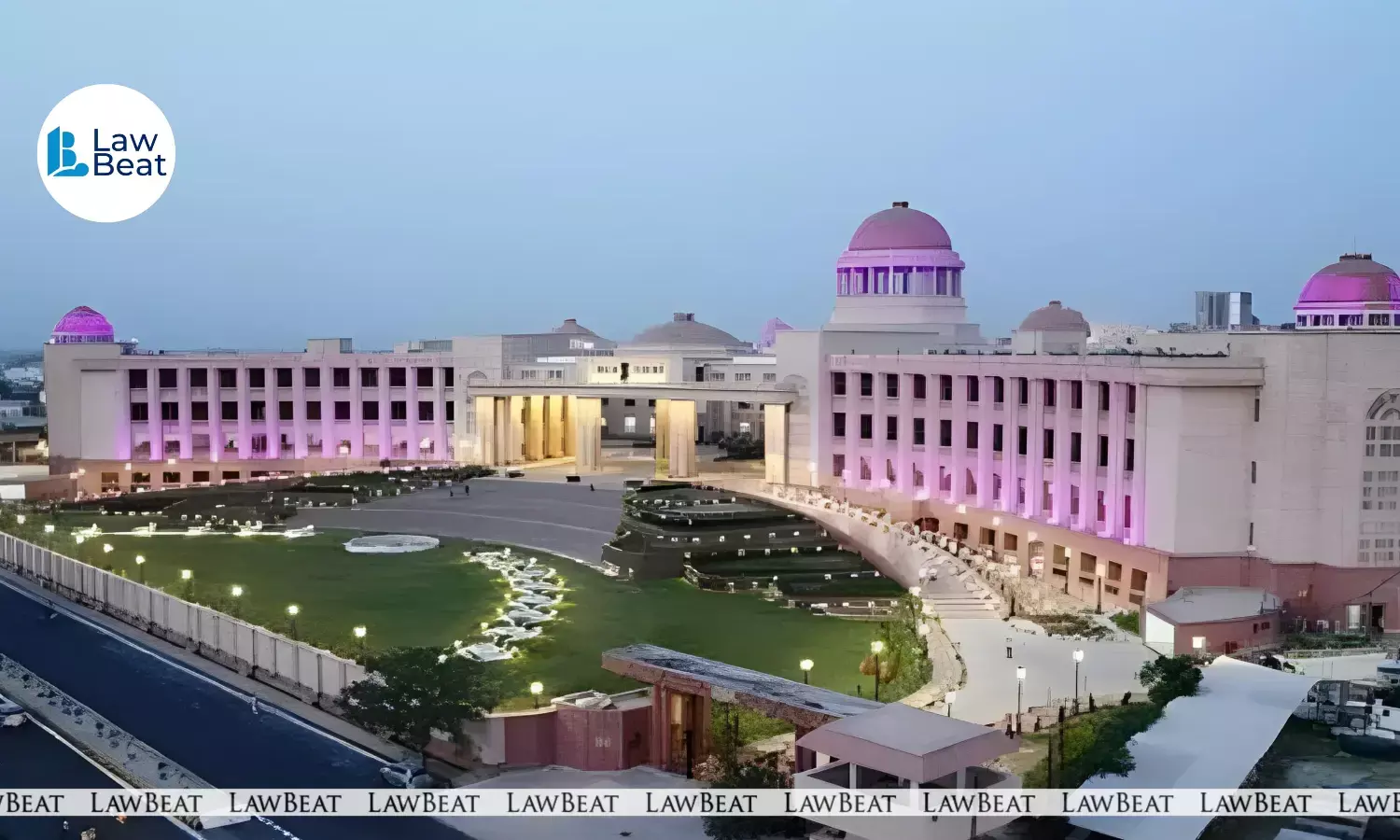
Allahabad High Court questions UP government over delayed response on equal land rights for women
The Allahabad High Court recently expressed strong dissatisfaction with the Uttar Pradesh government’s response in a long-pending public interest litigation challenging alleged gender discrimination in succession rights over agricultural land under the U.P. Revenue Code, 2006, and has directed the State’s top revenue official to file a clear and reasoned affidavit within two weeks.
A division bench of Justice Rajan Roy and Justice Abdhesh Kumar Chaudhary was hearing a batch of petitions, with PIL No. 12700 of 2019 as the lead matter, along with several writ petitions filed by women petitioners in recent years. The core grievance raised across these petitions is that the existing statutory scheme governing succession to agricultural holdings continues to discriminate against unmarried, married and widowed daughters, thereby violating constitutional guarantees of equality.
At the outset, the bench noted that since the challenged enactment is a State law, it had earlier called upon the Uttar Pradesh government to place its stand on record. While affidavits were filed by the State in 2021 and again in 2025, the court found them to be “woefully lacking” in necessary averments on the crucial issue of constitutional validity. According to the bench, instead of addressing whether the impugned provisions withstand constitutional scrutiny, the affidavits largely confined themselves to narrating the legislative history of the law.
One of the key disclosures made by the State was that in 2018, a sub-committee of the Cabinet had been constituted under the chairmanship of the Parliamentary Affairs Minister to examine the issue of granting equal rights in agricultural land to unmarried, married and widowed daughters. However, the State admitted that no meeting of this sub-committee ever took place, resulting in no decision being taken on the matter. It was further stated that steps were currently being taken to reconstitute the sub-committee.
The petitioners, appearing in person and through counsel, pointed out that despite the passage of several years, the legislative vacuum persisted. One of the petitioners informed the bench that although certain amendments had been introduced to recognize transgenders as successors to agricultural holdings, no corresponding amendment had been made to remove the alleged discrimination against daughters, which lies at the heart of the present challenge.
Taking serious note of the State’s vague stand, the bench directed that a fresh affidavit be filed by none other than the Additional Chief Secretary or Principal Secretary of the Revenue Department. The court made it clear that the affidavit must specifically address whether the government is genuinely pursuing the issue of equal succession rights for daughters through the Cabinet sub-committee. The State has also been asked to indicate how long it would take to reconstitute the committee and provide an approximate timeline for submission of its report.
Crucially, the bench has also sought a categorical statement from the State on its position regarding the constitutionality of the provisions under challenge. The judges observed that this stand must be “specifically spelled out” and supported by relevant material, if the government intends to defend the law. Granting two weeks’ time for compliance, the court cautioned that no further opportunity would be given and advised the senior revenue official to personally look into the matter.
The matter has been listed for February 2, 2026, among the first ten cases of the day. The bench has also requested senior advocate M.A. Khan to assist the court on the complex issues involved, while advocate Apoorva Tewari has also offered assistance and will be reflected in the cause list on the next date of hearing.
Siddhartha Shukla argued the lead public interest litigation in person, pressing the challenge to the succession provisions of the U.P. Revenue Code, while Skand Bajpai and Poulomi Pavini Shukla appeared in person in the connected writ petitions filed in 2024 and 2025.
Case Title: Siddhartha Shukla vs. State Of U.P. Thru Chief Secretary And Anr.
Order Date: January 12, 2026
Bench: Justice Rajan Roy and Justice Abdhesh Kumar Chaudhary