
Even 20 Years of Litigation Can’t Dilute SARFAESI Discipline, Says Kerala High Court
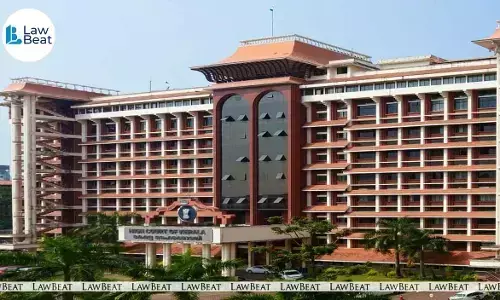
High Courts Must Not Bend SARFAESI Framework Despite Prolonged Proceedings: Kerala HC
Reiterating the strict limits on writ jurisdiction in matters arising under the SARFAESI Act, the Kerala High Court has held that even prolonged pendency of proceedings before the High Court, coupled with serious factual allegations regarding the conduct of a bank auction, does not justify bypassing the statutory remedy available before the Debts Recovery Tribunal.
A Division Bench comprising Justice Anil K. Narendran and Justice Muralee Krishna S. dismissed a writ appeal challenging a SARFAESI sale initiated nearly two decades ago, holding that no “exceptional circumstances” existed to warrant interference under Article 226 of the Constitution. The Bench, however, clarified that the appellant could seek exclusion of the time spent prosecuting writ proceedings for the purpose of limitation before the Tribunal.
"As far as the contention of the appellant regarding the long pendency of the matter before this Court is concerned, as noticed herein above, immediately after the judgment dated 14.01.2009 passed by this Court in this writ appeal, the appellant filed S.A.No.48 of 2009 before the Tribunal, and the same is pending. In such circumstances, the period of pendency of the matter before this Court cannot be taken as a ground to hold that the appellant need not be relegated to avail the alternative remedy", the bench observed.
The appeal arose from recovery proceedings initiated by Canara Bank against property mortgaged by a guarantor for a loan availed by a seafood export firm. Following classification of the account as a non-performing asset in 2006, the bank proceeded under the SARFAESI Act, culminating in an auction sale.
The guarantor passed away shortly before the sale, and her daughter subsequently challenged the proceedings.
The appellant raised multiple factual and procedural objections, including alleged non-compliance with mandatory rules governing possession and sale notices, incorrect invocation of statutory provisions, undervaluation of the property, pendency of a One Time Settlement proposal, and lack of notice to legal heirs.
It was also contended that the property was resold shortly after the auction at a substantially higher price, indicating serious irregularities.
Despite these allegations, and despite the writ proceedings remaining pending in various forms since 2006, the High Court declined to entertain the challenge on merits.
The Bench emphasised that the SARFAESI Act constitutes a complete code, providing an efficacious mechanism for redressal of grievances through the Debts Recovery Tribunal, including challenges to procedural irregularities and sale conduct.
Placing reliance on a consistent line of Supreme Court authority, including United Bank of India v. Satyawati Tondon, Authorized Officer, State Bank of Travancore v. Mathew K.C., and South Indian Bank Ltd. v. Naveen Mathew Philip, the Court underscored that High Courts must exercise self-imposed restraint in recovery matters, particularly where statutory remedies are available and effective.
Significantly, the Bench rejected the argument that the extraordinary length of litigation before the High Court itself constituted an exceptional circumstance.
The Court noted that the appellant had already invoked the SARFAESI remedy before the Tribunal and that court-induced delay could not be used as a lever to avoid the statutory forum prescribed by Parliament.
"... In Glaxo Smith Kline Consumer Health Care Limited [(2020) 19 SCC 681], is that even though the High Court has wide powers under Article 226 of the Constitution of India, that does not mean that it would issue a writ which may be inconsistent with the legislative intent regarding limitation. It shall not do so, as a matter of course, when the aggrieved person could have availed of an alternative remedy in the manner prescribed by law. As noted hereinabove, the appellant has not made out any sufficient reason for not availing the alternative remedy available to her before the Tribunal", it was further added.
The judgment sends a clear signal that factual complexity, allegations of undervaluation, or prolonged pendency, howsoever compelling, cannot dilute the legislative intent underlying the SARFAESI framework, which prioritises speedy recovery of public dues with minimal judicial interference.
At the same time, the Court adopted a limited equitable approach by clarifying that the appellant would be entitled to seek exclusion of the period spent litigating before the High Court while pursuing her securitisation application before the Tribunal.
Case Title: Sophie Vinay v. Canara Bank and Ors.
Bench: Justice Anil K. Narendran and Justice Muralee Krishna S.
Date of Judgment: 31.01.2026