
Existence Of Alternative Remedy, No Absolute Bar On Writ: Delhi High Court Restores Petition in Passport Impounding Case
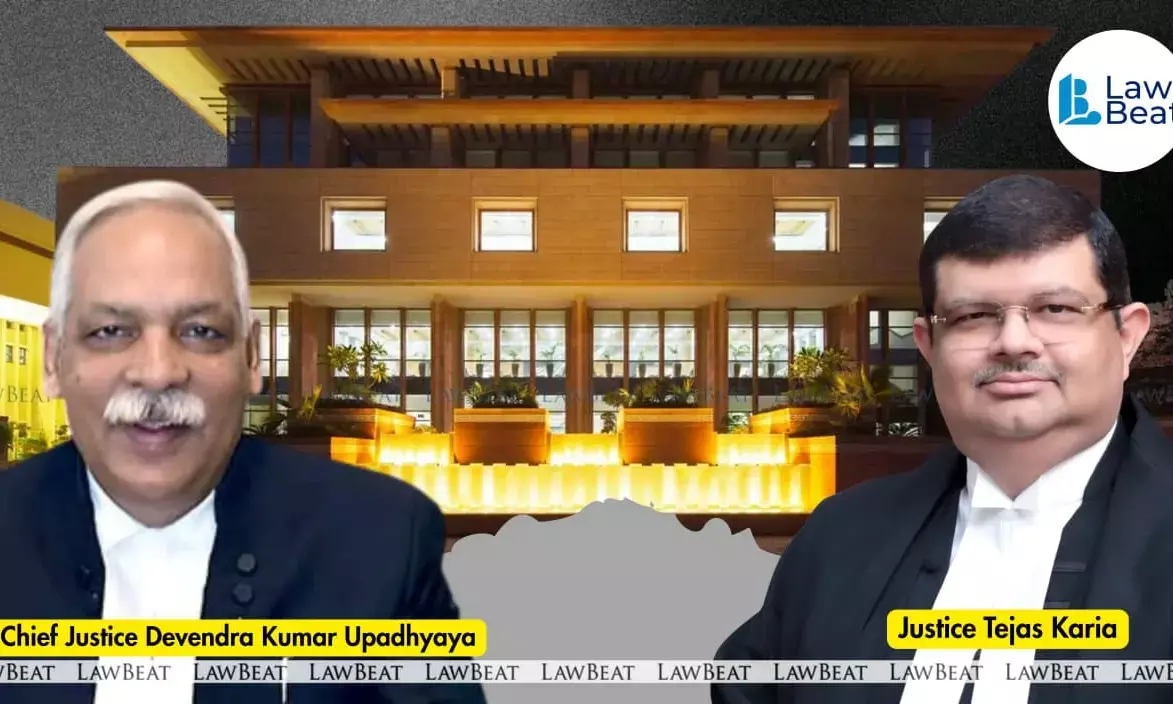
Delhi High Court held that passport impounding affecting personal liberty must follow strict procedural fairness and can be challenged directly under writ jurisdiction.
The Delhi High Court recently set aside a single judge’s order refusing to entertain a writ petition challenging the impounding of a passport, holding that the case merited examination under Article 226 of the Constitution despite the availability of a statutory appellate remedy.
A division bench comprising Chief Justice Devendra Kumar Upadhyaya and Justice Tejas Karia allowed an intra-court appeal against the February 13 order, which had relegated the petitioner to pursue an alternative remedy under Section 11 of the Passports Act, 1967.
“Having regard to the nature of proceedings which are drawn by the authorities by invoking Section 10(3) of the Passports Act and the situation to which a passport holder is likely to land himself once the passport is revoked, principles of natural justice assume special significance keeping in view the law laid down by the Hon’ble Supreme Court in Maneka Gandhi (supra)……… we are of the opinion that the learned single judge has erred while refusing to entertain the writ petition on the ground of availability of remedy of statutory appeal under Section 11 of the Passports Act, specially keeping in view the fact that the petition was entertained way back in the year 2021 itself”, court observed.
Court reiterated the settled principle that while the existence of an alternative remedy generally discourages the exercise of writ jurisdiction, it is not an absolute bar. In doing so, the bench relied on the landmark judgment in Whirlpool Corporation v. Registrar of Trade Marks, Mumbai and Others (1998), where the Supreme Court of India held that writ jurisdiction can be invoked in exceptional circumstances, including cases involving violation of fundamental rights, breach of natural justice, or lack of jurisdiction.
Examining the facts of the case, the high court found a prima facie breach of procedural fairness. It noted that the show cause notice issued to the petitioner had granted time until August 4, 2021, to respond. However, the final order impounding the passport was passed on August 3, 2021, even before the expiry of the response period.
The bench further observed that the impugned order did not reflect any consideration of the petitioner’s earlier reply and appeared to have been passed in haste, undermining the principles of natural justice.
“For the aforesaid facts of the situation, prima facie, the appellant has been able to make out a case where the impugned order appears to have been passed in violation of the principles of natural justice and, accordingly, having regard to the law laid down by the Hon'ble Supreme Court in Whirlpool Corporation (supra), in our opinion, it was a case where discretion of the learned single judge to entertain the writ petition under Article 226 of the Constitution of India ought not have been declined solely for the reason of availability of a statutory remedy available under Section 11 of the Passports Act,” court observed.
The high court also underscored the serious civil consequences that flow from the impounding of a passport. It noted that such actions directly impact an individual’s right to travel and personal liberty, thereby necessitating strict adherence to procedural safeguards.
In this context, court referred to the seminal ruling in Maneka Gandhi v. Union of India, which expanded the scope of Article 21 and emphasised that any procedure affecting personal liberty must be fair, just and reasonable.
The bench observed that proceedings relating to passport impounding must conform to these constitutional standards, and any deviation from principles of natural justice would justify judicial intervention even at the writ stage.
Accordingly, court set aside the order of the single judge and directed that the writ petition be restored and heard afresh on merits. The decision reinforces the judiciary’s role in ensuring that administrative actions, particularly those affecting fundamental rights and civil liberties, are carried out in a fair and legally compliant manner.
The ruling also reiterates that procedural safeguards cannot be diluted merely on the ground that an alternative statutory remedy exists, especially where the impugned action appears to have been taken in violation of basic principles of fairness.
Case Title: Shravan Gupta v. UOI
Bench: Chief Justice Devendra Kumar Upadhyaya and Justice Tejas Karia
Date of Judgement: 24.03.2026