
Madhya Pradesh High Court Quashes Deficient FIR For Non-Compliance With Section 156(3) CrPC, Directs Fresh Registration
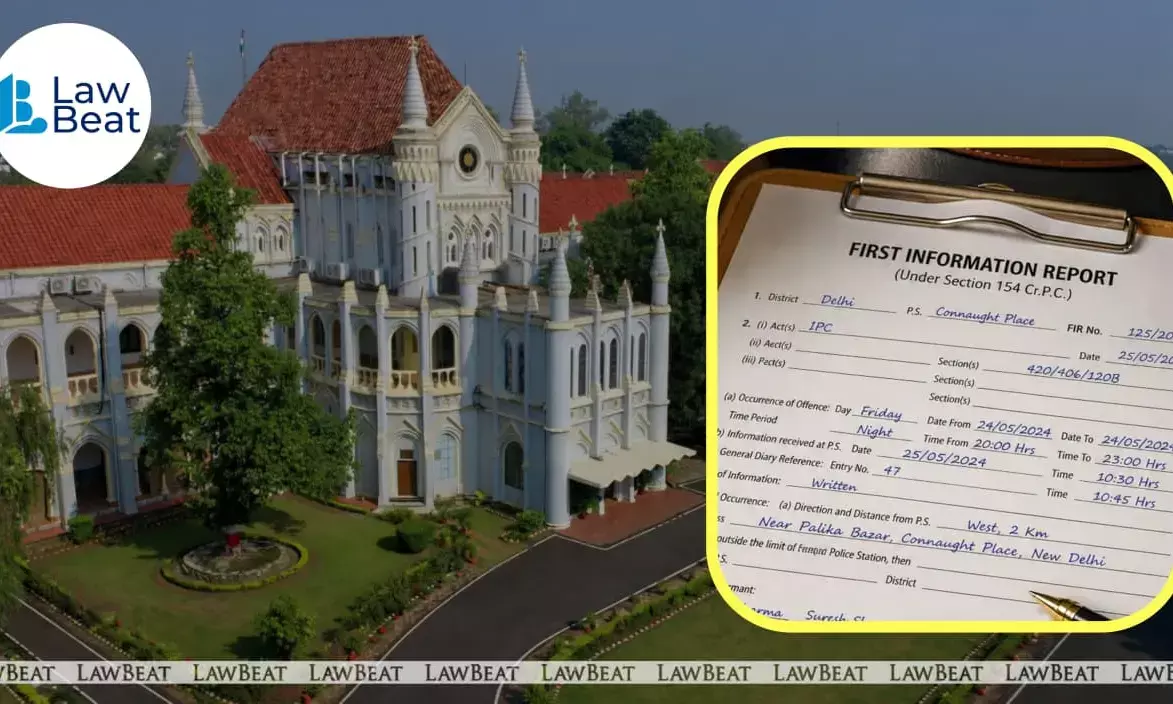
Illusory Compliance Not Enough: Madhya Pradesh High Court Slams Defective FIR
The Madhya Pradesh High Court has come down strongly on what it termed a “mechanical” and “illusory” compliance by the police with a Magistrate’s direction to register an FIR, quashing a deficient complaint and ordering a fresh registration that faithfully reflects the allegations and inquiry findings.
In a writ petition filed by Virendra Kumar Pandey, an employee of the District Court at Jabalpur, Justice B.P. Sharma examined whether mere registration of an FIR satisfies the mandate of law when the contents fail to capture the substance of allegations.
The petitioner alleged that private respondents, who were closely related to him, had fabricated judicial records to secure an ex-parte acquittal in earlier proceedings. A preliminary inquiry conducted on the directions of the High Court administration had already found prima facie material pointing towards forgery, following which permission was granted to initiate criminal action.
Despite this, the police failed to act, compelling the petitioner to approach the Magistrate under Section 156(3) of the CrPC. The Magistrate directed registration of an FIR incorporating all material particulars from the inquiry. However, the eventual FIR, registered after considerable delay and only when contempt proceedings loomed, was challenged as vague, incomplete, and deliberately diluted.
The High Court agreed with this grievance, noting that the controversy was not about whether an FIR had been registered, but whether it amounted to “genuine and faithful compliance” with judicial directions. It observed that the FIR “falls short of the said mandate” and does not reflect either the substance of allegations or the material findings of the inquiry.
Significantly, the Court underscored that such deficiencies are not minor procedural lapses but go to the root of the criminal process. It recorded that the FIR was “cryptic, materially incomplete, and appears to have been recorded in undue haste without due application of mind,” further noting that it failed to clearly disclose cognizable offences.
Rejecting the State’s argument that an FIR need not be exhaustive and that defects could be cured during investigation, the Court drew a clear line between permissible brevity and impermissible dilution. It held that where a Magistrate specifically directs incorporation of material particulars, any conscious omission or distortion cannot be brushed aside as curable irregularity.
In a pointed remark on police conduct, the Court said the manner of registration “reflects a clear lack of due application of mind” and gives rise to an inference that it was done merely to avoid consequences of non-compliance. It further emphasized that “a mere mechanical or cosmetic exercise… cannot be recognized as lawful compliance.”
The Court noted that the diluted complaint had already enabled accused persons to secure anticipatory bail, thereby undermining the possibility of a fair investigation. It cautioned that such practices strike at the “root of the rule of law” and erode the integrity of criminal justice administration.
Reinforcing the binding nature of judicial directions, the Court held that compliance must be “real, effective and meaningful,” and not a ritualistic formality. It stressed that once a Magistrate issues directions under Section 156(3), the police are duty-bound to adhere to both the letter and spirit of the order.
Accordingly, the Court quashed FIR No. 487/2025 registered at Police Station Omti, Jabalpur, and directed the Station House Officer to register a fresh FIR strictly in accordance with the Magistrate’s order. It mandated that the new FIR must incorporate all material facts and findings from the preliminary inquiry to ensure a fair, impartial, and effective investigation.
Case Title: Virendra Kumar Pandey v. The State of Madhya Pradesh and Others
Date of Order: April 8, 2026
Bench: Justice B.P. Sharma