
FIR Not Substantive Evidence: Rules MP High Court Sets Aside Insurer's Exoneration In Fatal Tractor Accident
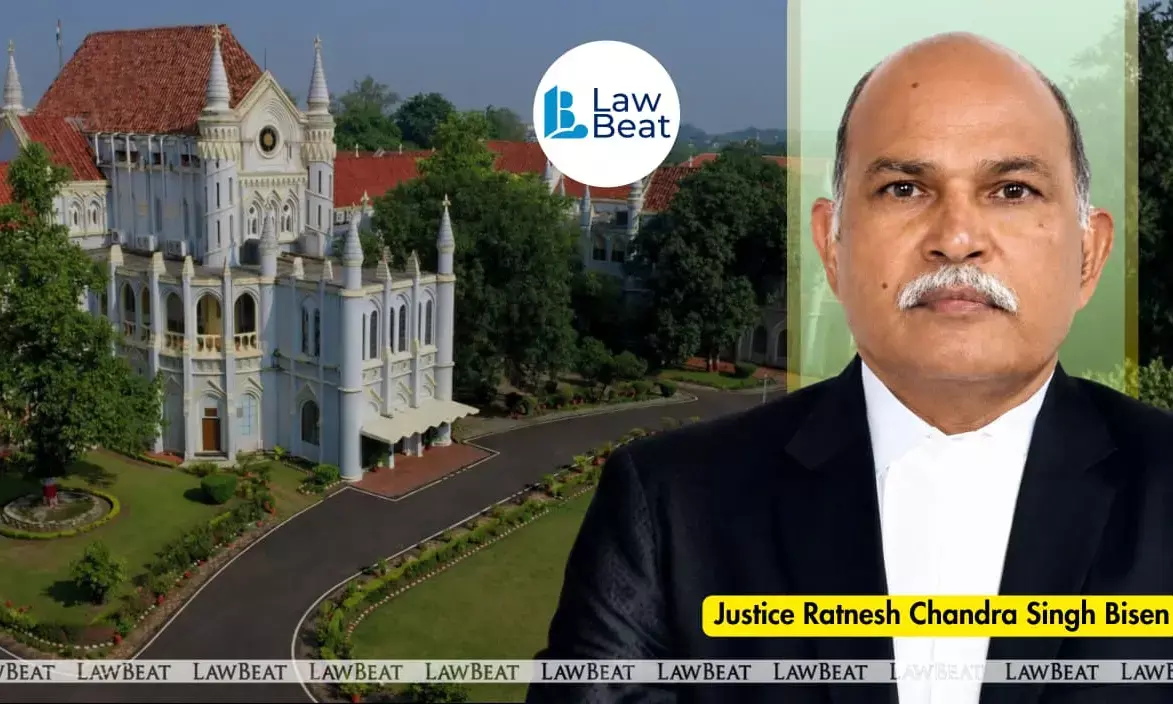
FIR Cannot Override Eyewitness Testimony, Says MP High Court, Restores Insurer's Liability in Tractor Death Case
The Madhya Pradesh High Court has ruled that a First Information Report cannot, by itself, be treated as proof of how an accident occurred, especially when contradicted by the sworn testimony of an eyewitness. Setting aside a Motor Accident Claims Tribunal's finding that had let an insurance company off the hook, the Jabalpur bench held that unless an FIR's contents are formally proved in court, they cannot override direct evidence led during trial.
The case arose from the death of Ramcharan Verma, who died on October 11, 2016, during a Durga idol immersion procession at Saraswati Ghat. According to the claimants, Ramcharan was dancing on the road ahead of a tractor driven by one Pramod Yadav, when the driver's rash and negligent driving caused it to run him over. The FIR, lodged by the deceased's uncle Bedilal, recorded a different version, that Ramcharan was sitting on the tractor and died after falling from it and coming under its wheel.
The Claims Tribunal, VI Additional Motor Accident Claims Tribunal, Jabalpur, relied on this FIR version to hold that the deceased was a gratuitous passenger on a vehicle insured only for agricultural use, and exonerated the insurance company while fixing responsibility on the tractor's owner and driver. This finding was challenged before the High Court by the owner, Anil Kumar Patel, under Section 173(1) of the Motor Vehicles Act, 1988.
Justice Ratnesh Chandra Singh Bisen, hearing the appeal, noted that the eyewitness account of Ram Verma alias Ashu, who was dancing alongside the deceased and was himself injured, remained unshaken in cross-examination. "There is nothing in the cross-examination of this witness on the basis of which his testimony could be disbelieved," the Court observed, adding that his presence at the spot stood corroborated by his own injuries.
The Court also pointed out that the insurer never examined an eyewitness or the author of the FIR to prove that the deceased was sitting on the tractor. "Merely because the FIR contains a statement to this effect, it cannot automatically be held proved that the deceased Ramcharan was sitting on the tractor at the time of the incident," the order stated, reiterating that an FIR "is not substantive piece of evidence; rather, it is admissible as corroborative evidence and may be used for the purpose of contradiction under Section 145 of the Indian Evidence Act."
Advocate Arvind Chawla, appearing for the appellant, relied on the Supreme Court's three-judge ruling in Halappa v. Malik Sab, arguing that evidence led before the Tribunal must prevail over the FIR. Advocate Prabal Singh Rajput represented respondent No. 1, while Advocate Aditya Narayan Sharma, for the insurer as respondent No. 4, cited Oriental Insurance Company Limited v. Premlata Shukla, arguing that the FIR's contents, once exhibited, could be relied upon.
The Court distinguished the Premlata Shukla judgment on facts, holding that since it was rendered by a two-judge bench while Halappa was decided by a three-judge bench, the latter's principle would prevail. It also relied on the final police report, which recorded that the deceased and the injured witness were dancing on the road when the tractor struck them, noting that a charge-sheet under Section 304-A IPC had been filed against the driver.
Holding that the Tribunal had erred in accepting an unproved FIR over corroborated eyewitness testimony, the Court set aside the award to the extent it exonerated the insurer. The appeal was partly allowed, with the insurance company made liable to satisfy the award, while the rest of it was left undisturbed.
Case Title: Anil Kumar Patel vs. Smt. Munni Bai Barman and Others
Date of Order: September 1, 2026
Bench: Justice Ratnesh Chandra Singh Bisen