
‘Forum Shopping’ or Fair Trial Concern? Delhi High Court Reserves Order on Kejriwal’s Recusal Plea
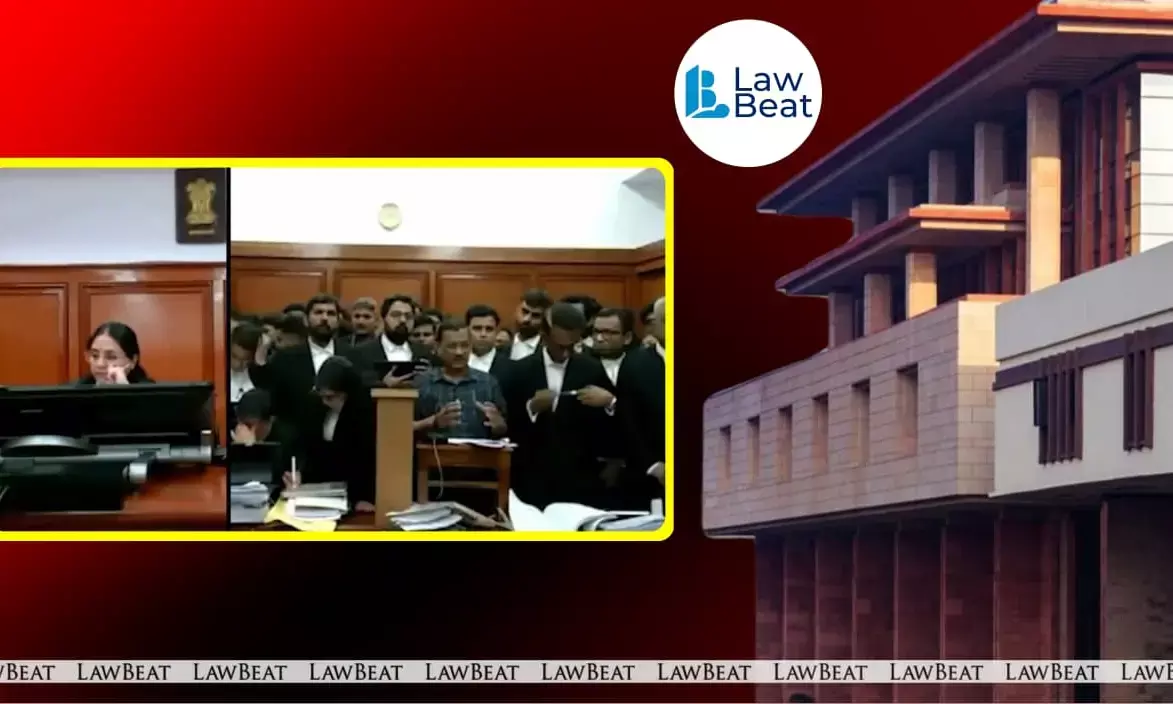
Delhi High Court orders removal of videos linked to Arvind Kejriwal’s recusal hearing, citing violation of virtual court rules
The Delhi High Court on Tuesday reserved its order on applications seeking recusal of the presiding judge in proceedings arising out of the Delhi excise policy case, with sharp arguments advanced on both sides regarding judicial impartiality and alleged forum shopping.
Appearing for the prosecuting agencies, Solicitor General Tushar Mehta strongly opposed the recusal plea, contending that the application was a “mala fide” attempt by Arvind Kejriwal and other respondents to secure a bench of their choice. He submitted that such pleas, if entertained, would undermine the administration of justice by enabling litigants to engage in “forum shopping” through unsubstantiated allegations against judges.
Mehta argued that the court’s earlier observations in connected proceedings were not discretionary but mandated under Section 19 of the Prevention of Money Laundering Act, 2002. He further submitted that several of these findings had already received affirmation from the Supreme Court, and therefore could not be cited as evidence of bias. He dismissed references to the judge’s participation in legal events as “juvenile” and legally irrelevant, urging the court to dismiss the application with strictness. He also suggested that such allegations may warrant initiation of contempt proceedings to preserve the dignity of the judiciary.
The matter was heard by Justice Swarna Kanta Sharma, who reserved orders after hearing extensive submissions. The proceedings arise from a petition filed by the Central Bureau of Investigation challenging the discharge of several accused persons, including Kejriwal, Manish Sisodia and K Kavitha, in the alleged excise policy scam case. The trial court had earlier discharged all accused, holding that the material on record did not disclose commission of any offence.
Arguing his recusal application in person, Kejriwal submitted that the legal standard for recusal is not actual bias, but a reasonable apprehension of bias in the mind of the litigant. He contended that such apprehension arose from the court’s prior observations in related proceedings, where his arrest had been upheld and the alleged scam described in strong terms. According to him, these findings effectively pre-judged the issue, thereby raising doubts about the possibility of an impartial hearing.
Kejriwal also referred to what he described as the “extraordinary speed” of the present proceedings and the grant of an ex parte stay on the trial court’s discharge order. He argued that these factors, when viewed cumulatively with the judge’s prior observations and public appearances at certain legal forums, created a perception of prejudice sufficient to justify recusal.
Senior Advocate Sanjay Hegde, appearing for Sisodia, supported the plea by emphasizing that the test for recusal is rooted in the perspective of a reasonable litigant. He submitted that the issue is not the actual impartiality of the judge, but whether a party, particularly one facing criminal prosecution, can reasonably apprehend bias. He argued that prior judicial observations in connected matters may create a perception that the bench has already formed a view, making it difficult for the litigant to expect a neutral adjudication.
Hegde further submitted that recusal in the present case would not disrupt judicial functioning, as the high court has multiple benches competent to hear the matter. He argued that stepping aside in such circumstances would reinforce public confidence in the judicial process, rather than diminish it.
Senior Advocate Shadan Farasat also appeared for the respondents, while Additional Solicitor General S V Raju represented the investigative agencies along with the Solicitor General.
The case raises important questions concerning the balance between judicial independence and litigants’ perception of fairness, particularly in high-profile criminal proceedings. The court is now expected to determine whether the grounds advanced meet the threshold for recusal under established legal principles.
Case Title: CBI v. Kuldeep Singh & Ors.