
Gauhati High Court Says Heinous Crime Alone Cannot Justify Denial Of Remission To Life Convicts
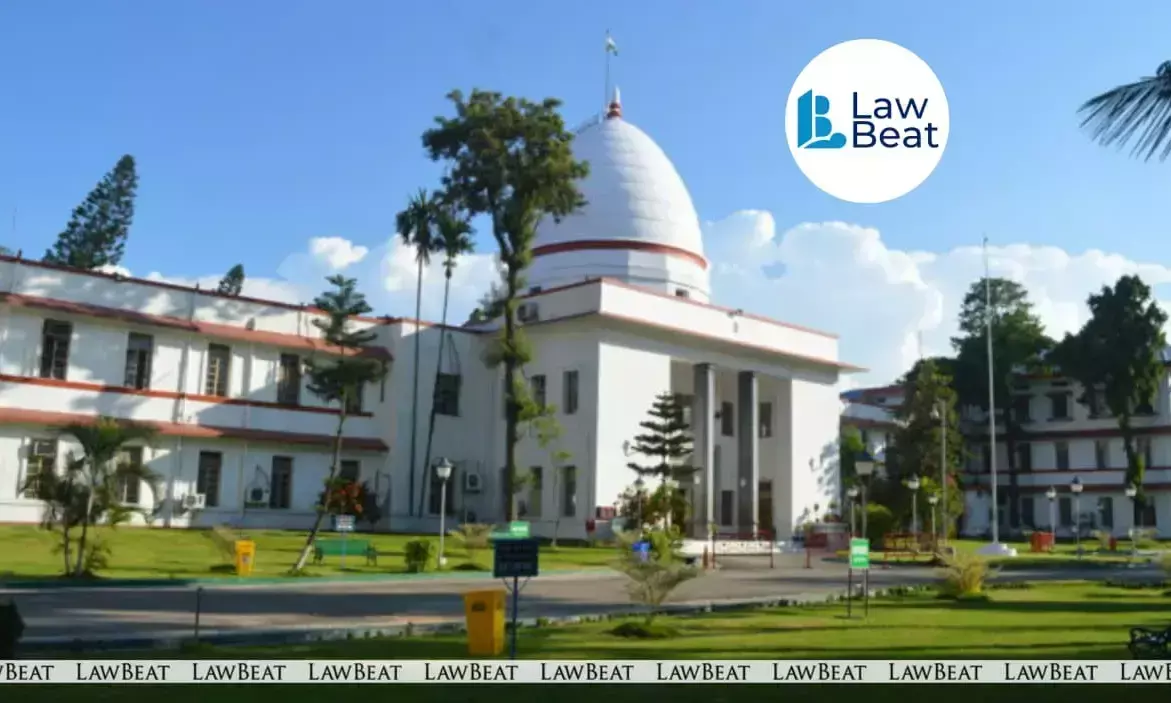
Gauhati HC Directs Assam Review Board to Reconsider Premature Release Applications of Four Prisoners
The Gauhati High Court has ruled that the heinous nature of an offence, by itself, cannot be the sole reason for denying remission to a life convict, stressing that authorities must undertake a holistic assessment of each prisoner before deciding on premature release.
A single-judge bench of Justice Manish Choudhury passed the ruling while allowing four writ petitions filed by life convicts whose requests for remission or premature release had either been deferred or inadequately considered by the Assam State Level Review Board. The Court directed the authorities to place all four cases before the Review Board again and undertake a fresh consideration in accordance with law.
The petitions were filed by Ganesh Bhumij alias Faloo Karmakar, Holiram Bordoloi, Samsul Miya and Md. Moynuddin, all of whom have spent more than two decades in prison. They challenged decisions of the Review Board that either deferred their remission proposals for two years or declined to take a reasoned decision despite favourable reports regarding their conduct and rehabilitation prospects.
The Court noted that in several cases the jail authorities, district administration, police authorities and even the concerned trial courts had furnished reports indicating good conduct, discipline and the possibility of the prisoners leading law-abiding lives upon release. Yet, the Review Board deferred consideration primarily because of the serious nature of the offences involved.
Examining the legal framework governing remission, Justice Choudhury referred to Supreme Court precedents including Laxman Naskar v. Union of India, Ram Chander v. State of Chhattisgarh, Sangeet v. State of Haryana and the recent judgment in Rohit Chaturvedi v. State of Uttarakhand. The Court observed that remission decisions must be based on several relevant factors, including the likelihood of reoffending, the convict’s conduct in prison, whether continued incarceration serves any useful purpose, the prisoner’s age and health, and the socio-economic condition of the family.
Relying on the Supreme Court’s ruling in Rohit Chaturvedi, the High Court held that, “The nature of the offence cannot be the sole ground for denying remission.” The Court added that a decision on remission must emerge from a balanced assessment of both societal interests and the prisoner’s right to be considered for release on fair and reasonable criteria.
The Court was particularly critical of the Review Board’s approach in the cases of Samsul Miya and Ganesh Bhumij, where remission proposals were deferred merely because the crimes were considered heinous. It found that such reasoning failed to account for the various factors mandated by Supreme Court judgments and Assam’s remission policy dated October 6, 2015.
In Md. Moynuddin’s case, the Review Board had deferred consideration on the ground that the opinion of the trial court was unclear. The High Court held that where a judicial opinion is vague or indecisive, authorities are required to seek a fresh opinion rather than indefinitely postpone consideration of remission.
The Court also highlighted that one of the petitioners, Holiram Bordoloi, was above 75 years of age. Under the State policy, age and physical condition are relevant factors while considering remission. However, no medical opinion had been obtained regarding whether his release would pose any threat to society. The Court found this omission significant.
Holding that the remission proposals were not examined on the basis of all relevant considerations, the Court directed the Inspector General of Prisons, Assam, to place the four cases before the Review Board within July 2026. It further ordered that fresh judicial opinion be obtained where necessary and that any final decision be promptly communicated to the prisoners, along with information regarding their right to challenge an adverse order.
The petitioners were represented by Advocate A. Atreya, while Junior Government Advocate S.S. Roy appeared for the State respondents.
Case Title: Ganesh Bhumij v. The State of Assam and others with connected matters
Date of Judgment: June 23, 2026
Bench: Justice Manish Choudhury