
Gurpatwant Pannun Suit: US Court Requests Delhi Courts To Serve Summons On Ajit Doval, Samant Goel
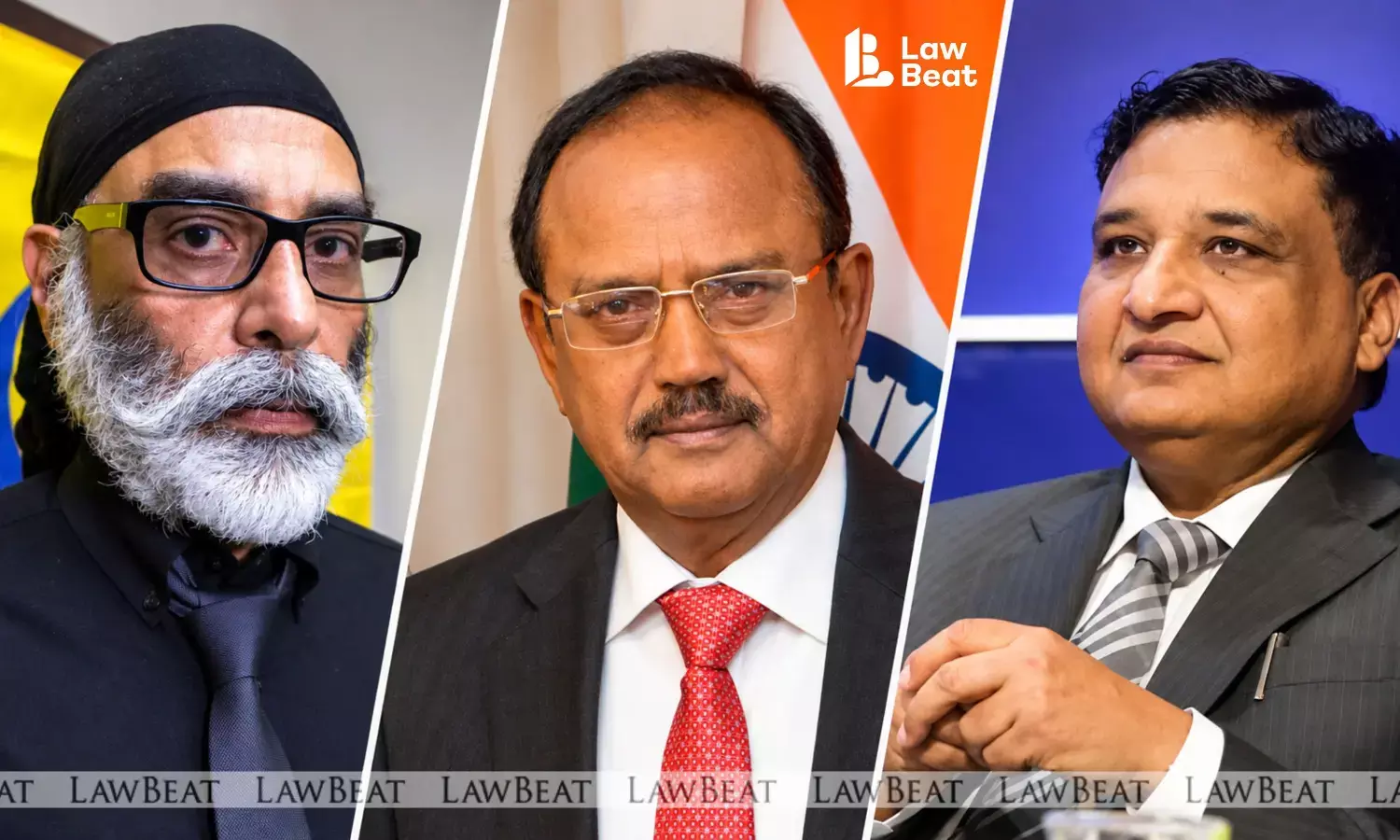
A United States federal court has formally requested three district courts in Delhi to facilitate service of summons and accompanying judicial documents on National Security Adviser Ajit Doval and former Research and Analysis Wing (RAW) chief Samant Goel in a civil suit filed by Sikh separatist Gurpatwant Singh Pannun.
In an order dated November 13, 2026, US District Judge Katherine Polk Failla of the Southern District of New York directed the US Court Clerk to transmit the documents to the Patiala House, Dwarka and Tis Hazari District Courts under the Hague Convention on the Service Abroad of Judicial and Extrajudicial Documents.
The order authorises service through the Indian court system under Article 19 of the Hague Convention, read with Section 29(c) and Order V Rule 21 of the Code of Civil Procedure, 1908 (CPC).
The Court has requested the Patiala House District Court to effect service on Doval. In Goel's case, the documents are to be transmitted to both the Dwarka and Tis Hazari District Courts.
US Court Invokes Article 19 Of Hague Convention, Section 29(c) CPC
The Court noted that Section 29(c) of the CPC permits summonses issued by foreign civil courts to be transmitted to Indian courts and served as though they had been issued by those courts.
It also referred to the Government of India's notification dated January 13, 2009, through which Section 29 was extended to civil courts in countries that are parties to the Hague Convention, including the United States.
Order V Rule 21 of the CPC further permits a court issuing summonses to transmit them by post or other permitted means to a court having jurisdiction over the place where the defendant resides.
Relying on these provisions, the Court held that service through the Indian court system was authorised under Article 19 of the Hague Convention. It accordingly ordered that service on Doval and Goel be undertaken through the appropriate district courts in Delhi.
The order states that the US Court Clerk is to transmit the service materials by international mail or courier to the designated Indian courts.
Each transmission must include the summons and accompanying judicial documents, a copy of the US Court's order, the relevant provisions of the CPC and the Official Gazette notification, along with records demonstrating that service under Article 5 of the Hague Convention had previously been attempted and rejected by India's Central Authority.
The US Court has formally requested the receiving Indian courts to accept the documents and cause them to be served on the respective defendants in accordance with the procedures applicable to summonses issued by those courts.
It has also requested the Indian courts to provide a written record of the proceedings undertaken and return those records to the US Court Clerk.
Earlier Attempts To Serve Doval In US
The latest order follows unsuccessful attempts by Pannun's lawyers to serve Doval personally during his official visits to the United States.
In April 2025, the US Court rejected Pannun's claim that summonses and other papers had been delivered to Doval during his visit to Washington in February that year. It clarified that the complaint had not been served on him on that occasion.
Pannun subsequently sought permission to adopt an alternative method of service through the Indian court system.
In an earlier order dated November 9, 2026, Judge Failla accepted Pannun's argument that Article 19 of the Hague Convention permits foreign judicial documents to be served through a method authorised by the receiving country's internal law.
The November 13 order takes the next procedural step by directing transmission of the service materials to the specified Delhi courts.
India Had Objected To Alternative Service Route
The development comes against the backdrop of India's objection to the proceedings and the allegations against its officials.
On November 10, Ministry of External Affairs spokesperson Randhir Jaiswal rejected the suit and the allegations against Indian officials.
According to The Telegraph, Jaiswal said that requests for service of judicial documents in India could only be routed through the country's designated Central Authority, the Ministry of Law and Justice.
The objection concerns the route through which judicial documents are to be served in India. Article 5 of the Hague Convention provides for transmission through the Central Authority. The US Court's latest order, however, records that the Article 5 route had been attempted and rejected by India's Central Authority, and authorises an alternative route under Article 19, relying on Indian procedural law.
What Is The Civil Suit About?
Pannun, general counsel of the banned organisation Sikhs for Justice (SFJ), filed the civil suit in September 2024 before the Southern District of New York.
The suit names the Government of India, Doval, Goel, former Indian government employee Vikash Yadav, Nikhil Gupta and 50 unnamed defendants.
Pannun alleges that the defendants conspired to assassinate him at his home in New York in 2023 in retaliation for his advocacy of an independent Sikh state. He is seeking damages over the alleged plot. These allegations have not been established in the civil proceedings, and the latest order makes no finding on their merits or on the liability of any defendant.
The civil suit is distinct from the criminal prosecution initiated by the US Department of Justice over the alleged murder-for-hire plot. US prosecutors accused Gupta of conspiring with Yadav and others to arrange Pannun's killing. Gupta pleaded guilty in February 2026.
His guilty plea relates to the criminal case against him and does not establish the allegations made against Doval, Goel or the Government of India in Pannun's civil suit.
India has rejected allegations of government involvement in the alleged plot. In October 2024, the Ministry of External Affairs stated that Yadav was no longer employed by the Government of India. The government also constituted a committee to examine the evidence and issues raised by US authorities.
The latest order is confined to the procedural question of service of summonses and does not determine the merits of Pannun's allegations.
Case Title: GURPATWANT PANNUN, Plaintiff v. THE GOVERNMENT OF INDIA, AJIT DOVAL, SAMANT GOEL, VIKRAM YADAV, NIKHIL GUPTA, and DOES 1-50,