
"He May Not Be Innocent, But...": Delhi Court While Granting Satyender Jain Bail In DJB Corruption Case
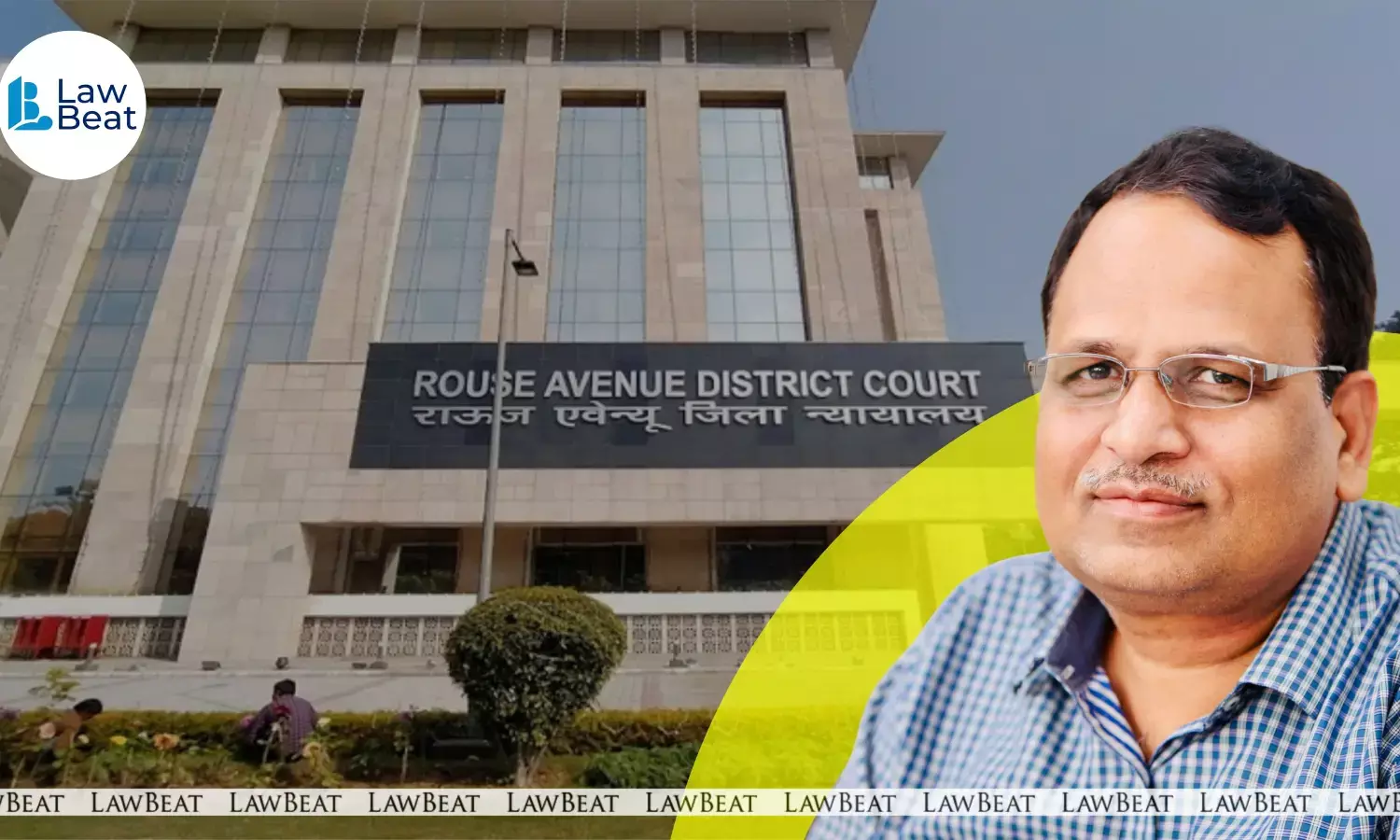
Former Delhi Minister Satyender Kumar Jain, who was granted regular bail by a Delhi court in the Delhi Jal Board sewage treatment plant corruption case
A Delhi court has granted regular bail to former Delhi Minister Satyender Kumar Jain in a corruption case relating to the tendering and award of contracts for the augmentation of ten Sewage Treatment Plants (STPs) run by the Delhi Jal Board (DJB).
Special Judge Dig Vinay Singh of Rouse Avenue Court passed the order in a bail plea arising out of FIR No. 10/2024 registered at the Anti-Corruption Branch (ACB), GNCTD, under Sections 7, 7A, 9 and 13 of the Prevention of Corruption Act, 1988 read with Sections 420, 409, 418 and 120-B of the IPC.
Background of the Case
Jain, who was the Minister of Water in the GNCTD and Chairman of the DJB at the relevant time, was arrested on 18 August 2026 along with five other accused; Udit Prakash Rai (A-2), an IAS officer and then-CEO of DJB; Nagendra Yadav (A-3), proprietor of M/s A.N. Enterprises, alleged to have acted as a middleman; Raja Kumar Kurra (A-4), a director of M/s Euroteck Environmental Private Limited; Pankaj Verma (A-5), proprietor of M/s Srijanhar Enterprises and nephew of one Vinod Chauhan, an alleged associate of Jain; and Ankit Srivastava (A-6), a consultant to DJB.
The FIR arose from a reference by the Directorate of Vigilance, GNCTD, alleging that project estimates for the ten STPs; initially Rs. 1,546.32 crore in February 2022; were escalated to Rs. 1,938 crore at the contract stage, with contracts awarded in July 2022 to a select cartel of three joint ventures.
Allegations against Jain
The prosecution alleged that Jain arbitrarily increased the capacity of the Rohini STP from 15 to 30 MGD on the note-sheet on 14 October 2021, escalating costs by Rs. 57 crore without a feasibility study; restructured the STP packages on 3 December 2021 in a manner that increased Package III's cost by Rs. 123 crore; directed the exclusive use of "fixed media" IFAS technology during TOR meetings in December 2021, restricting the field to Euroteck's proprietary equipment; rejected a proposal to relax the aerator's oxygen transfer requirement on 30 December 2021, ensuring only Euroteck's AIRE-O2 aerator remained compliant; approved dilution of CPCB environmental parameters including Total Nitrogen levels; and granted administrative approval for the Rs. 1,546.32 crore block estimate on 14 January 2022, which the prosecution claimed fell solely within the authority of the DJB Board.
The prosecution also relied on WhatsApp chats recovered from co-accused Nagendra Yadav's phone showing corrigendum text being shared between Srivastava, Kurra and Yadav before official upload to the government portal, and alleged that Euroteck funnelled Rs. 4.66 crore in kickbacks, including Rs. 2.71 crore routed through Srijanhar Enterprises to entities connected to Vinod Chauhan, and a hawala transaction involving a currency note serial number shared over WhatsApp confirming delivery of Rs. 75 lakh in cash.
Senior Advocate N. Hariharan, appearing for Jain, argued that no kickbacks or proceeds of crime had been traced to the applicant; that the FIR had been registered 27 months earlier with no custodial interrogation sought during that period; that Jain complied with both notices issued to him on 7 and 18 August 2026; that Jain is not a flight risk, being an ex-MLA and former Cabinet Minister with deep roots in society; that the case rests entirely on documentary evidence already seized by the investigating agencies; and that the Directorate of Enforcement had separately investigated the same alleged proceeds of crime and filed a complaint in December 2025 without arresting any accused, including Jain.
The defence further argued that Jain, holding eight portfolios at the time and not a technical expert, could not be held responsible for decisions that were first vetted and signed by the Chief Engineer, Member (Drainage) and CEO before reaching him, and relied on a line of Supreme Court precedents including Satender Kumar Antil v. CBI, Arnesh Kumar v. State of Bihar, Vihaan Kumar v. State of Haryana and Sanjay Chandra v. CBI on the principle that bail is the rule and jail the exception.
The prosecution opposed bail, describing Jain as the mastermind behind the tender manipulation, and pointed to his alleged evasive conduct during interrogation on 18 August 2026, when he reportedly refused to cooperate upon being confronted with the note sheets. It also stated that six other criminal cases were pending against Jain besides the present one, and relied on Nimmagadda Prasad v. CBI to argue that economic offences constitute a "class apart" warranting stricter scrutiny at the bail stage.
Court's observations
On the 27-month delay before arrest, the court held: "the unexplained and extraordinary delay of 27 months between the registration of FIR No. 10/2024 (11.05.2024) and the applicant's arrest (on 18.08.2026) indicates that the investigating agency did not consider his physical custody necessary for over two years."
It added: "When an investigating agency has conducted its investigation for years without arresting an accused, and the accused has joined the investigation process, a sudden arrest at the tail end of the investigation, without strong reasons and without a change in circumstances, tends to invite criticism that it is arbitrary."
On the prosecution's apprehension of evidence tampering, the court observed: "The documentary evidence is already in safe custody, rendering any apprehension of evidence tampering, destruction or concealment completely groundless." It further held that the prosecution's claim on this count "seems to be nothing but a stereotyped one."
On the purpose of pre-trial detention, the court stated: "The primary purpose of pre-trial detention is to secure the accused's presence at trial and to prevent obstruction of justice. It cannot be permitted to degenerate into an advance form of punitive punishment prior to conviction."
On the absence of custodial interrogation, the court held: "Continued detention in judicial custody cannot be justified on the generic plea that a conspiracy is yet to be unearthed."
Examining the specific allegations, the court repeatedly found the defence's rebuttals persuasive at the prima facie stage, noting on more than one occasion: "Without expressing any opinion on the merits of this allegation and rebuttal, the argument appears forceful."
On the corrigendums that altered technical specifications, the court noted: "None of the corrigendums that changed the specification of the work was approved by the applicant. All were approved and signed by the CEO, Udit Prakash Rai (A-2)." It further observed: "There is no direct proof that the applicant approved, signed, or directed the issuance of the same, or had knowledge of it."
On the WhatsApp and hawala evidence, the court found: "Prima facie, none of the WhatsApp chats links the applicant; there are no other phone call records or SMS messages that might presently connect him to the kickbacks and hawala transactions with other co-accused persons in the conspiracy."
While declining to hold Jain innocent, the court remarked: "A few decisions taken by the applicant in this matter, as evident from the contents of the notes, etc., do raise eyebrows, and he may not be innocent, but by themselves they are not enough at this stage to deny bail." It added: "The investigating agency ought to have first conducted a thorough investigation and gathered more evidence before rushing to arrest him."
Summing up its assessment, the court concluded: "The material till now is prima facie insufficient to deny the applicant bail."
Bail Conditions
The court allowed Jain's regular bail application upon furnishing a personal bond of Rs. 2,00,000 with two sureties of the like amount, subject to conditions including surrender of his passport, a restraint from contacting or influencing witnesses, continued cooperation with the investigation, prior intimation to the Investigating Officer for travel outside Delhi exceeding two days, and a direction not to delay trial proceedings once the chargesheet is filed.
The court clarified: "the observations touching upon the merits in this order shall not be construed as an opinion expressed on merits."
Case Title: State v. Satyender Kumar Jain
Bench: Special Judge Dig Vinay Singh
Order Date: September 3, 2026