
Honest Disclosure Cannot Cost Public Employment: MP High Court Restores BSF Appointment
BSF Constable’s Appointment Cancellation Quashed by MP High Court After Acquittal
The Madhya Pradesh High Court has held that a candidate who honestly discloses a pending criminal case cannot be denied public employment merely because he was facing trial at the time of appointment, especially when the allegations are minor in nature and the candidate is later acquitted.
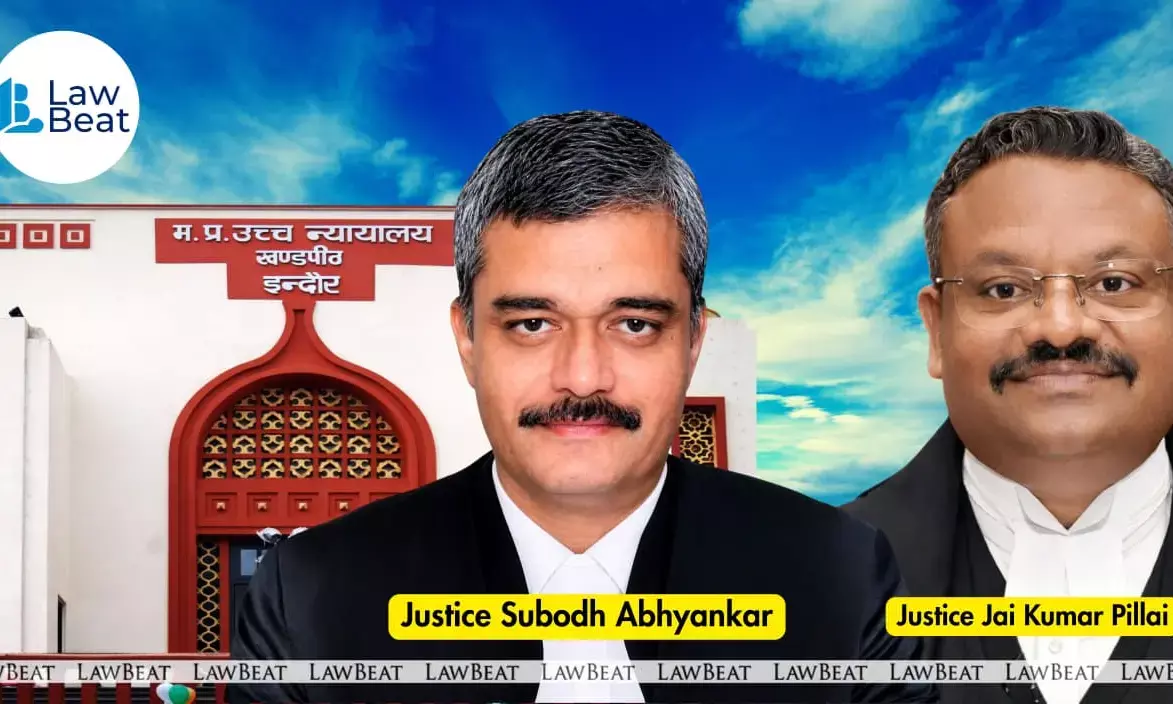
Setting aside the cancellation of a Border Security Force (BSF) constable’s appointment, a Division Bench of Justice Subodh Abhyankar and Justice Jai Kumar Pillai directed the authorities to reinstate him in service with all consequential benefits.
The case arose from the appointment of Rahul Jatav, who had successfully cleared the Staff Selection Commission General Duty Examination 2022 and was selected for the post of Constable (GD) in the BSF. After receiving his appointment letter, he joined training at the Central School of Weapons and Tactics, BSF, Indore, in October 2023. During verification formalities, he disclosed that a criminal case under Sections 323, 325, 294 and 34 of the Indian Penal Code was pending against him.
Despite the disclosure, BSF authorities cancelled his provisional appointment on November 22, 2023. Just days later, on November 28, 2023, the Chief Judicial Magistrate at Shivpuri acquitted him after finding that the prosecution had failed to establish the charges. His subsequent representation seeking restoration of service was rejected on the ground that the acquittal was not a “clean acquittal” and had allegedly been granted on the benefit of doubt.
Challenging the decision, Jatav argued through Advocate Amrita Jain that he had never concealed any material information from the employer. It was submitted that the criminal case stemmed from a sudden dispute over a motorcycle horn and involved allegations that were neither heinous nor reflective of moral turpitude. The appellant further contended that punishing a candidate for making a truthful disclosure defeated the very purpose of the verification process.
Representing the respondents, Advocate Jitendra Bharat Mehta supported the decision of the authorities and defended the order passed by the Single Judge, who had dismissed the writ petition and upheld the cancellation of appointment.
After examining the record, the Division Bench found that the Single Judge had placed substantial reliance on a Ministry of Home Affairs circular dated February 1, 2012. However, the appellate court observed that the circular itself protected candidates who disclosed their involvement in criminal cases during verification and stated that candidature should not be cancelled on that ground alone.
The Bench noted that Jatav had made a “clean and honest disclosure” and therefore could not be treated as a candidate who had suppressed facts. It further held that the provisions dealing with disqualification at the recruitment stage could not be mechanically applied to a person who had already been appointed and had joined service.
The Court also examined the nature of the allegations and found them to be minor. Referring to the criminal case, it observed that the incident arose out of a trivial quarrel over the sounding of a motorcycle horn and did not involve premeditated violence, moral turpitude or any character defect that would make the appellant unsuitable for service in a disciplined force.
In significant observations, the Bench said, “The appellant did not suppress facts; he had already made a clean and honest disclosure of the pending case before the authority.” It further held that “deeming such non-heinous charges as a perpetual bar to employment is manifestly arbitrary.”
The judgment also underscores that recruitment policies must be applied fairly, proportionately, and with contextual sensitivity in service.
Holding that the Single Judge had fundamentally erred in interpreting the government circular, the Court allowed the appeal, quashed the termination and rejection orders, and directed the BSF authorities to reinstate Jatav with all consequential benefits. The ruling reinforces that transparency by a candidate cannot become the basis for exclusion from public service, particularly where the allegations are minor and the criminal proceedings end in acquittal.
Case Title: Rahul Jatav v. The Union of India Through Secretary and Others
Date of Judgment: June 25, 2026
Bench: Justice Subodh Abhyankar and Justice Jai Kumar Pillai