
Inconclusive Forensic Report Can’t Justify Closing Bribery Probe: MP High Court
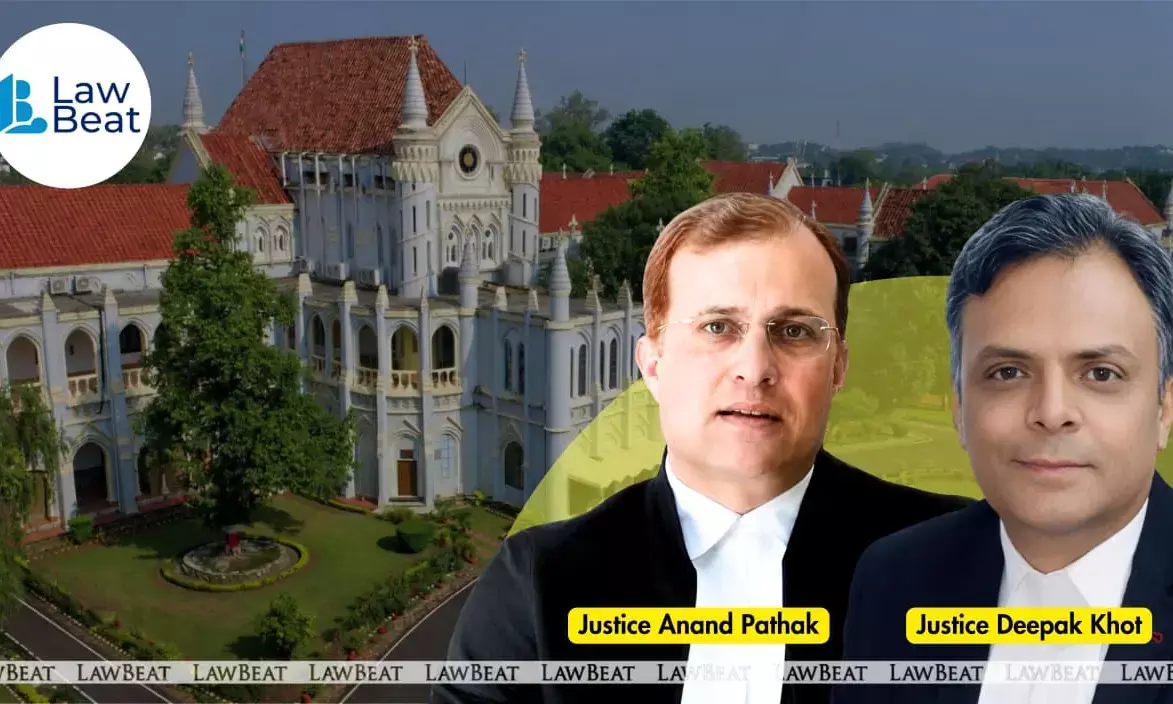
MP High Court Upholds Order for Fresh Voice Samples of ASI in Bribery Case
The Madhya Pradesh High Court has refused to interfere with a trial court’s decision to reject a police closure report in a bribery case against an Assistant Sub-Inspector, holding that an inconclusive forensic report cannot be a ground to shut an investigation and that a court can direct fresh voice samples of the accused.
A Division Bench of Justice Anand Pathak and Justice Deepak Khot dismissed the writ petition filed by Sanjay Sisodiya, an ASI, against the 22 July 2026 order of the Special Judge (Prevention of Corruption Act), Bhopal, who had rejected the closure report and ordered further investigation, including fresh voice samples.
The case began with a complaint by Karan Gurjar, who alleged that his landlord had got his hotel premises vacated by fraudulent means, leading to an FIR under Section 420 of the IPC. Sisodiya, who investigated that case, allegedly demanded Rs 30,000 from the complainant for conducting the probe.
Gurjar approached the Deputy Superintendent of Police, who handed him a Sony digital voice recorder to capture the conversation. Head Constable Brijbihari Pandey accompanied him as a shadow witness. In a second complaint the same day, Gurjar alleged that the ASI had asked him to come with Rs 10,000 as illegal gratification. An FIR under Section 7 of the Prevention of Corruption Act, 1988 was registered as Crime No. 82/2024.
The trap, attempted two or three times, failed as the ASI was not found at the police station. Voice samples were sent to the Regional Forensic Science Laboratory (RFSL), Bhopal. Closure Report No. 2/2025, dated 12 March 2026, was then filed, saying the transcript showed no direct or indirect demand and the laboratory had given no opinion for want of suitable speech data.
Senior Advocate Anil Khare, with Advocate Priyank Agrawal, for the petitioner, argued that fresh voice sampling amounted to a “roving inquiry” violating Article 20(3) of the Constitution, which protects against self-incrimination. He added that the trap failed without any recovery, the complainant had no objection to the closure report, and even a voice match could not prove a demand.
Advocate Abhinav Shrivastava, for the State, countered that a court is not bound by a closure report and can direct further investigation. He submitted that giving a voice sample does not violate Article 20(3) and that the complainant’s no-objection does not bind the court.
The bench noted that the transcript itself prima facie disclosed an offence. Citing the Explanation to Section 7, which covers even an attempt to receive gratification, it observed that “it is not the case that the offence is not made out on the face value of the report or the material.”
On the forensic report, the court clarified that RFSL had not said the voices did not match. It had cited large variation in the speaker’s voice, suggesting deliberate disguise. The bench held that “the sample which was sent to the FSL was inappropriate and insufficient to form an opinion,” adding that a closure report built on such evidence “does not lead to the conclusion that on the basis of collected evidence no offence is made out.”
The court also remarked that the investigator “ought to have conducted the investigation honestly and carefully.”
Relying on Supreme Court rulings in Abhinandan Jha v. Dinesh Mishra, Ramswaroop Soni v. State of M.P. and Vinay Tyagi v. Irshad Ali, the bench reiterated that a magistrate may accept a closure report, take cognizance despite it, or direct further investigation if dissatisfied.
On the Article 20(3) objection, the bench recalled that the Supreme Court in Ritesh Sinha v. State of U.P. had affirmed that a magistrate can direct recording of an accused’s voice sample. It found Sanjaysinh Ramrao Chavan v. Dattatray Gulabrao Phalke, on authenticity of electronic evidence, inapplicable at this stage.
Concluding that “the learned Magistrate has not committed any illegality, irregularity, much less jurisdictional error,” the bench dismissed the petition, with no costs imposed.
Case Title: Sanjay Sisodiya vs. The State of Madhya Pradesh and Another
Order Date: October 23, 2026
Bench: Justice Anand Pathak and Justice Deepak Khot