
Islam Conversion, Marriage Opposed By Family: Allahabad HC Sets Ayush Malik At Liberty, Says Adult Can Decide His Own Life
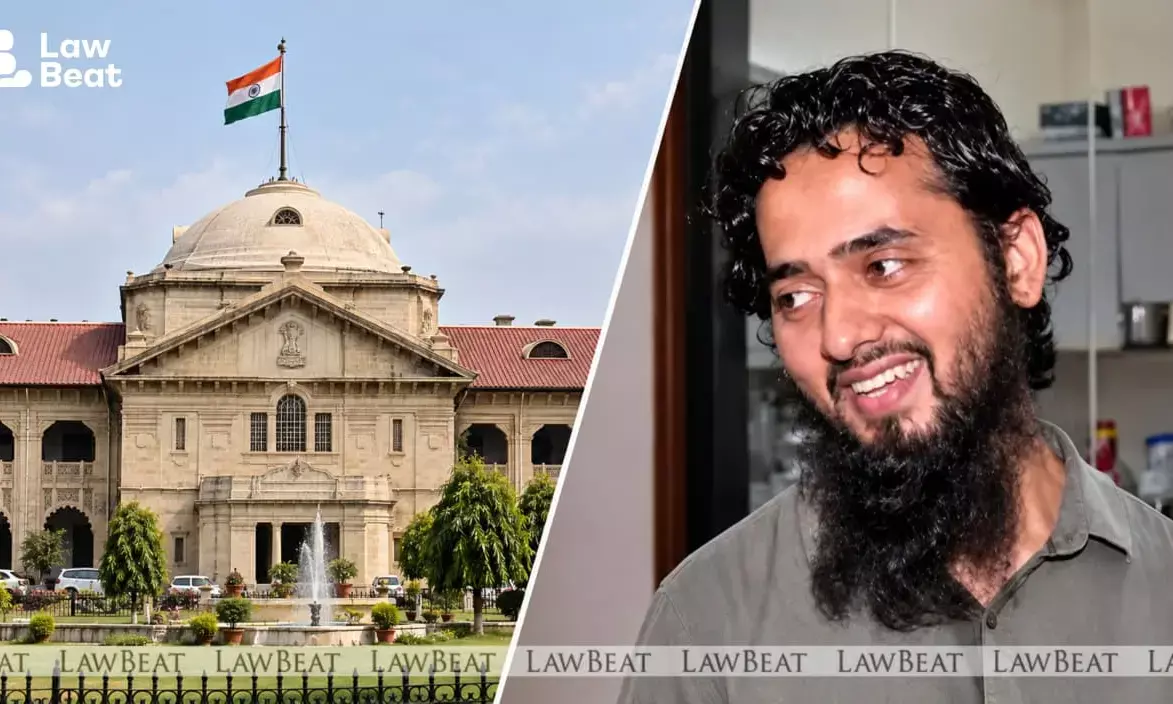
Allahabad High Court protects man’s choice to embrace Islam.
The Allahabad High Court on Wednesday held that a major who has voluntarily chosen his religion and life partner cannot be restrained by his family merely because they find that choice unacceptable, as it disposed of a habeas corpus petition filed on behalf of 31-year-old Ayush Malik, a Bachelor of Pharmacy graduate from Shamli who said he had embraced Islam of his own free will in 2014.
The bench of Justice Sandeep Jain passed the order after personally interacting with Malik, who was produced before the court following directions issued on September 9.
Malik told the court that his conversion was not the result of any threat, coercion, undue influence or inducement, and that he intended to solemnise his marriage with Chandni Qureshi, a decision his parents opposed.
"The choice of an adult as to whom he or she wishes to marry or with whom he or she wishes to establish a relationship is a matter of individual autonomy...The mere fact that such choice may be contrary to the wishes or expectations of the family cannot, by itself, furnish a legitimate basis for curtailing such choice," the bench observed.
Alleged Illegal Detention
The petition, filed through Malik's friend Sultan, had alleged that Malik was being illegally confined at his family home since June 4 this year, with the state machinery allegedly colluding with his father, Devraj Singh Malik, to facilitate the detention. Court had earlier termed these allegations "serious in nature" and warranting immediate consideration, directing the state and the father to produce Malik before it.
During the hearing, court also heard Devraj Singh Malik, who disputed his son's account and maintained that Malik had been "brainwashed" into converting rather than having done so voluntarily. He told the court his objections stemmed from concern for his son's welfare.
Weighing both statements, court found nothing on record to disbelieve Malik's own account of events, noting that he had attained majority and was capable of making decisions about his own life.
"A person who has attained majority is ordinarily entitled to determine his faith according to his own conscience," court said.
Invoking Article 25 of the Constitution, court observed that the freedom of conscience and the right to profess, practise and propagate religion allow an adult to determine his faith according to his own conscience, a choice that an individual's family cannot displace simply because it does not approve.
“Such a choice, being an expression of individual autonomy and freedom of conscience, cannot be displaced merely because it is not acceptable to his family members," said the bench.
It went on to hold that the right to choose one's spouse is equally an integral part of the right to life and personal liberty under Article 21, and that a choice running contrary to family expectations does not, by itself, justify curtailing it.
While acknowledging that the father's concern for his son's welfare was "understandable" given the familial relationship, court said such concern could not override an adult's constitutionally protected autonomy over his faith, residence and choice of partner.
"The choice of an adult as to whom he or she wishes to marry or with whom he or she wishes to establish a relationship is a matter of individual autonomy. The mere fact that such choice may be contrary to the wishes or expectations of the family cannot, by itself, furnish a legitimate basis for curtailing such choice," the bench stressed.
It added that a writ court exercising jurisdiction under Article 226 is not meant to substitute its own view of what may be beneficial for the considered choice of an adult.
The criminal case
Following Malik's conversion and his decision to marry Qureshi, his father had lodged an FIR on June 6 against Qureshi and her relatives under the Uttar Pradesh Prohibition of Unlawful Conversion of Religion Act, 2021, along with several sections of the Bharatiya Nyaya Sanhita. Court noted that Qureshi and her father, Islam Qureshi, who were arrested in the case, had since been granted bail by the District and Sessions Judge, Shamli, on July 24.
Finding no lawful justification to continue any restraint on Malik, court set him at liberty to reside wherever he chooses, with whomever he chooses, to practise the religion of his choice, and to take a decision on his marriage in accordance with law.
It also directed that the corpus, who had been under police presence at his residence, be freed from any such restriction.
With these observations, court disposed of the petition.
Case Title: Ayush Malik and Another v. State of U.P. and 3 Others
Order Date: September 16, 2026
Bench: Justice Sandeep Jain