
Jharkhand HC Reinstates Peon Fired Over Taking Tea and Biscuits, Calls Punishment Disproportionate
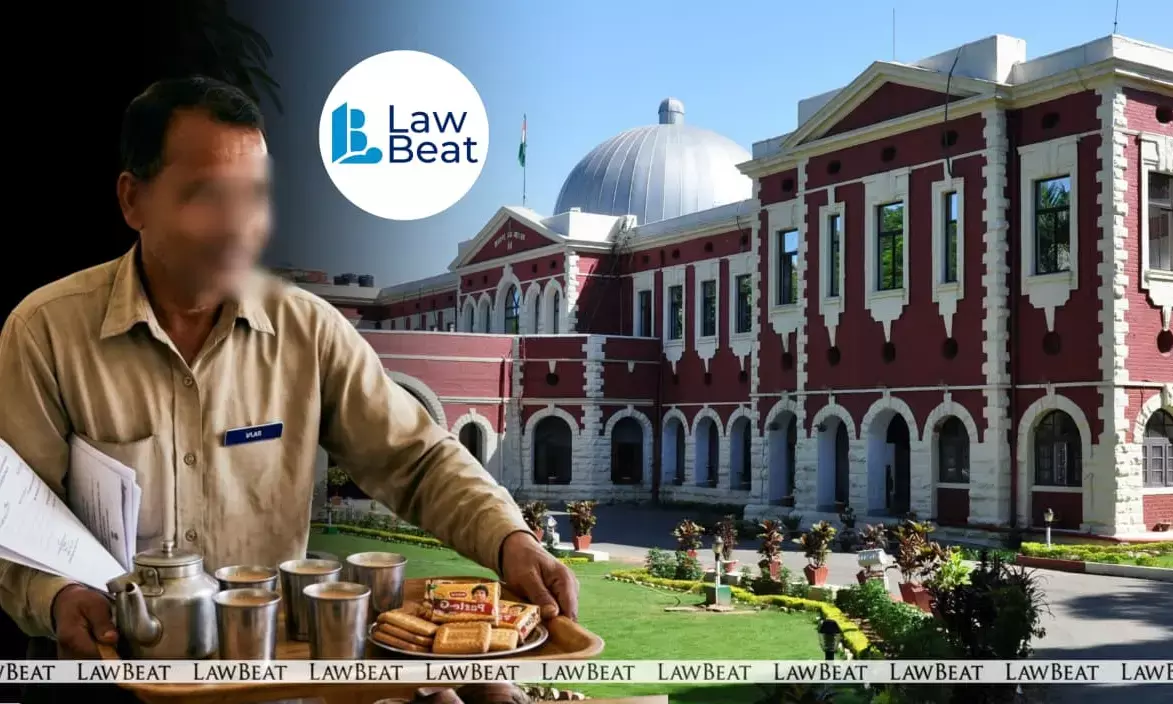
Terminating Peon for Taking Tea, Biscuits After 17 Years of Service Shocks Conscience: Jharkhand HC
The Jharkhand High Court has ordered the reinstatement of a contractual peon who was removed from service after allegations that he had taken tea powder and biscuits from his office, holding that the punishment of termination after 17 years of service was grossly disproportionate and contrary to principles of natural justice.
A Division Bench comprising Chief Justice M.S. Sonak and Justice Rajesh Shankar allowed an appeal filed by Ranjeet Kumar Himanshu and set aside a 2022 termination order issued by the District Rural Development Agency (DRDA), Bokaro. The Court directed his reinstatement with 50 percent back wages and observed that the manner in which the authorities proceeded against him reflected insensitivity rather than fairness.
Appearing for the appellant, Advocate Krishna Prajapati argued that the action taken against his client was arbitrary and unsustainable. The State was represented by Senior Standing Counsel Ashok Kumar Yadav, assisted by Advocate Aditya Kumar. The appeal challenged a January 2026 order of a Single Judge who had dismissed the employee’s writ petition against his removal from service.
The Court noted that Himanshu had been working as a peon on a contractual basis since December 2005. After nearly seventeen years of service, he was served with a show-cause notice in March 2022 alleging that certain office material had gone missing and that an inquiry had revealed he had taken it home for personal use. The notice further stated that some of the material had later been returned.
However, the Bench found a serious flaw in the notice. It observed that the authorities never specified what material had allegedly been taken, how much of it was involved, or what quantity had been returned. Calling the notice extremely vague, the Court held that a person cannot be expected to effectively defend himself against allegations that are not clearly disclosed.
The judges also examined the employee’s response to the notice. In his reply, Himanshu referred to his long service record, his financial condition, and the fact that six family members depended upon his income. He pleaded for leniency and assured the authorities that any mistake, if committed unintentionally, would not be repeated.
Despite this, the termination order merely stated that his explanation was “not satisfactory” and ended his employment. The Court found that the order contained no meaningful reasons and showed no consideration of the circumstances placed before the authorities.
The Bench further rejected the argument that the employee’s response amounted to an admission of guilt. According to the Court, the reply only conveyed regret if the authorities believed an unintentional mistake had occurred and could not automatically be treated as a confession.
In one of the strongest observations in the judgment, the Court remarked, “This is certainly not justice tempered with mercy, but injustice brimming with insensitivity.” The Bench added that even if it were assumed that the employee had taken tea and biscuits home, termination from service was a punishment that “shocks the conscience.”
The Court stressed that a vague show-cause notice amounts to no notice at all and that a termination order passed without proper reasoning cannot satisfy the requirements of natural justice. It also noted that there was no allegation that the employee had repeatedly engaged in such conduct and that the case appeared to concern a single incident.
The Bench also took note of certificates issued by previous Deputy Development Commissioners appreciating the appellant’s performance and recording that his work was excellent. These documents, the judges said, had been ignored by the authorities. The Court further observed that the employee had remained out of service for four years, causing hardship.
Setting aside the termination memo, the High Court directed that Himanshu be reinstated by July 1, 2026, and paid 50 percent back wages by July 31, 2026. The Deputy Commissioner and Deputy Development Commissioner of Bokaro have been directed to personally ensure compliance and file affidavits before the Court. The appeal was accordingly allowed.
Case Title: Ranjeet Kumar Himanshu v. The State of Jharkhand and Others
Date of Order: June 25, 2026
Bench: Chief Justice M.S. Sonak and Justice Rajesh Shankar