
Justice G.R. Swaminathan Disposed Over 1.26 Lakh Cases: Madurai Bench Bar Defends Judge Amid Impeachment Move
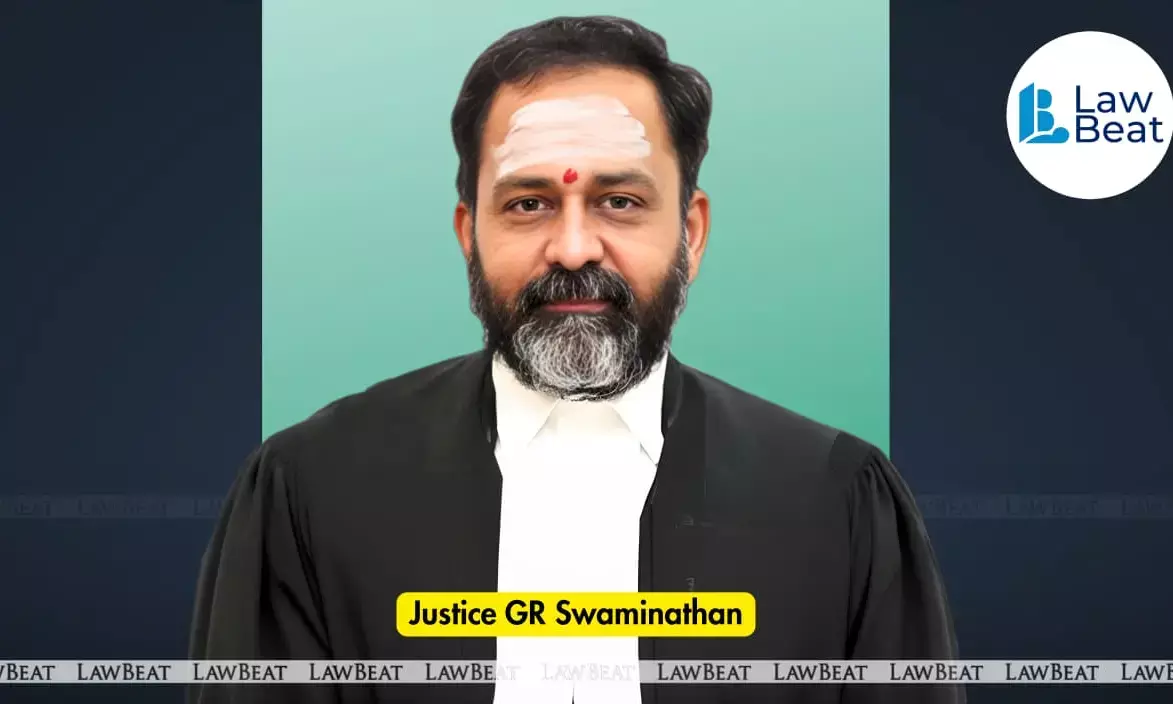
Madras High Court Advocates Defend Justice Swaminathan, Call Impeachment Move a Threat to Judicial Independence
A group of designated senior advocates and practising lawyers from the Madurai Bench of the Madras High Court has submitted a memorandum to Lok Sabha Speaker Om Birla, opposing the notice of motion seeking impeachment of Justice G.R. Swaminathan, and warning that the move poses a serious threat to the independence of the judiciary.
In the memorandum, the advocates claim to represent the majority of the practising bar at the Madurai Bench and describe the allegations levelled against Justice Swaminathan as “totally baseless, false, frivolous and atrocious.” They contend that the attempt to initiate impeachment proceedings amounts to a misuse of constitutional powers and an effort to destabilise the judiciary through what they term a “high-handed application” of an extraordinary constitutional provision.
The advocates have stated that they are consciously refraining from examining the merits of the allegations raised in the impeachment notice dated December 9, 2025, on the ground that doing so would cross the “Lakshman Rekha” separating the legislature and the judiciary. They emphasised that the subject matter of the proposed impeachment is already under consideration before the higher judiciary and is therefore sub judice.
According to the memorandum, the motion of impeachment is not rooted in facts but reflects an attempt by a section of Members of Parliament to interfere with the functioning of the judiciary without personal knowledge of the allegations or the values and principles upheld by Justice Swaminathan. The lawyers assert that such an exercise undermines the constitutional balance between the two pillars of democracy.
The memorandum also places on record Justice Swaminathan’s judicial performance, highlighting his case disposal record between June 28, 2017, and November 30, 2025. During this period, he is stated to have disposed of 1,26,426 cases, including 73,505 main cases. The advocates describe this record as being marked by impartiality, honesty, integrity, and intellectual rigour.
Expressing “deep concern” over what they describe as false and motivated allegations, the advocates claim that the impeachment notice is driven by political, communal, and religious considerations rather than any objective assessment of judicial conduct. They allege that the accusations lack any iota of truth or constitutional basis and amount to an attempt to transgress the basic structure of the Constitution, particularly the principle of judicial independence.
The memorandum further characterises the notice of motion as an effort by certain political parties that, according to the advocates, have little regard for constitutional morality or the sanctity of democratic institutions. It claims that the impeachment attempt reflects vested interests opposed to national interest and the constitutional doctrine of separation of powers.
"The Notice of Motion of Impeachment is nothing short of an attempt by a Section of Political Parties who have no faith in the Noble Principles of Democracy and the sanctity of the Constitution of India. The said Motion amounts to proof of sheer bigotry and vested interests that are opposed to the National Interest and the esteemed principle of separation of powers," the memorandum reads.
While condemning the atrocious and maligning attempt by the Members of Parliament who have signed the impeachment notice, the advocates have urged the Speaker not to accept the motion against Justice Swaminathan. They have requested that the notice be rejected at the threshold by applying the constitutional safeguards provided under Articles 124(4) and 217 of the Constitution, read with the Judges (Inquiry) Act, 1968.
The memorandum concludes by appealing to the Speaker to uphold the “majesty of law” by preventing what it describes as a malicious and unwarranted assault on the judiciary. The advocates assert that allowing such motions without strict scrutiny would set a dangerous precedent and weaken public confidence in the independence and integrity of constitutional courts.
Justice G.R. Swaminathan is currently a sitting judge of the Madras High Court and has been associated with several notable judgments during his tenure. The impeachment notice against him has triggered sharp reactions from sections of the legal community.