
Juvenile Offence No Bar To Army Job, Rules Madhya Pradesh High Court
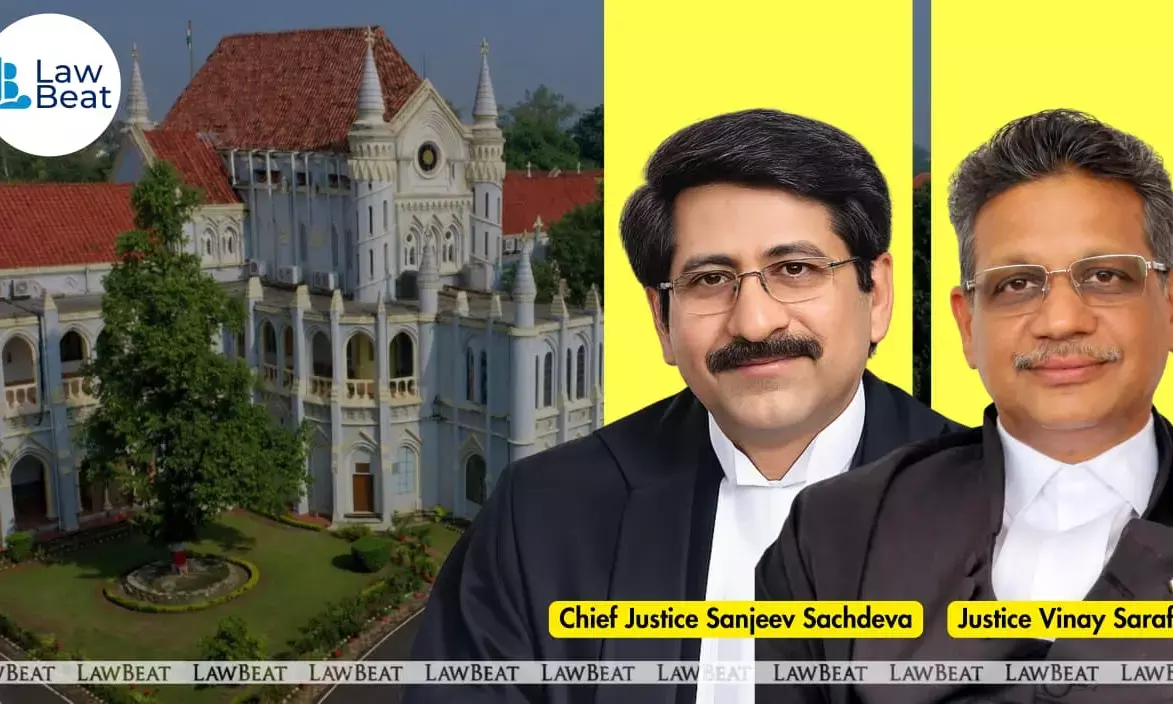
Minor Past Offence Cannot Derail Future: Madhya Pradesh High Court
The Madhya Pradesh High Court has reaffirmed that a juvenile’s past brush with the law, particularly for minor offences, cannot be used to deny future employment, even in disciplined forces, underscoring the rehabilitative intent of the Juvenile Justice regime.
In a recent ruling, a Division Bench comprising Chief Justice Sanjeev Sachdeva and Justice Vinay Saraf dismissed a writ appeal filed by the Union of India against an order directing issuance of an appointment letter to a candidate selected for the post of Soldier (General Duty).
The case arose from a recruitment process initiated in 2018, where the respondent, Pushpraj Singh, successfully cleared the physical, medical and written examinations. However, at the stage of verification, his appointment was withheld on account of a prior criminal case. The respondent contended that the offence in question was committed when he was a juvenile and was trivial in nature, attracting the protective framework of Section 24 of the Juvenile Justice (Care and Protection of Children) Act, 2015.
Section 24 of the Juvenile Justice (Care and Protection of Children) Act, 2015 provides for removal of disqualification on the findings of an offence.
The Single Judge had earlier allowed the writ petition, noting that the allegations against the respondent pertained to use of obscene language, minor assault and criminal intimidation under Sections 294, 323, 34 and 506 of the IPC. The Juvenile Justice Board, while recording a conviction based on a guilty plea, had imposed only a nominal fine of Rs. 1,000 and explicitly observed that the conviction would not affect the respondent’s future.
Affirming this view, the Division Bench emphasized that the statutory scheme of the Juvenile Justice Act is aimed at reintegration rather than stigmatization. The Court reiterated that “mere conviction of the respondent would not be a bar to the respondent securing an employment,” particularly when the offence falls outside the statutory exceptions.
Importantly, the Bench rejected the Union’s argument that stricter standards ought to apply to recruitment in the armed forces. It held that the Act does not carve out any such exception based on the nature of employment. Drawing from precedents, including decisions of the Delhi High Court and the Supreme Court, the Court noted that juveniles cannot be burdened with lifelong consequences for acts committed during minority, unless specifically excluded by law.
Also Read: Press Cannot Be Silenced, But Child’s Identity Must Be Shielded: Delhi HC in Dwarka Crash Plea
The judgment also reinforced the principle that disclosure of such past involvement is not mandatory where the individual was a juvenile at the time of the offence. The Court observed that even non-disclosure in attestation forms would not be fatal in such cases, as the law itself mandates erasure and sealing of juvenile records to enable a fresh start.
In dismissing the appeal, the Bench found no merit in the Union’s contention that recruitment standards in military services justified a departure from settled legal principles. It highlighted that similar protections have been extended in cases involving paramilitary and police forces, thereby negating any distinction sought to be drawn.
The Court concluded that the respondent’s case fell squarely within the protective ambit of the law, noting that the offences were trivial, the punishment minimal, and the intent of the legislation unequivocal. “Nothing done by a person when he was a Juvenile… is to be an embargo in his future,” the Bench observed, stressing the need to provide individuals an opportunity to reintegrate into society.
With this, the High Court upheld the direction to grant the appointment, reinforcing that youthful indiscretions, especially of a minor nature, cannot define or derail a person’s future prospects.
Case Title: Union of India and Others v. Pushpraj Singh
Date of Order: April 15, 2026
Bench: Chief Justice Sanjeev Sachdeva and Justice Vinay Saraf