
Kanwad Yatra | No Fundamental Right To Insist On Particular Road For Religious Procession: Bombay HC
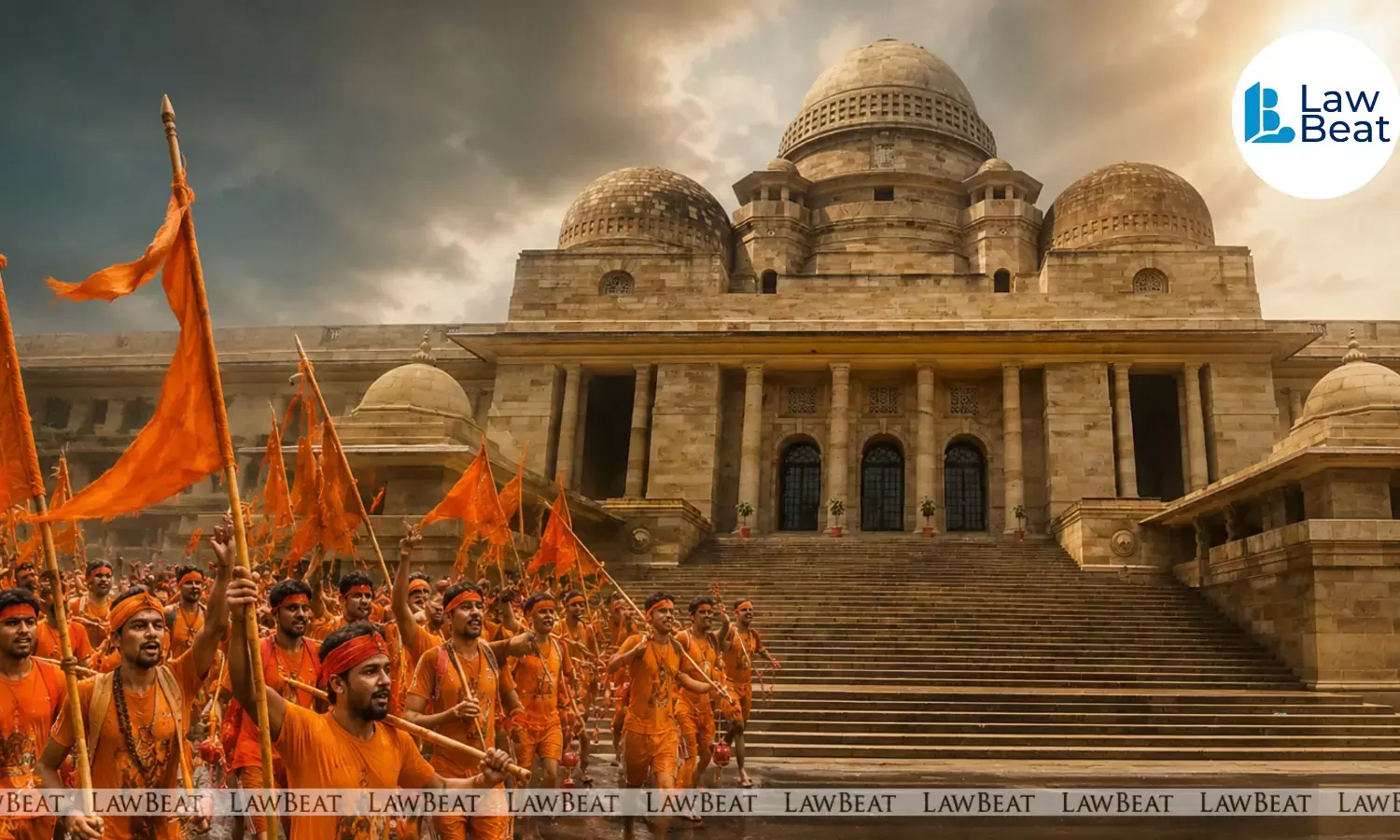
Bombay High Court holds there is no fundamental right to insist on a particular route for a religious procession
Article 25 guarantees the right to practise religion, but does not confer a right to insist on practising it through a particular route, Bombay High Court’s Nagpur Bench has held
The Nagpur Bench of the Bombay High Court has held that there is no fundamental right to take out a religious procession on a particular road, while upholding the Nagpur police’s decision to suggest an alternate route for a Kanwad Yatra.
A Division Bench of Justices Anil S. Kilor and Rajnish R. Vyas dismissed a petition challenging the police decision concerning a proposed 3.5-km Kanwad Yatra scheduled for August 16, 2026.
The procession was to carry consecrated water from Mahadeo Ghat for performing Jalabhishek of a Shivling.
The Court clarified that the police had not prohibited the procession altogether, but had permitted it subject to a change in route.
"The right guaranteed by the Constitution of India under Article 25, to practice one's religion is certainly subject to larger interest of law and order, public order and the needs of other sections of the population, that might be adversely affected, if the exercise of the right in a particular manner is insisted upon and permitted... The exercise of right to practice one’s religion is one thing and to practice it in a particular way is another" the Bench observed.
It further held: "The earmarking of routes to take out processions, that involve a multitude of people, is a matter that essentially relates to law and order, for which the civil and the police administration bear responsibility".
No Fundamental Right To Insist On Particular Route
The petitioner argued that a religious procession could not be denied merely because the proposed route passed through an area where members of another religious community resided or carried on business.
Rejecting the contention, the Court relied on the Allahabad High Court’s recent judgment in Sharif Ahmad vs. State of Uttar Pradesh, which held that although Article 25 guarantees the right to practise religion, its exercise is subject to the larger interests of law and order and public order.
The Bombay High Court held: "There is no right inhering in the petitioners to take out the procession along the particular route… The petitioner has no right to compel the respondents to give him permission to take out the procession from the route, as proposed by the petitioner only."
Police had cited Law & Order concerns
The police reports referred to eight mosques and a dargah along the proposed route, previous incidents of violence in the locality and the sensitivity of the area.
The authorities also cited traffic congestion, narrow roads, possible disruption to ambulances and fire brigades, and inadequate police manpower due to other government programmes.
The petitioner’s application also lacked details concerning the expected number of participants, volunteers, sound equipment, traffic management and crowd-control arrangements.
The Court noted that where the organizer insisted on a particular route despite adverse police reports, it was incumbent upon him to provide the necessary details to satisfy the authorities that the relevant requirements had been addressed.
The Bench also took note of the location of the temple forming part of the procession, observing: "The open space available is only from three sides of the temple and that space is too narrow to even accommodate 50 to 60 persons."
Relying on the Supreme Court’s decision in State of Karnataka v. Dr. Praveen Bhai Thogadia, the Bench reiterated that courts should ordinarily not interfere with matters relating to law and order, which are primarily within the domain of administrative authorities.
"Courts should not normally interfere with matters relating to law and order which is primarily the domain of the administrative authorities concerned " the division bench remarked.
The High Court held that past conduct and antecedents may provide sufficient material for administrative action based on a reasonable expectation of possible future events that need to be avoided in the interest of public order.
It further observed that an apprehension of danger to the "greater community interest" or "interest of the collective or social order" may warrant curtailment of the right to take out a procession.
The Court also noted that the temple was private property and that complaints had been received from its owner. It held that the petitioner could not compel a private person to make the temple part of the Kanwad Yatra.
Finding no illegality in the police decision to deny the particular route and suggest an alternate one, the Bench dismissed the petition, holding that the decision was justified in view of previous law-and-order disturbances and considerations of public order.
Case Title : Deepak v. State of Maharashtra And Ors
Bench: Justices Anil S. Kilor and Rajnish R. Vyas
Judgment Date: August 14, 2026
Next Story