
Karnataka HC Judge Recuses From Hearing Challenge To Gig Workers Welfare Law, Cites Conflict Of Interest
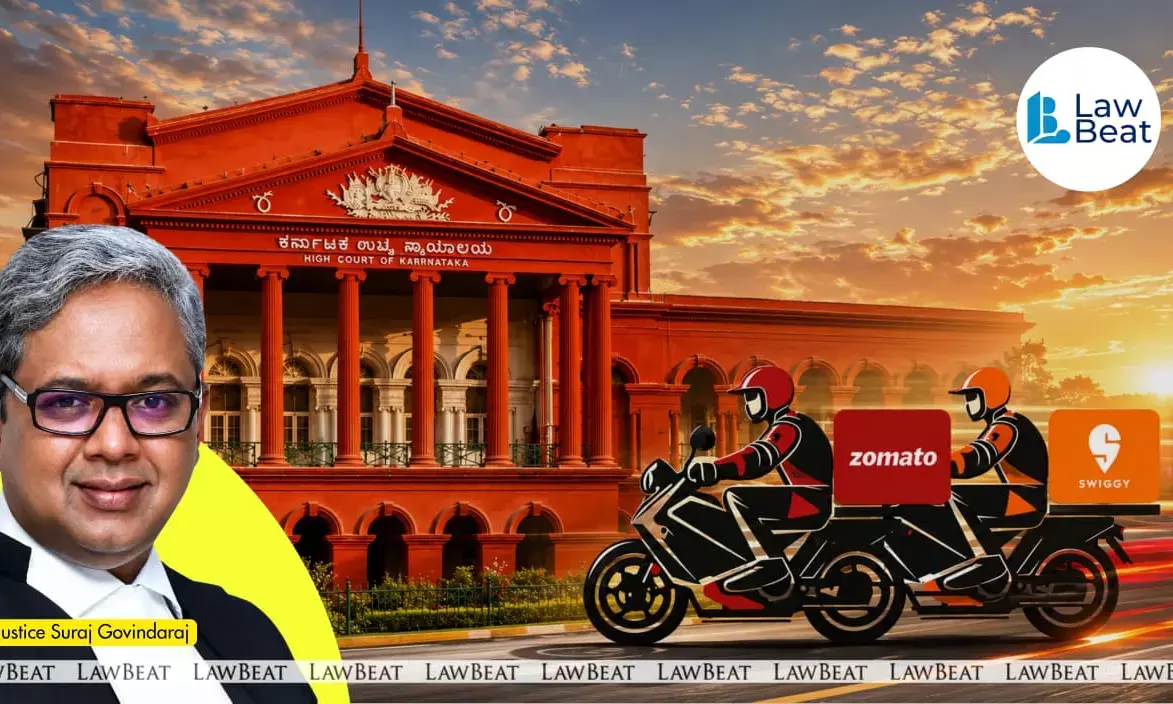
Karnataka HC Judge Declines To Hear Plea Against Gig Workers Act After Noting Connection With Law Firm
The Karnataka High Court has directed that a petition challenging the constitutional validity of the Karnataka Platform-Based Gig Workers (Social Security and Welfare) Act, 2025, and the Rules framed under it, be placed before another bench after Justice Suraj Govindaraj recused himself from hearing the matter.
The recusal came during the preliminary hearing of a plea filed by the Internet and Mobile Association of India (IAMAI) and several major platform-based companies, including Zomato, Swiggy, Blinkit and Zepto. The petitioners have questioned the legality of the State legislation, arguing that it conflicts with the Central government's Code on Social Security, 2020, and violates constitutional guarantees of equality.
While hearing the matter, Justice Govindaraj orally observed that the petition had been filed through IndusLaw and indicated that he would not be able to hear the case because of a potential conflict of interest. Addressing the counsel, the judge remarked, “You should have known… Indus Law… It cannot be before us.”
Senior Advocate Dhyan Chinnappa, appearing for the petitioners, informed the Court that the parties had no objection to the judge hearing the matter. However, the Court declined to proceed and directed that the case be placed before an appropriate roster bench for consideration.
The challenge raises important questions regarding the extent of a State government's power to legislate in an area already covered by a Central law. The petitioners contend that the Karnataka Platform-Based Gig Workers (Social Security and Welfare) Act, 2025, and the Karnataka Platform-Based Gig Workers (Social Security and Welfare) Rules, 2025, create a parallel legal framework that is inconsistent with the Code on Social Security, 2020.
According to the plea, the State legislation is repugnant to the Central enactment and therefore liable to be struck down under Article 254 of the Constitution, which deals with inconsistencies between laws made by Parliament and State legislatures. The petitioners have sought a declaration that both the Act and the Rules are unconstitutional and unenforceable.
The plea further argues that the legislation is arbitrary and violates Article 14 of the Constitution, which guarantees equality before the law. It has been contended that a State legislature cannot establish a separate statutory regime that is not aligned with an existing Central law governing the same subject matter.
The matter is expected to come up before another bench of the High Court.
Case Title: Internet and Mobile Association of India (IAMAI) and Others v. State of Karnataka and Others.
Date of Order: July 1, 2026