
Lawyer Never Advised Him to Challenge Decree: MP High Court Condones 3-Year Delay, Restores Plea
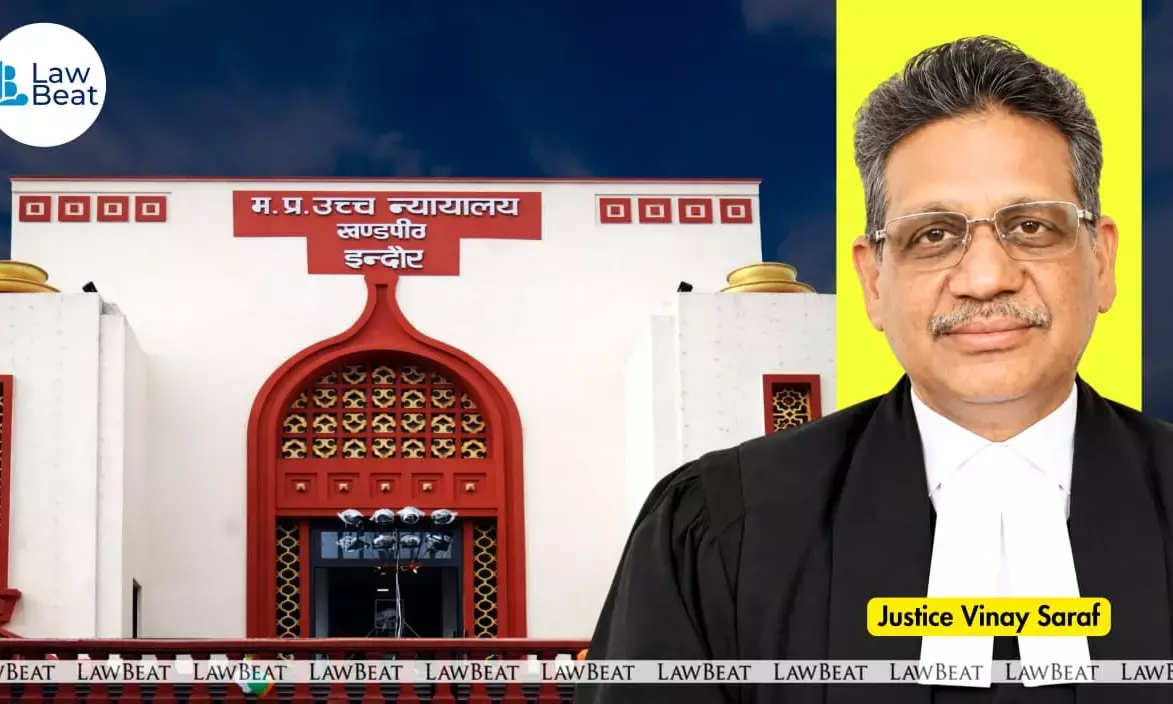
“Length of Delay Is No Matter”: MP High Court Says Explanation Is the Only Test for Condoning Delay
The Madhya Pradesh High Court at Indore has held that a litigant cannot be made to suffer because his lawyer failed to advise him, setting aside orders that refused to condone a delay of 1,093 days in challenging an ex parte decree for specific performance of a land sale agreement.
Justice Vinay Saraf, in an order delivered on October 8, 2026, partly allowed a civil revision filed by Deepak Afle, condoned the delay subject to costs of Rs 50,000 payable to the plaintiff, and sent the matter back to the trial court to decide his application on merits.
The dispute began in 2017, when Dharam Developers and Finvest Limited sued Afle seeking specific performance of an April 24, 2012 agreement to sell land in survey number 573/17, measuring 0.169 hectare, in village Machal, Depalpur tehsil. The company said it had paid Rs 10 lakh as part consideration, with the balance due by March 31, 2013.
Summons returned unserved, so the trial court allowed service by publication in the daily newspaper Nai Dunia. Afle did not appear and was proceeded against ex parte on August 24, 2017. An ex parte decree followed on August 8, 2019.
Afle said he learned of the decree only when an execution notice reached him in November 2019. His lawyer appeared on November 27, 2019, but never advised him to seek setting aside of the decree under Order IX Rule 13 of the Code of Civil Procedure. After that lawyer shifted to Kerala in July 2022, new counsel filed the application on November 17, 2022, along with a Section 5 Limitation Act plea.
The trial court rejected the plea on April 13, 2024, calling his conduct grossly negligent and lacking good faith, and relying on the Supreme Court’s decision in Lanka Venkateswarlu v. State of A.P. The District Judge dismissed his appeal on February 28, 2025, prompting the present revision.
Advocate Anuj Bhargava, appearing for Afle, argued that his client depended entirely on his lawyer and that the lapse was a bona fide mistake. Senior Advocate A.K. Sethi, along with Advocate Harish Joshi, appearing for the company, contended that the explanation was insufficient and that findings of fact cannot be reopened in revision. Panel Lawyer Youkta Pahadiya appeared for the State.
Justice Saraf noted that superior courts normally do not disturb findings on condonation, but where the lower courts refuse it, a revisional court is free to examine the cause shown afresh, citing N. Balakrishnan v. M. Krishnamurthy. He observed that “the rules of limitation are not meant to destroy the right of the parties.”
On the explanation itself, the Court found it credible, noting that the first lawyer had appeared in execution. “It is settled position of law that a litigant should not suffer for any mistake committed by the Lawyer,” it said, adding that a litigant “is always dependent upon the Lawyer.”
The Court also rejected the idea that a long delay is fatal by itself. “Length of delay is no matter, acceptability of the explanation is the only criteria,” it held.
The consequences weighed heavily. With the delay plea dismissed, the Order IX Rule 13 application fell too, leaving Afle, in the Court’s words, “remediless in respect of the ex parte judgment and decree.” It also noted that summons were served only through publication, and that the delay overlapped the Covid years, when the Supreme Court excluded March 15, 2020 to March 28, 2022 from limitation.
Finding that the trial court had decided the matter “in a highly technical manner” and that the appellate court overlooked the irreparable loss to Afle, the Court held that compensating the plaintiff in costs would balance the equities.
Both orders were set aside and the miscellaneous judicial case was restored to its original number. The trial court must now decide the Order IX Rule 13 application in accordance with law, “without being influenced by anything stated hereinabove.”
Case Title: Deepak Afle vs. Dharam Developers and Finvest Limited through its Authorized Director Surendrasingh and Others
Order Date: October 8, 2026
Bench: Justice Vinay Saraf