
Leaked Private Phone Call About Planning To Remove 'Bhagwa' Flag Not Hate Speech: Karnataka HC
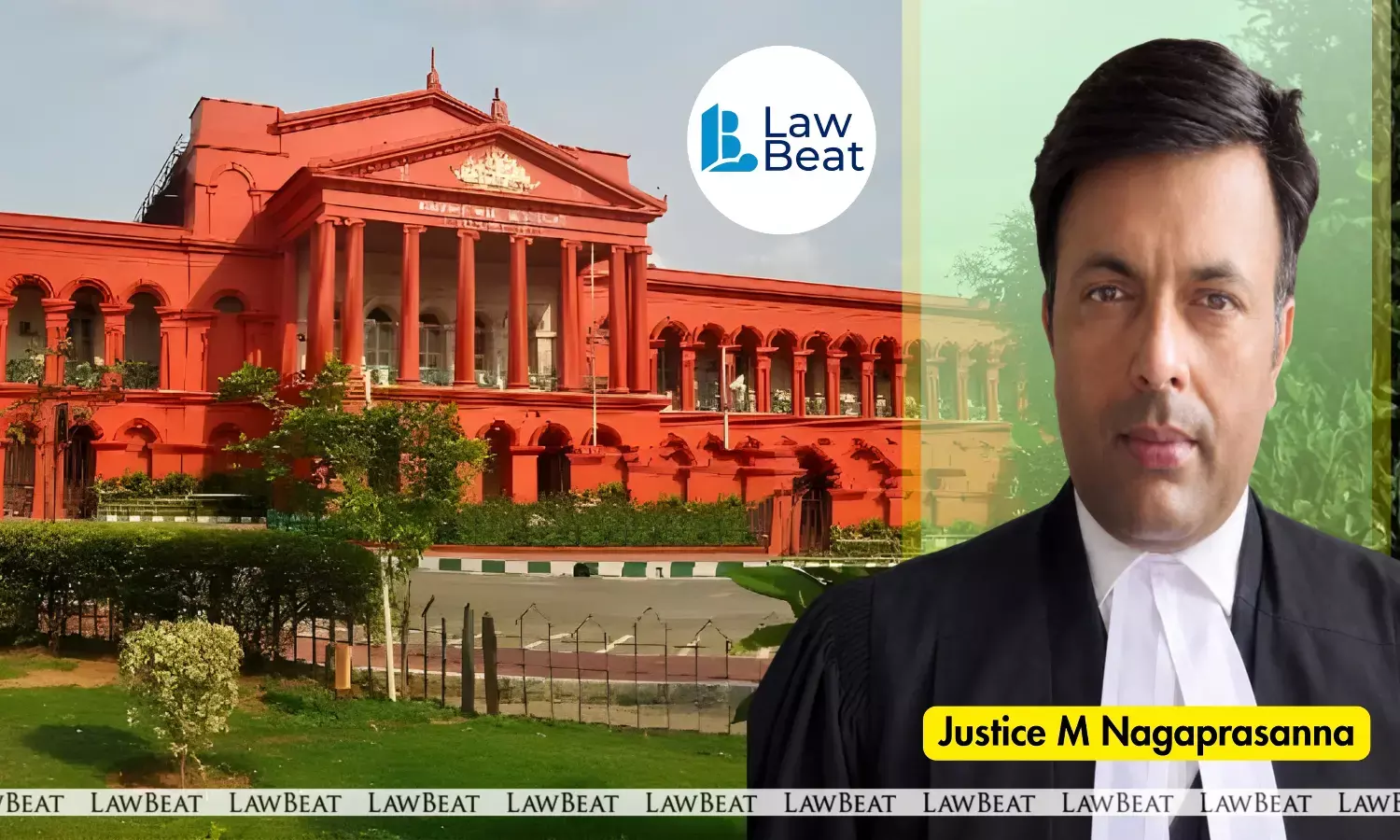
Private Phone Conversation Cannot Amount to Hate Speech, Says Karnataka High Court
The Karnataka High Court has quashed an FIR against two individuals accused of hate speech and criminal conspiracy, ruling that a leaked private phone call in which they allegedly discussed plans to remove a 'Bhagwa' (Saffron) flag does not constitute the offence of Hate Speech.
The Court held that a private, one-on-one telephonic conversation that was recorded and later circulated as an audio message by a third party does not constitute a crime.
Background of the FIR
The case stems from an FIR registered by the police in 2024 against two residents of Karadagi village. The authorities took action after an audio clip of a phone call between the two accused went viral on WhatsApp.
In the leaked recording, the individuals were allegedly heard planning to remove a 'Bhagwa Dhwaj' (Saffron flag) near a local mosque.
According to the police complaint, the conversation included tactical discussions, such as gathering 200 people, submitting a formal petition first, turning off CCTV cameras, and a rhetorical mention of 'swords'.
Citing the fact that the same flag had been a flashpoint for communal tension in 2004, the police registered a case under Section 153A, Section 295A (deliberate and malicious acts intended to outrage religious feelings), and Section 120B (criminal conspiracy) IPC.
Arguments before the Court
Before the High Court, counsel for the accused argued that the ingredients of the alleged offences can be invoked only if there is a conglomeration of a certain number of people, and not for an audio message or a private telephonic conversation between two people.
Conversely, the State Government argued that if only two people were conversing, it would not have been a crime. But here, the audio message on WhatsApp had circulated, and therefore, the crime had to be registered.
What did the High Court observe?
The High Court considered the allegations that an audio message containing the private conversation had been sent to the complainant's phone by a certain person and then circulated.
While quashing the criminal proceedings, the High Court relied on the Supreme Court’s landmark judgment in Javed Ahmad Hajam v. State of Maharashtra.
In its order, the High Court observed:
"The complaint itself narrates that two people were having private conversation and that private conversation stood recorded and became an audio message and was to be circulated. This would not become a crime as obtaining under Section 153(A) or 295(A) as is held by the Apex Court in the case of Javed Ahmad Hajam (supra)".
The Court added that permitting investigation even in the case at hand would run foul of the elucidation of the Apex Court and cause the investigation to become a gross abuse of the process of law, resulting in patent injustice.
Therefore, the FIR, as well as the entire criminal proceedings, were quashed.
Case Title: Sri Sayyad Azampeer Khadri v. The State of Karnataka
Date of Order: July 3, 2026
Bench: Justice M. Nagaprasanna