
Lok Sabha Inquiry Committee Speeds Up Proceedings in Justice Yashwant Varma Case
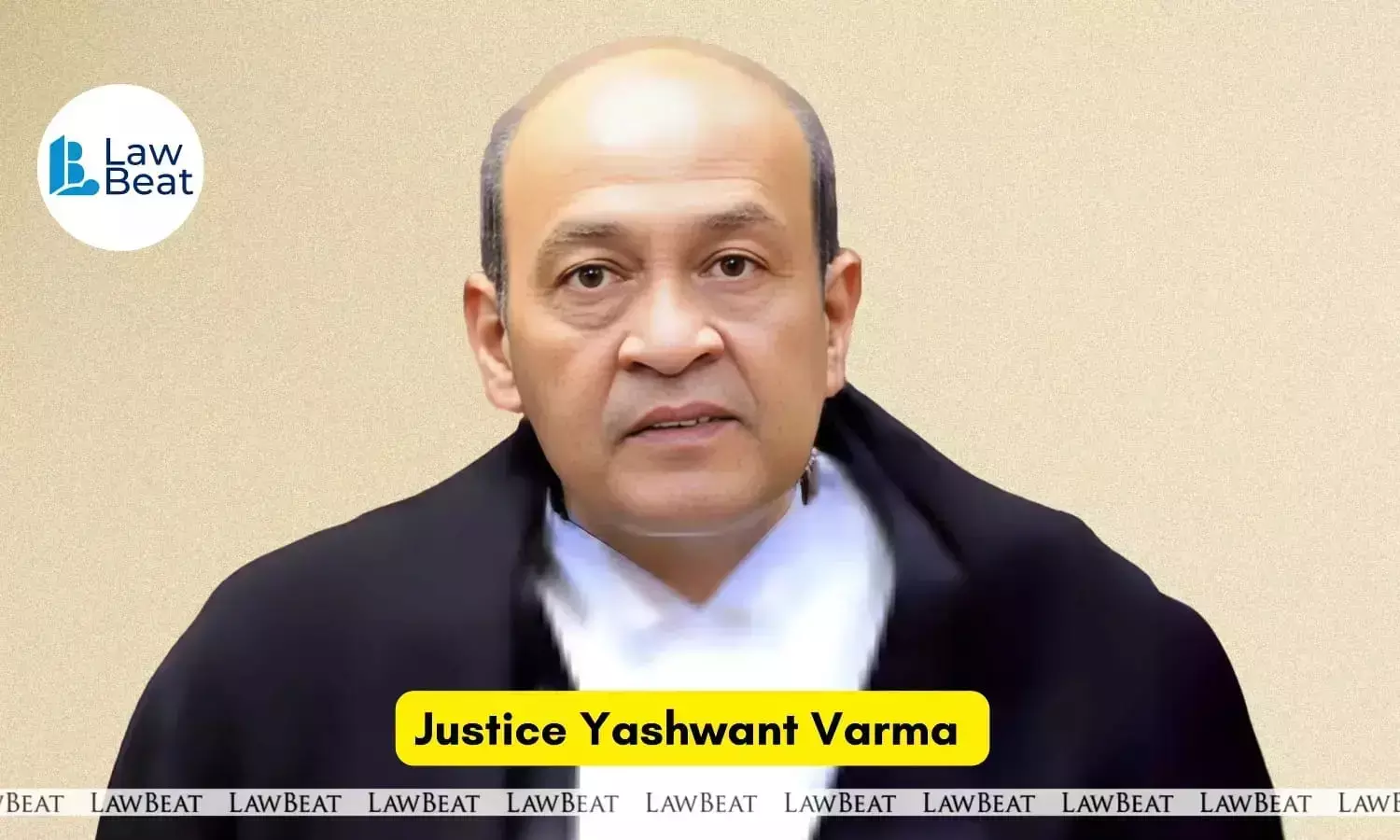
Justice Yashwant Varma resigns as Allahabad High Court judge amid ongoing probe and impeachment proceedings linked to the cash-at-home controversy.
The three-member inquiry committee constituted by the Lok Sabha Speaker to examine allegations against Allahabad High Court judge Justice Yashwant Varma has fast-tracked its proceedings, indicating an effort to conclude the probe before the impending retirement of one of its members. The inquiry, initiated under the Judges (Inquiry) Act, 1968, concerns allegations of unaccounted cash having been found at Justice Varma’s official residence in Delhi following a fire in March 2025, when he was serving as a judge of the Delhi High Court.
The committee comprises Madras High Court Chief Justice M.M. Shrivastava, Supreme Court judge Justice Aravind Kumar, and senior advocate B.V. Acharya. Justice Shrivastava is scheduled to demit office on March 6, a factor that has assumed significance in the recent scheduling of hearings. Justice Varma first appeared before the panel on January 24, shortly after the Supreme Court dismissed his challenge to the initiation of impeachment proceedings. Since then, at least two further hearings were held last week, with the committee indicating a preference for day-to-day proceedings. Two additional dates have also been fixed this week.
The inquiry proceedings are being conducted in camera, in keeping with the statutory framework governing removal proceedings against judges. There is a strict embargo on lawyers and law officers associated with the matter from speaking to the press or discussing the proceedings outside the committee. This confidentiality requirement is intended to preserve the integrity of the process and prevent public speculation while the statutory mechanism runs its course.
In a detailed judgment delivered on January 16, the Supreme Court cleared the way for the inquiry committee to proceed. Rejecting Justice Varma’s petition challenging the Speaker’s decision to constitute the panel, the court observed that “constitutional safeguards for judges cannot come at the cost of paralysing the removal process itself.” The bench held that the petitioner had failed to demonstrate any present or inevitable violation of his fundamental rights at this preliminary stage.
The top court emphasised that the Judges (Inquiry) Act provides “elaborate safeguards” to a judge facing removal proceedings. These include the framing of definite charges, a full opportunity to defend himself, the right to examine and cross-examine witnesses, and adjudication by senior constitutional functionaries. According to the court, the statutory scheme adequately balances the need to protect judicial independence with the requirement that serious allegations of misbehaviour be examined in an effective and credible manner.
The Supreme Court also rejected Justice Varma’s contention that impeachment proceedings could not continue after the Rajya Sabha declined to admit a parallel removal motion. It held that the Lok Sabha Speaker’s decision to admit the motion and constitute an inquiry committee remained valid and autonomous, irrespective of the outcome in the Upper House.
The impending retirement of Justice Shrivastava has figured in other recent proceedings as well. On February 4, Chief Justice of India Surya Kant took note of the fact that the Madras High Court Chief Justice had “barely a month” left in office while dealing with litigation concerning Tamil Nadu laws that replaced the Governor with the state government in the appointment of vice chancellors. Acknowledging the practical constraints, the Chief Justice of India left it open to Justice Shrivastava to constitute an appropriate bench to decide the matter expeditiously.
Against this backdrop, the accelerated pace of hearings before the Lok Sabha inquiry committee appears aimed at avoiding a situation where the panel would have to be reconstituted after Justice Shrivastava’s retirement. If the proceedings remain incomplete beyond March 5, the committee would have to be reformed with a new member, a step that would require the inquiry to recommence afresh under the Judges (Inquiry) Act, potentially causing significant delay.
Justice Varma has assailed the impeachment process initiated against him following the alleged discovery of cash at his official residence after the March 2025 fire. A Supreme Court in-house inquiry panel subsequently found his explanation to be unsatisfactory, prompting then Chief Justice of India Sanjiv Khanna to recommend action to the Prime Minister and the President. Notices seeking his removal were thereafter moved in both the Lok Sabha and the Rajya Sabha on July 21, 2025. While the Lok Sabha Speaker admitted the motion on August 12 and constituted the present inquiry committee, the Rajya Sabha Deputy Chairman declined to admit the motion, holding it to be defective.
Source: HT