
MACT Calls For Delhi Police and Transport Authority Coordination Over Unrecorded Vehicle Transfers
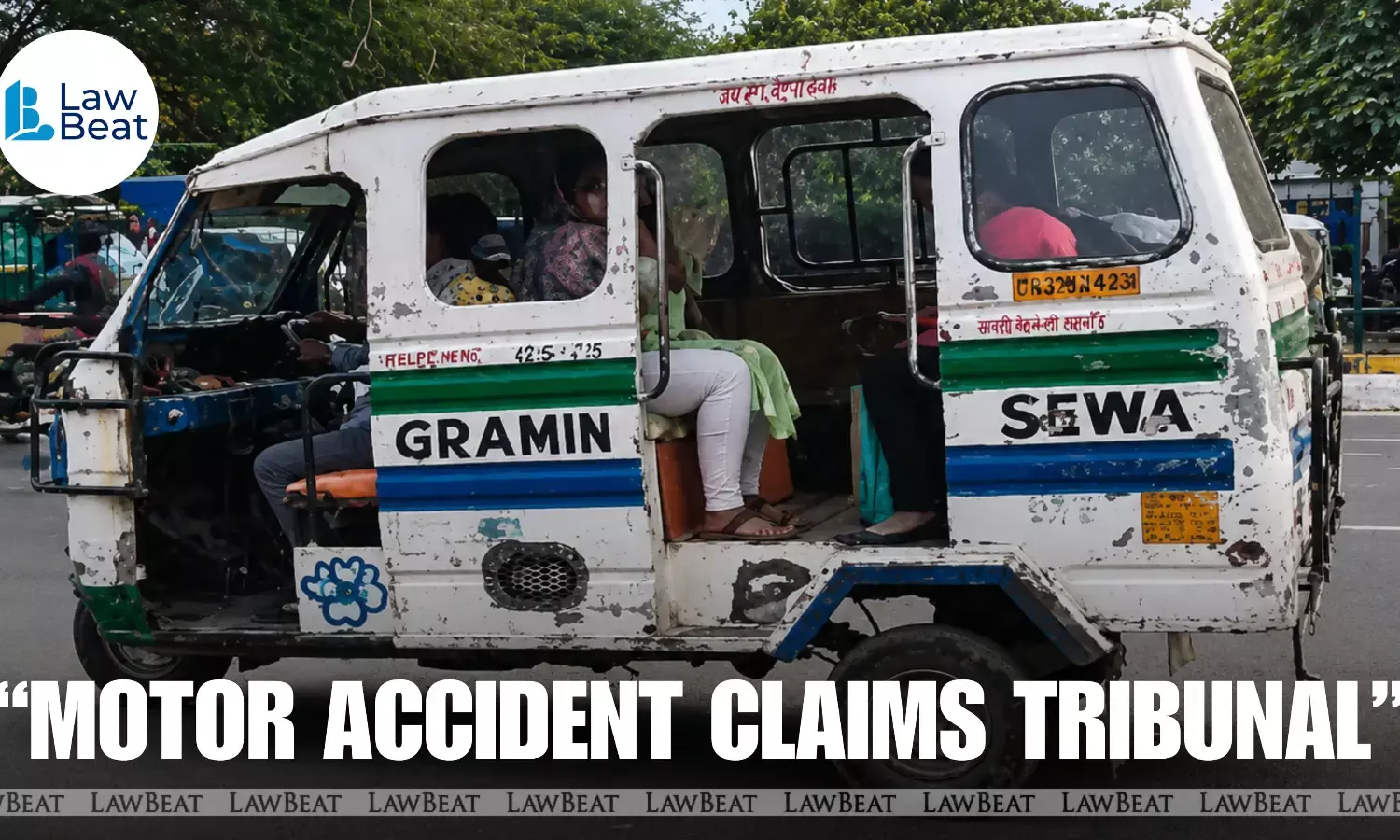
Delhi MACT raises concern over illegal transfer of Gramin Seva vehicles without updating registration records, calls for coordination between Delhi Police and STA
A Motor Accident Claims Tribunal (MACT) in Delhi has underscored the urgent need for stricter compliance with Section 50 of the Motor Vehicles Act, 1988, while expressing concern over the rampant transfer of public utility vehicles without corresponding updates in registration records.
The Tribunal observed that such unchecked transfers not only violate statutory requirements but also defeat the regulatory framework governing public transport vehicles such as Gramin Sevas.
Stressing the absence of coordination between the Delhi Police and the State Transport Authority (STA), the Tribunal called for immediate policy intervention and the development of a mechanism for information-sharing between authorities to ensure compliance with the law.
The observations were made by Dr. Abhilash Malhotra, Judge, MACT-02, Patiala House Courts, New Delhi, while deciding a motor accident claim petition arising out of FIR No. 549/2022 registered at PS Kishan Garh under Sections 279 and 337 IPC.
The Tribunal noted that the offending vehicle involved in the accident was uninsured and had changed hands multiple times without the transfer being reflected in official registration records.
Directing urgent deliberation between the offices of the Commissioner, STA and the Commissioner of Delhi Police, the Tribunal stated that there was an immediate need to “plug these loopholes” and ensure strict compliance with Section 50 of the Motor Vehicles Act.
The matter arose in proceedings where the claimant’s petition was allowed and compensation was awarded through a separate judgment passed on the same date.
While dealing with ancillary issues arising from the case, the Tribunal examined the ownership history of the offending vehicle bearing registration number DL-2W-5902, a Gramin Seva vehicle.
According to the charge sheet filed by the police, the vehicle was originally registered in the name of one Sikander.
The Tribunal recorded that the vehicle was subsequently sold to Karamvir, who in turn sold it to Manoj Kumar, and thereafter to Vivek Kumar, arrayed as respondent no. 3 in the proceedings.
However, despite these successive transfers, the registration certificate was never updated to reflect the changes in ownership.
The Tribunal found this state of affairs deeply troubling, particularly given the nature of the vehicle involved.
It observed that Gramin Seva vehicles are public utility vehicles for which permits are granted after due scrutiny and where drivers are required to possess badges and authorisation.
In such a regulatory environment, the Tribunal said, it was difficult to comprehend how a vehicle could continue changing hands without any formal compliance with statutory transfer procedures.
The order noted that the transfer of vehicles in such a manner constituted a clear violation of Section 50 of the Motor Vehicles Act, 1988, which mandates the transfer of ownership to be duly reported and recorded.
The Tribunal further observed that such conduct also undermined permit conditions applicable to public transport vehicles, particularly because such permits are initially non-transferable for a prescribed duration.
The Court also questioned how the issue escaped scrutiny during the annual fitness certification and permit renewal processes applicable to such vehicles.
It remarked that authorities appeared to have ignored the practical reality that the vehicle had changed hands multiple times despite periodic interactions with transport authorities for regulatory compliances.
In a significant observation, the Tribunal pointed to what it described as an “absolute lack of coordinate between the two State agencies”, namely, the investigating agency and the transport authority.
The Tribunal noted that even after the accident investigation and filing of the charge sheet, the investigating agency did not intimate the Regional Transport Office (RTO) about the apparent violation of Section 50 read with Section 177 of the Motor Vehicles Act so that appropriate action could be initiated.
Highlighting systemic deficiencies, the Tribunal stressed that the issue was not merely confined to the present case but reflected broader regulatory loopholes in the administration and monitoring of public transport vehicles.
It emphasised that there was an urgent necessity to establish institutional coordination between enforcement authorities and transport regulators.
Accordingly, the Tribunal called upon the offices of the Commissioner, State Transport Authority and the Commissioner of Delhi Police to deliberate upon and formulate a feasible policy response aimed at ensuring strict compliance with the Motor Vehicles Act, particularly Section 50.
The Tribunal further emphasised the need for a dedicated mechanism through which the police could share information regarding sale and purchase transactions that violate statutory transfer requirements with the transport authorities.
Copies were also directed to be sent to the Chairman (IT & Digitization), Delhi District Courts and the Central Project Coordinator of the Delhi High Court for information.
The observations assume significance in the context of increasing concerns relating to ownership disputes, uninsured vehicles and accountability gaps in motor accident claims involving commercial and public transport vehicles.
Counsel for the petitioner: Adv. Manoj Goel
Case Title: Ram Prasad Sahu v. Raju & Ors.
Bench: Dr. Abhilash Malhotra, Judge/PO, MACT-02, Patiala House Court
Date of Judgment: 12.05.2026