
Madhya Pradesh High Court: Acceptance Of Compensation Bars Return Of Unused Land Acquired For Bansagar Project
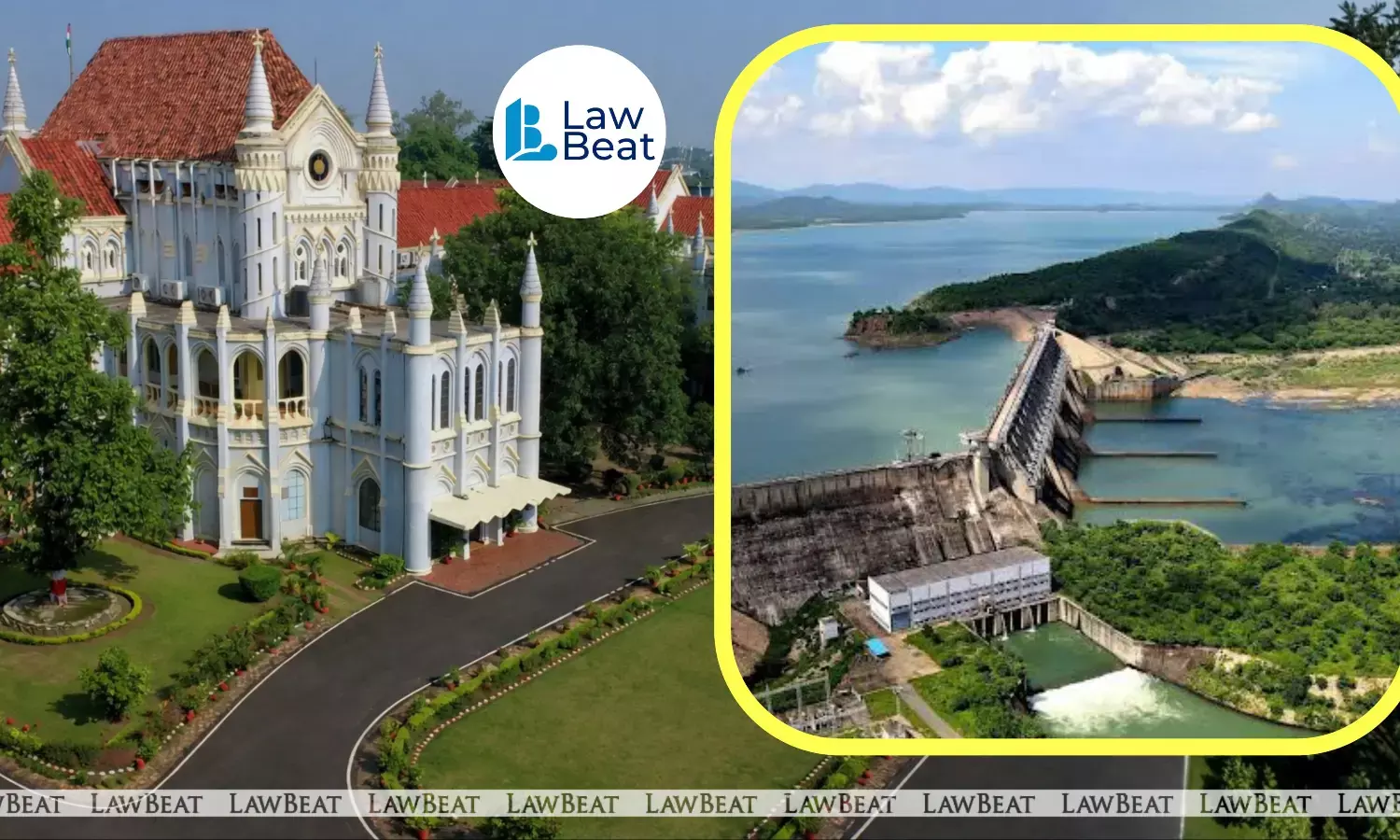
Madhya Pradesh High Court: Acceptance of Compensation Bars Return of Bansagar Project Land
The Madhya Pradesh High Court has reiterated that once land is acquired under the Land Acquisition Act, 1894 and vests in the State, it cannot be restored to the original owner merely on the ground that it remains unutilised. Dismissing an intra-court appeal filed by Rajendra Prasad Tiwari, a Division bench held that in the absence of any statutory provision permitting restoration, no direction can be issued to consider such a representation.
The Division Bench comprising Chief Justice Sanjeev Sachdeva and Justice Vinay Saraf was dealing with Writ Appeal No. 167 of 2026, arising from the dismissal of a writ petition by a Single Judge on December 15, 2025.
The appellant’s land had been acquired in 2004 for the Bansagar Project. A Land Acquisition Award was passed and compensation was paid to him. Over two decades later, the appellant contended that the land had not been utilised for the stated project purpose and was lying vacant. He submitted a representation on October 29, 2025 seeking restoration of the land. Alleging inaction on the representation, he approached the High court seeking a direction to the authorities to decide his plea.
The learned Single judge dismissed the writ petition, holding that the land stood vested in the Government after acquisition and that the appellant had no enforceable right to seek restoration on the ground of non-utilisation, particularly when compensation had been accepted long ago.
Before the Division bench, counsel for the appellant, Shri Munendra Singh, argued that the land had not been used for the Bansagar Project despite acquisition. He further submitted that the Project Authorities had issued a No Objection Certificate indicating that they would have no objection if the land was restored. It was also contended that the appellant was willing to refund the compensation amount received. On this basis, a limited prayer was made for issuance of a direction to the concerned authority to consider and decide the pending representation.
Opposing the appeal, Shri Anubhav Jain, Government Advocate for the State, argued that once land vests in the Government following acquisition, it cannot be divested or restored at the instance of the original owner. He submitted that the appellant had no legal right to demand restoration and that the appeal deserved dismissal.
The Division bench noted that it was undisputed that the land had been acquired in 2004 by passing a Land Acquisition Award and that compensation had been paid. The acquisition proceedings were conducted under the Land Acquisition Act, 1894. The court categorically observed that “in the absence of any provision to restore the unutilized land back to the original owner, no direction can be issued to the respondents to consider and decide the representation submitted by the appellant as the appellant has no right to claim the restoration of the land”.
Emphasising the legal consequence of vesting, the bench held that once land is vested in the Government, the title stands transferred absolutely, free from encumbrances. The fact that the land may remain unutilised does not create a reversionary right in favour of the former landowner unless a statutory provision expressly provides for such restoration. The court also found no infirmity in the reasoning adopted by the Single judge.
Consequently, the bench stated that it was “in full agreement with the findings recorded by the learned Single Judge” and concluded that the impugned order did not warrant interference. The appeal was dismissed as being “sans merits,” with no order as to costs.
Case Title: Rajendra Prasad Tiwari v. The State of Madhya Pradesh and Others
Date of Order: February 23, 2026
Bench: Chief Justice Sanjeev Sachdeva and Justice Vinay Saraf