
Madhya Pradesh High Court Cancel's Congress MLA's Election Over Criminal Case Non Disclosure, BJP Candidate Elected
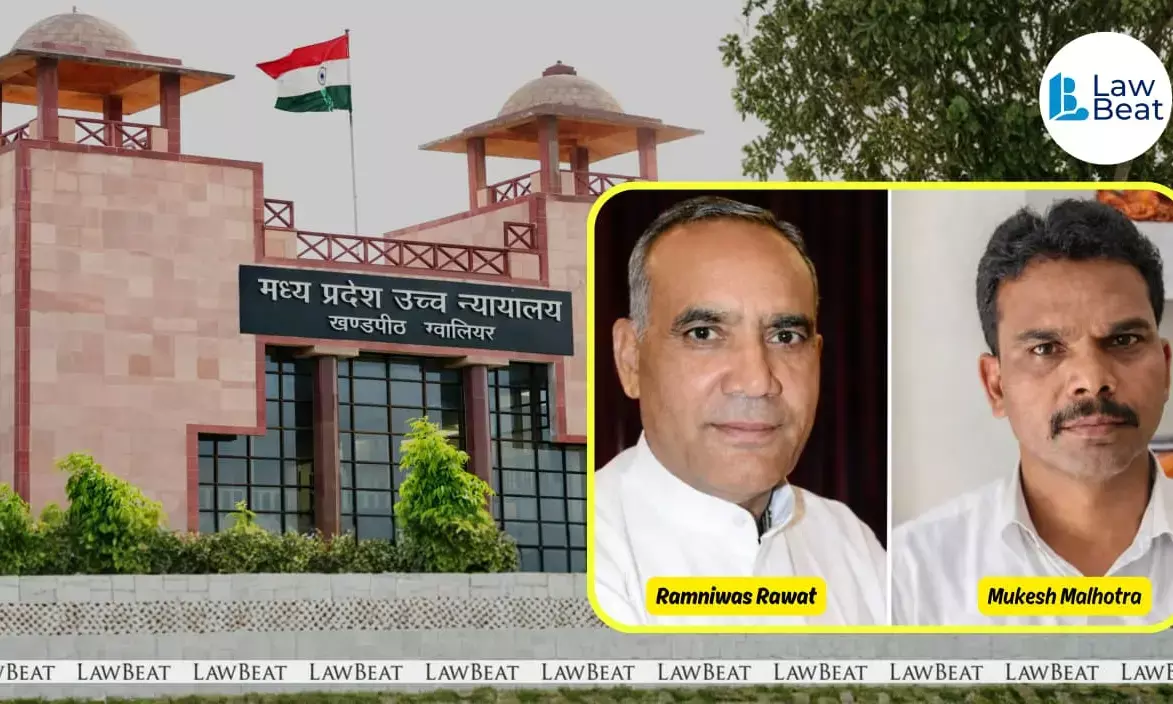
Madhya Pradesh Congress MLA's Election Declared Void For Failing To Declare Criminal Cases
The Madhya Pradesh High Court has set aside the election of Mukesh Malhotra as MLA from Assembly Constituency No. 02 Vijaypur in Sheopur district, holding that suppression of material information regarding criminal cases in the nomination affidavit amounted to corrupt practice under the Representation of the People Act, 1951.
The court further declared election petitioner Ramniwas Rawat, who had secured the second-highest votes in the 2024 by-election, as the duly elected MLA from the constituency.
The judgment was delivered by Justice G.S. Ahluwalia while allowing an election petition filed by Rawat challenging the validity of Malhotra’s election. The petition alleged that Malhotra had either concealed or incorrectly disclosed several criminal cases in the affidavit required to be filed under Form 26 along with nomination papers, thereby depriving voters of material information necessary to make an informed electoral choice.
According to the case record, Rawat had earlier represented the Vijaypur constituency multiple times and had contested the 2024 by-election after switching political parties. In the by-poll held in November 2024, Malhotra emerged victorious with 50.66 percent of the votes, while Rawat secured 46.95 percent. The election petition primarily questioned the legality of Malhotra’s victory on the ground that his affidavit did not fully disclose criminal antecedents, including the status of certain pending cases where charges had already been framed.
The petitioner contended that although Malhotra mentioned two pending criminal cases in his affidavit, he falsely indicated that charges had not been framed in them, despite the trial court having already framed charges. The petition further alleged that several other criminal cases, including those resulting in conviction or disposal, were not disclosed at all in the affidavit submitted before the Returning Officer.
During the proceedings, the returned candidate argued that under Section 33A of the Representation of the People Act, disclosure is mandatory only for cases where charges have been framed or where conviction has resulted in imprisonment of more than one year. It was contended that certain convictions relied upon by the petitioner involved sentences of less than one year and therefore their non-disclosure would not amount to corrupt practice. The defence also argued that the petition lacked material facts showing that the alleged omissions had materially affected the election result.
Justice Ahluwalia examined the legal framework governing disclosure of criminal antecedents and emphasised the importance of transparency in electoral democracy. The court noted that the purpose of requiring candidates to disclose criminal cases is to ensure that voters are able to assess the background of candidates before casting their votes. Observing that the electorate has a fundamental right to know relevant information about candidates, the court stressed that incomplete or misleading disclosures undermine this principle.
The court found that Malhotra had knowingly suppressed the fact that charges had been framed in two pending criminal cases and had thereby furnished incorrect information in the nomination affidavit. According to the judgment, such conduct misled voters and interfered with their ability to exercise electoral choice freely and knowledgeably. The Court observed that the suppression of material information regarding criminal proceedings had “created an impediment in the free exercise of electoral rights” and deprived voters of the opportunity to make an informed decision.
While the court noted that non-disclosure of some other cases, including those involving convictions of less than one year, might not by itself constitute corrupt practice under Section 33A, it held that the deliberate misstatement regarding framing of charges in pending cases was sufficient to establish corrupt practice. The court concluded that the returned candidate’s conduct amounted to undue influence on the electorate because it concealed relevant information about his legal background.
Holding Malhotra guilty of corrupt practice, the court declared his election as MLA from Vijaypur null and void. It further allowed the alternative relief sought by the petitioner and declared Ramniwas Rawat, who had secured the second-highest number of votes in the by-election, as the duly elected representative from the constituency. The Election Commission and the Returning Officer were directed to complete the necessary formalities to give effect to the declaration.
Allowing the election petition, the court clarified that each party would bear its own costs.
Case Title: Ramniwas Rawat v. Mukesh Malhotra and Others
Date of Judgment: March 9, 2026
Bench: Justice G. S. Alhuwalia