
Madhya Pradesh High Court Pulls Up State Over CCTV Lapses; Directs Compensation In Custodial Violence Case
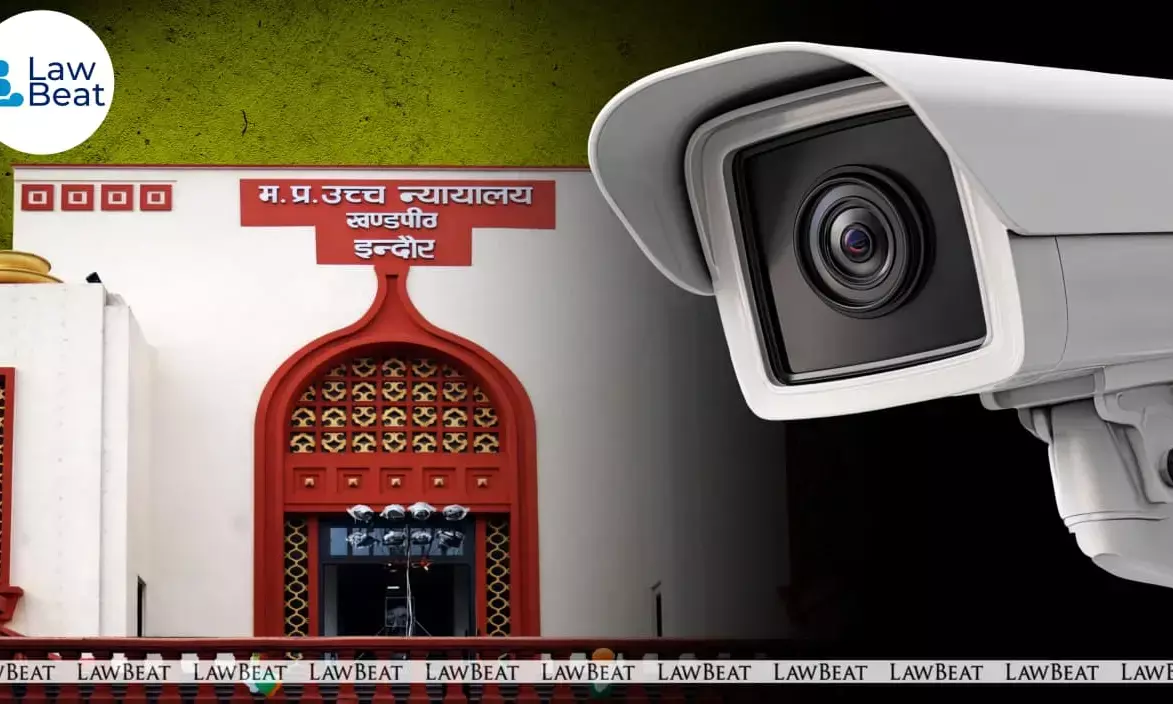
Madhya Pradesh High Court: Accused Must Not Be Taken to Areas Without CCTV Coverage
The Indore Bench of the Madhya Pradesh High Court has raised serious concerns over gaps in police surveillance infrastructure while granting compensation to a petitioner who alleged custodial violence at the hands of police personnel.
Justice Subodh Abhyankar, while dealing with a writ petition under Article 226 of the Constitution, held that the absence of CCTV footage in crucial areas of the police station was “not natural” and justified drawing an adverse inference against the officials involved.
The case arose from a late-night incident on December 29, 2025, when the petitioner claimed he was assaulted by two police constables after a minor altercation at a restaurant in Indore.
According to the petitioner, he was taken to Police Station Lasudiya where he was subjected to further physical assault, humiliation, and coercion. He also alleged that his phone was snatched and video evidence of the incident was deleted. The petition sought preservation of CCTV footage, registration of an FIR, departmental action against the erring officers, and compensation for violation of his fundamental rights.
The State, however, denied the allegations, contending that no assault had taken place and that forensic examination of the petitioner’s phone did not reveal any deleted video files. It was also argued that the petitioner had been taken to a part of the police station not covered by CCTV cameras, but only because that area was designated for women officers.
Rejecting the State’s stand, the Court noted that the available CCTV footage itself showed that the petitioner was taken to an area not covered by cameras, during which time suspicious sounds could be heard. It observed that such gaps in surveillance, especially in a police station located in the heart of the city, could not be treated as routine or insignificant. “Non-availability of such visuals… is not natural and is enough to draw an adverse inference,” the Court remarked, adding that the petitioner’s version was also supported by injury photographs and statements of witnesses.
The Court ultimately directed the State to pay ₹10,000 as compensation to the petitioner for the hardship suffered. While acknowledging the limitations of its jurisdiction under Article 226, it held that some form of relief was necessary in light of the material on record.
Beyond the individual case, the Court expressed strong dissatisfaction with the State’s failure to effectively implement CCTV and body camera systems in police stations, despite earlier judicial directions. It noted that although 442 body-worn cameras had been distributed within the Indore Police Commissionerate, only two were allotted to the concerned police station and those too were used merely for traffic violations.
Calling this a “criminal waste of public resources,” the Court observed that such technology, if properly deployed, could protect both citizens and police personnel. It further pointed out the absence of any standard operating procedure governing the use of these devices, indicating systemic apathy toward accountability mechanisms.
In a set of forward-looking directions, the Court mandated that individuals should not be taken to areas of police stations not covered by CCTV cameras, except spaces like toilets or changing rooms. It also directed the State to equip police personnel in at least five major police stations in Indore with body-worn cameras within nine months and to frame a proper SOP for their usage.
Emphasizing the need for proactive reform, the Court stated that such measures were essential to prevent future instances of custodial violence and to ensure transparency in policing.
The matter has been listed for compliance review on January 4, 2027.
Case Title: Harsh v. The State of Madhya Pradesh and Others
Date of Order: April 22, 2026
Bench: Justice Subodh Abhyankar